Uruguay's World Cup Opener Under Bielsa: High Stakes in Miami
Uruguay step into the Miami heat on Monday night with a familiar weight on their shoulders and an unfamiliar edge to their game. Saudi Arabia await in Group H, but the real story is La Celeste under Marcelo Bielsa, finally unleashed on the World Cup.
This is not the Uruguay of cautious lines and veteran forwards grinding out 1-0 wins. Bielsa has spent months drilling a high press into this squad, demanding relentless running, risky passing and total commitment. His Uruguay will hunt in packs, squeeze the pitch and dare opponents to live with the tempo.
It’s thrilling. It’s exhausting. And it’s still a little unpredictable.
A powerhouse with questions in attack
On paper, Uruguay arrive as a heavyweight. They cruised through South American qualifying, navigating one of world football’s toughest regions with authority. The badge still carries the aura of two world titles and a long history of knockout menace.
Yet the warm-up games left a sour taste.
They failed to score against Mexico. They failed to score against Algeria. Then came a bruising 5-1 defeat to the United States, a reminder that Bielsa’s high wire act can snap if the balance is wrong.
The biggest concern sits at the top of the pitch. Edinson Cavani has retired from international duty. Luis Suarez, the other half of an era-defining forward line, did not make the final squad. For the first time in more than a decade, Uruguay walk into a World Cup without a proven, battle-hardened goalscorer leading them.
The responsibility now falls on Darwin Nunez. Volatile, powerful, constantly on the move, he will carry the attack against opponents he knows well from the Saudi Pro League. Darwin can terrorise a back line, stretch a game and create chaos. What Uruguay need now is end product – cold, ruthless finishing in a tournament that rarely forgives waste.
Federico Vinas is expected to work around him, linking play and attacking the box. Maximiliano Araujo will offer width and direct running from the flank. The structure is there. The chemistry and cutting edge still need to show up under the brightest lights.
Midfield steel and stardust
If there is one area where Uruguay can look any rival in the eye, it is midfield.
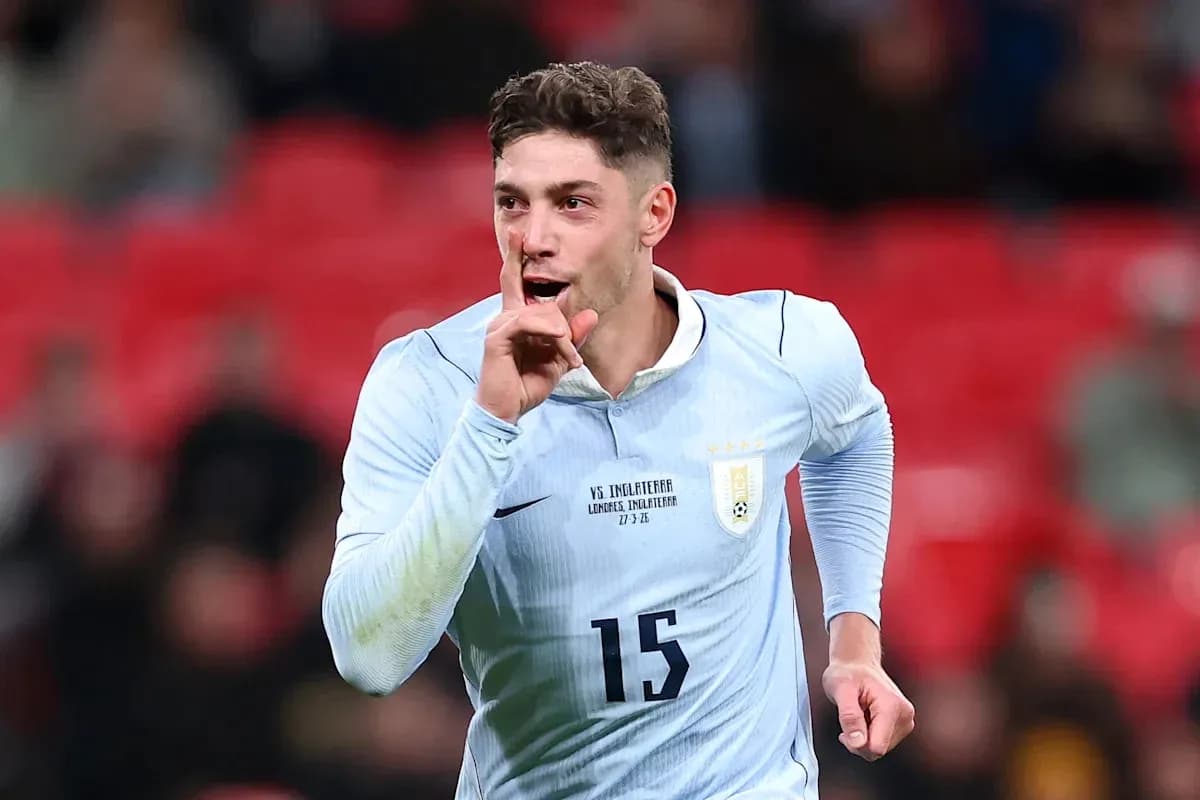
Federico Valverde stands at the centre of it all. The Real Madrid man brings drive, range and a thunderous long shot, and he will set the rhythm for Bielsa’s team. When Uruguay break, it is often Valverde who turns defence into attack with one stride or one pass.
Behind him, Manuel Ugarte will do the dirty work. He bites into tackles, screens the defence and covers the spaces that Bielsa’s aggressive pressing inevitably leaves. Rodrigo Bentancur completes a formidable trio, knitting moves together and offering calm on the ball when the game threatens to spin out of control.
If Uruguay are to dominate Saudi Arabia, it will likely start here: winning second balls, pinning the opposition back and forcing mistakes in dangerous zones. Bielsa’s sides live off those turnovers. The pressure, sooner or later, usually tells.
A defence patched together
The problem for Bielsa is what lies behind that midfield.
Uruguay’s defensive resources have been shredded by injury at the worst possible time. Ronald Araujo, a cornerstone for club and country, is effectively out with a calf problem. Jose Gimenez, another leader at the back, remains a major doubt with an ankle issue. Matias Vina is nursing a muscle injury and could also miss out.
That is not rotation. That is the spine of a defence ripped out on the eve of a World Cup opener.
Sebastian Caceres, who recently suffered a head knock, is racing the clock but is still the most likely to start. Santiago Bueno should join him in the heart of the back line, with Mathias Olivera expected to slot in on the left and Guillermo Varela on the right. It is a back four that can function, but it does not carry the same authority as a fully fit Uruguay rearguard.
Giorgian de Arrascaeta, a key creative outlet when available, is also doubtful with a calf complaint. His absence would strip away one more layer of invention, placing even more pressure on the midfield trio and wide players to supply Nunez.
For all the talk of Bielsa’s attacking ideals, these defensive absences inject real jeopardy into this opener. One mistake, one lapse under the Miami lights, and a match Uruguay expect to control can quickly tilt.
Predicted XI and tactical shape
Bielsa is unlikely to abandon his principles now. Uruguay are expected to line up with:
Muslera; Varela, Caceres, Bueno, Olivera; Valverde, Ugarte, Bentancur, M Araujo; Vinas, Nunez.
On paper it looks like a 4-4-2, but the reality will be far more fluid. Valverde will surge forward, Araujo will push high from the flank, and the front two will press from the front, trying to lock Saudi Arabia into their own half.
The risk is clear: with a makeshift defence and an all-action press, any loose touch or broken line can be punished. The reward, if it clicks, is a dominant opening statement from a side with ambitions of going deep into the tournament.
Stage, time and spotlight
Kick-off comes at 23:00 BST on Monday, 15 June 2026, in Miami, a late start that will still bring heavy air and a testing climate. In the UK, viewers can watch live on ITV1. In the United States, Fox Sports carries the broadcast.
For Uruguay, this is more than a group opener. It is the first true World Cup examination of the Bielsa project, a test of whether this intense, attacking identity can survive the strain of tournament football.
The names of Cavani and Suarez are no longer there to drag them through on memory and muscle. This generation must write its own story. Does it begin with a statement in Miami, or with more questions about a giant still trying to find its finishing touch?