USMNT's Growth: McKennie and Berhalter Reflect on Evolution
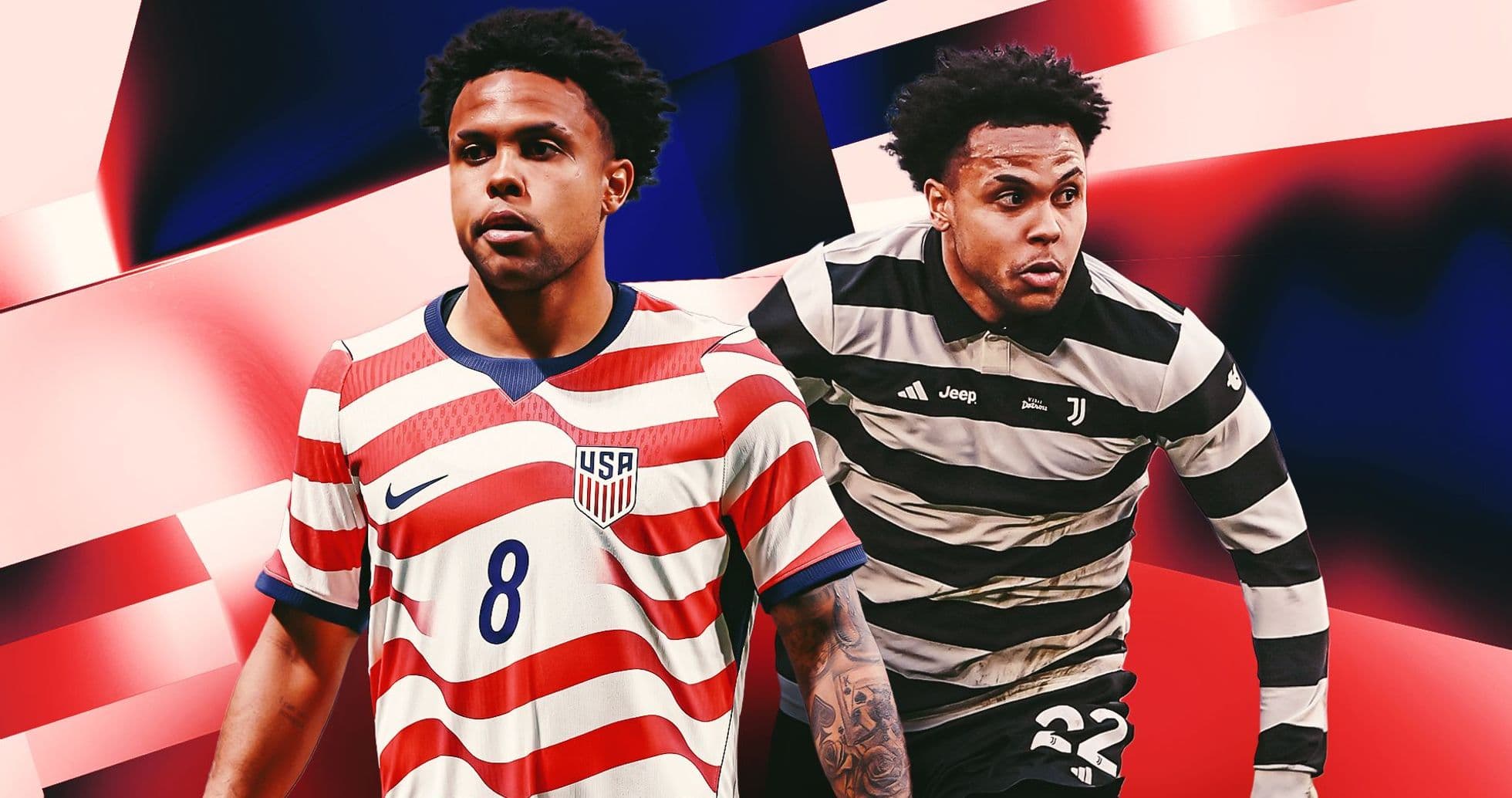
The first thing Weston McKennie wanted at the Chicago Fire training facility wasn’t a ball or a bib. It was a familiar face.
Gregg Berhalter’s.
Across the room, Sebastian Berhalter smiled. He knew exactly why his Juventus teammate was so eager to bump into his dad.
“He's a great person, and I'm not just saying this because [Sebastian is here],” McKennie said with a laugh, the warmth in his voice cutting through the usual pre-World Cup tension.
McKennie had barely dropped his bags before he and the younger Berhalter were ushered in front of the microphones. Even so, his mind was already on a reunion with the coach who helped shape his international career.
“I went to him with problems on and off the field. I've cried in front of him,” McKennie said. “We've had tough times and also amazing times together, and so it'll be really nice to be able to see him around here, hopefully, today, and just to catch up and just go over some memories. I'm sure he'll probably give me some advice leading into the game and into the World Cup, because that's just the type of guy he is.”
This is the strange new reality for the USMNT. The man who guided the group out of its post-2018 wreckage is no longer in charge, yet still moves around them like a proud uncle at a family gathering. He helped pick up the pieces. Now he’s watching what they’ve become.
From “Babies” to Men
When Gregg Berhalter took over after the 2018 qualifying collapse, his job was clear: turn a talented but raw generation into a real national team. Many of them were teenagers then, still figuring out what it meant to be professionals. Now they arrive at camp as established club players, fathers, leaders.
“I think one thing we have to remember is when I got them, they were young, they were babies, and they were just learning what it takes to be a professional athlete,” Berhalter said. “Now I see them, and they're men! They have kids, and they're adults, and they know exactly what it means to maintain themselves as professionals. It's an amazing thing to see.
“I just greeted them now, and was like, ‘I can't believe it, they're grown up!’. I think they'll be ready for this moment. The one thing I know about this group is that they step up to these moments.”
The bond runs deeper than tactics or team sheets. For players like McKennie, Berhalter isn’t just a former coach; he’s part of their football upbringing. That emotional thread still matters as the U.S. heads into a World Cup with expectations that didn’t exist six years ago.
Pochettino’s Balancing Act
On the training pitch, another voice carries the weight now. Mauricio Pochettino is the man tasked with turning this matured core into a tournament force, and his week has been about more than just drills and patterns of play.
Chris Richards joined the group on Friday, warming up without any obvious issue. His presence on the grass was a welcome sight. His absence from the matchday squad will not be.
He will not play this weekend, Pochettino confirmed. That reality clearly irritates him.
“When we decided the roster, we thought that Chris could play the final of the Conference [League] because we had designed the roster previously,” Pochettino said. “There was a line of information where we were thinking that he could play that final against Rayo Vallecano in the Conference League. He was on the bench, if you remember. After, that he could maybe be [there] against Senegal. After, today, in the end, the timelines were lengthening and [it] angers me a bit. I’m not happy because we know Chris Richards is an important player, of course, we all know it, but also when I was saying is based on the information that we had, and sometimes there wasn't clarity.
“In the end, we can hope that Chris can be there. But, in the end, we’re going to find ourselves coming without competing [for a month] and after we have to make the decision if he’s in form to compete or not. There’s not a lot of time in the World Cup.”
That last line is the one that lingers. There is never much time at a World Cup. For a defender like Richards, a month without competitive minutes can be the difference between starting and watching.
Across the squad, Pochettino described the usual end-of-season knocks and niggles. He laughed off attempts to get a detailed injury list, but he didn’t hide from the core dilemma: every decision before a World Cup feels like a trap.
Rest players and risk losing rhythm. Play them and risk losing them altogether.
“The haters today with social media, they will never agree if you play normally with the players or if you play with the first team for the World Cup,” he said. “If nothing happens, no one is going to say anything, good decision, but if something does happen, they say I have no clue!
“It's impossible to know what we need to do. That's why, from the beginning, it is to prepare in the best way that all the players have the possibility to play or to compete.”
Testing Themselves Against Europe’s Best
Pochettino has been consistent about one thing: the U.S. must test itself against the best European sides whenever it can. Those chances are rare. They matter.
In March, he spoke about the value of facing top European opposition. The message hasn’t changed. After a win over Senegal, Germany awaits this weekend.
“We wanted to play the best in preparation for this World Cup,” he said. “I think all the tests of Portugal or Belgium were amazing because they allowed us to improve and to learn what we don't need to do and how we need to approach it again. I think it's a great opportunity, after Senegal, this is going to be a beautiful team that we have to face tomorrow, and it's about approaching in the best way we can.”
The U.S. knows exactly how punishing Germany can be. In October 2023, they led through a Christian Pulisic strike before losing 3-1 in Connecticut. Fourteen of the 26 players in this squad were there that day. The scars – and the lessons – remain.
“I don't really remember Germany's roster for that game, and I don't know how similar it is to this roster,” McKennie said. “But I think that game showed, obviously, the quality that they have, but also the quality that we have as well. We played a good game, and we had the potential to win that game as well.
“We go into this game with a lot of players that haven't played against them yet and players that have, so I think the new energy, the new style, the new circumstances in general leading into a World Cup, I think it's going to be a great test for us and I think we go out there with the same mentality that we always go out with.”
New coach. Evolved squad. Same ambition.
McKennie’s Form and Flexibility
If there’s a symbol of this group’s maturation, McKennie is high on the list. He arrives from a strong season with Juventus, his confidence intact even if his club fell just short of the Champions League places, missing the final Serie A spot by two points.
Nine goals and six assists across league and Champions League underline his impact. The numbers matter, but the swagger behind them may matter more.
“I think any player can say that coming out of club form and being in good club form does a lot, because it's the confidence that you bring, it's the desire, the want, the everything,” McKennie said. “I think the system that our coach has here, the type of player I am is a player that adapts. I'm the type of player who can play many roles, so I'm more of a guy that, wherever he needs me to do, I'll do whatever I'm called upon for.
“I try to step up and just be the best I can for the team. I think that's one thing that this team does have: no one's selfish. Everyone's here for the right reasons. Everyone's here to get a victory for the U.S., so I think it's amazing to be able to come here with confidence, and coming off a great individual season. Obviously, my club team didn't finish where we wanted to finish, but the confidence is still there.”
The tactical question for Pochettino is where to deploy that confidence. Deeper, to dictate and break up play? Higher, to crash the box and tilt games in the final third? McKennie shrugs off the debate. He’ll go where he’s told.
That attitude, shared across the core of this squad, is exactly what Gregg Berhalter wanted to instill when he first called them “babies.” Now he walks through a training facility and sees men with Champions League minutes, families, scars from big nights in Europe.
He no longer picks the team. He no longer sets the press or chooses the shape. But he can still offer a word in McKennie’s ear, still remind this group what it took to get here.
The next step, against Germany and then on to the World Cup, will show whether this generation is finally ready to turn all that growth into something lasting.