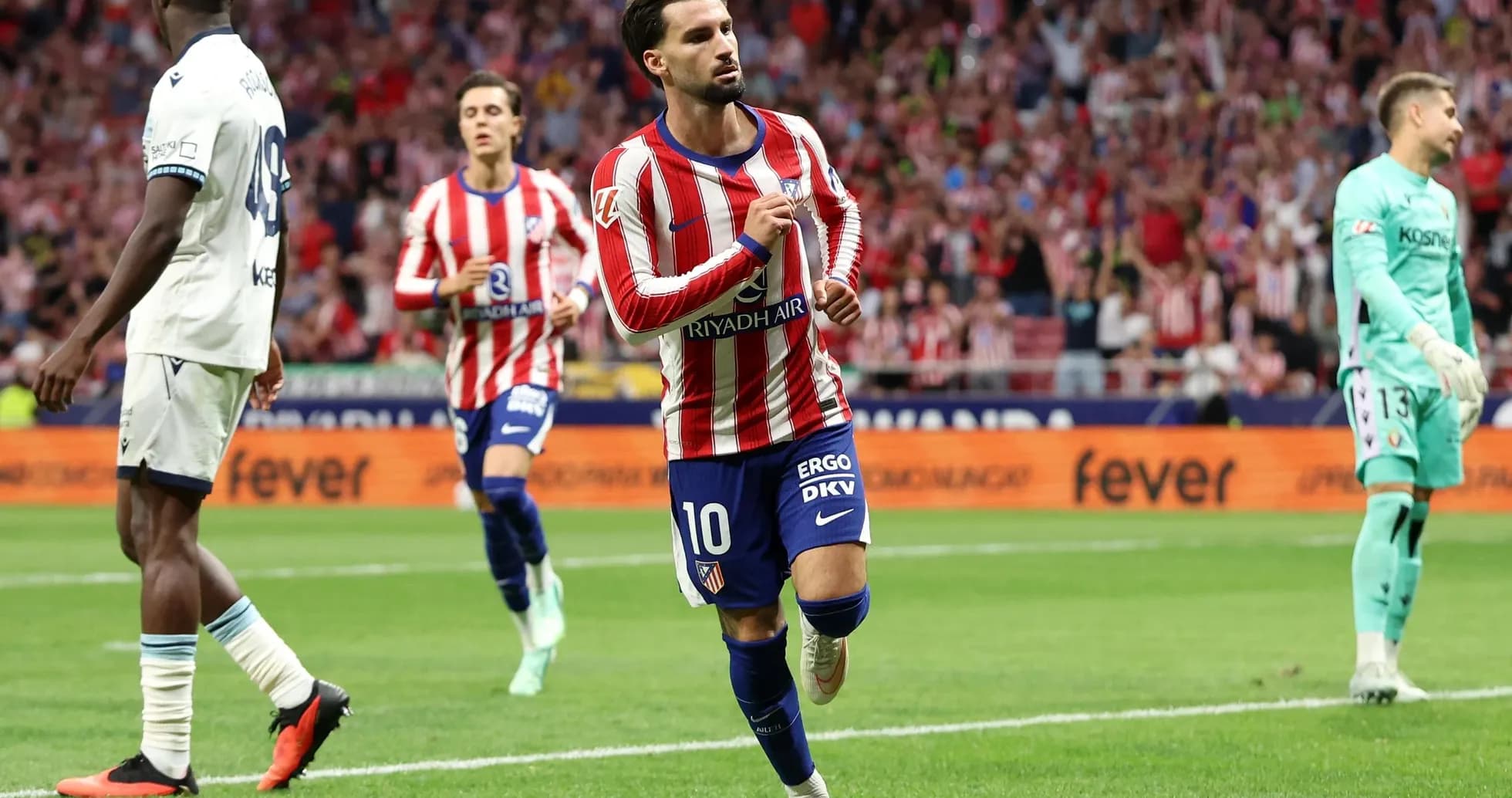
Valencia's Tactical Masterclass: Defeating Sevilla 2-0
At Estadio Ramón Sánchez Pizjuán, Valencia beat Sevilla 2-0 in a La Liga regular-season fixture, a controlled away performance built on compact defending and ruthless first-half finishing. Both sides lined up in 4-3-3, but Carlos Corberan’s team executed their plan with far greater clarity: absorb pressure, spring quickly through the front three, and punish Sevilla’s unstable defensive structure. Despite having 59% possession and more total shots, Sevilla lacked penetration and were repeatedly funneled into low-value efforts. Valencia’s superior xG (1.81 to 0.4) and disciplined mid-block underpinned a win defined by efficiency and defensive resilience rather than volume of attacks.
Scoring Sequence & VAR
The match opened with Sevilla trying to assert themselves through patient buildup from the back, using Nemanja Gudelj and Kike Salas to progress play while full-backs G. Suazo and C. Azpilicueta pushed high. Valencia initially sat in a 4-1-4-1 defensive shape out of possession, with H. Duro leading the press and A. Almeida stepping out to disrupt Sevilla’s pivots.
The breakthrough came in the 38' minute. After Sevilla lost their defensive balance following the earlier substitution of Azpilicueta, Valencia exploited the right channel. A direct sequence found H. Duro in space, and he finished clinically for 1-0. The goal crystallized Valencia’s plan: quick, vertical attacks targeting the gaps behind Sevilla’s advanced full-backs.
On 45', Valencia doubled their lead. A swift move down the left saw L. Rioja receive and drive at Sevilla’s back line before feeding L. Ramazani, who attacked the inside channel and finished for 2-0. The timing of the goal was brutal for Sevilla, turning a manageable deficit into a structural crisis just before the interval. The score was 2-0 at the break.
There were no VAR interventions, no disallowed goals, and no penalty incidents. The scoreboard stayed fixed through a goalless second half, with Valencia content to manage space and tempo rather than chase further goals.
Tactical Shifts & Personnel
Both teams started in 4-3-3, but the interpretation of the shape diverged sharply. Sevilla’s front three of R. Vargas, Neal Maupay, and A. Sanchez tried to stretch the pitch horizontally, while the midfield trio of J. Sanchez, L. Agoume, and D. Sow looked to circulate and step into half-spaces. Valencia’s midfield triangle of J. Guerra, G. Rodriguez, and A. Almeida, however, screened lanes superbly and forced Sevilla into predictable wide deliveries and shots from distance.
The first key adjustment came early from Valencia. At 26', J. Vazquez came on for J. Gaya. This forced a reshuffle in the back line but did not alter the defensive principles: narrow central lanes, aggressive stepping from the center-backs, and protection of the box. The change hinted at Valencia’s willingness to prioritize defensive stability even at the cost of some buildup fluency.
Sevilla reacted before halftime. At 37', A. Adams came on for C. Azpilicueta, effectively pushing Sevilla into a more aggressive posture with extra attacking thrust on the flank and increased central responsibility for Gudelj and Salas. The back line became more vulnerable to transitions, and Valencia’s first goal arrived one minute later, exploiting precisely that loosened structure.
Matias Almeyda went all-in at the break. In a triple move at 46', B. Mendy came on for L. Agoume, I. Romero came on for A. Sanchez, and J. A. Carmona came on for J. Sanchez. Mendy offered more vertical passing and late runs, Romero added directness and depth in the forward line, and Carmona provided energy from the back. The intention was clear: raise tempo, attack second balls, and pin Valencia deep.
Despite Sevilla seeing 5 of their shots blocked by the Valencia defense, their persistence never translated into high-quality chances. Valencia’s box defending was exemplary: the center-backs and screening midfielders consistently stepped into shooting lanes, keeping most of Sevilla’s 13 shots to low xG efforts.
Valencia refreshed their own attacking line intelligently to maintain a counter threat without losing structure. At 66', L. Beltran came on for L. Ramazani, and at 67', U. Sadiq came on for H. Duro. These moves kept Sevilla honest in transition; Sadiq’s presence offered an outlet to hold the ball and win fouls, while Beltran added work rate and ball retention in midfield.
Sevilla’s final attacking roll of the dice came as the pressure phase intensified. At 71', Oso came on for R. Vargas, and at 73', Castrin came on for D. Sow. This tilted Sevilla even more toward a direct, cross-heavy approach, with extra defensive legs at the back to guard against counters while the front line rotated positions to find space.
Valencia then closed the game with further control substitutions. At 80', D. Lopez came on for A. Almeida, and at 89', Pepelu came on for J. Guerra, adding fresh legs and composure in central areas to see out the result.
Disciplinary events subtly shaped the intensity but not the structure. L. Agoume’s yellow card at 28' for a foul constrained his ability to press aggressively from midfield and may have contributed to Sevilla’s caution in central duels. For Valencia, L. Beltran’s booking at 74' for a foul reflected the increased defensive workload as Sevilla pushed numbers forward. Neal Maupay’s yellow card at 90+5' for argument symbolized Sevilla’s frustration more than any tactical shift.
The Statistical Verdict
The numbers align with the tactical story. Sevilla had more of the ball (59% possession), more total shots (13 to 9), and more passes (494 to 351) with better accuracy (84% to 76%). Yet their xG of 0.4 exposes how sterile that dominance was. Valencia, with only 9 shots, generated 1.81 xG, reflecting the quality and centrality of their chances, especially in the first half.
Sevilla’s two shots on target and limited penalty-area penetration underline their inability to convert territorial control into real threat. Valencia’s 4 shots on target, combined with sharp execution from H. Duro and L. Ramazani, delivered a two-goal cushion they never looked likely to surrender.
Ultimately, Valencia prevailed through superior efficiency and defensive resilience. Their compact mid-block, intelligent blocking of shooting lanes, and well-timed transitions maximized their attacking actions. Sevilla’s structural gambles, constant reshuffles, and reliance on volume over quality left them exposed early and blunt late, turning possession into an empty statistic rather than a platform for comeback.