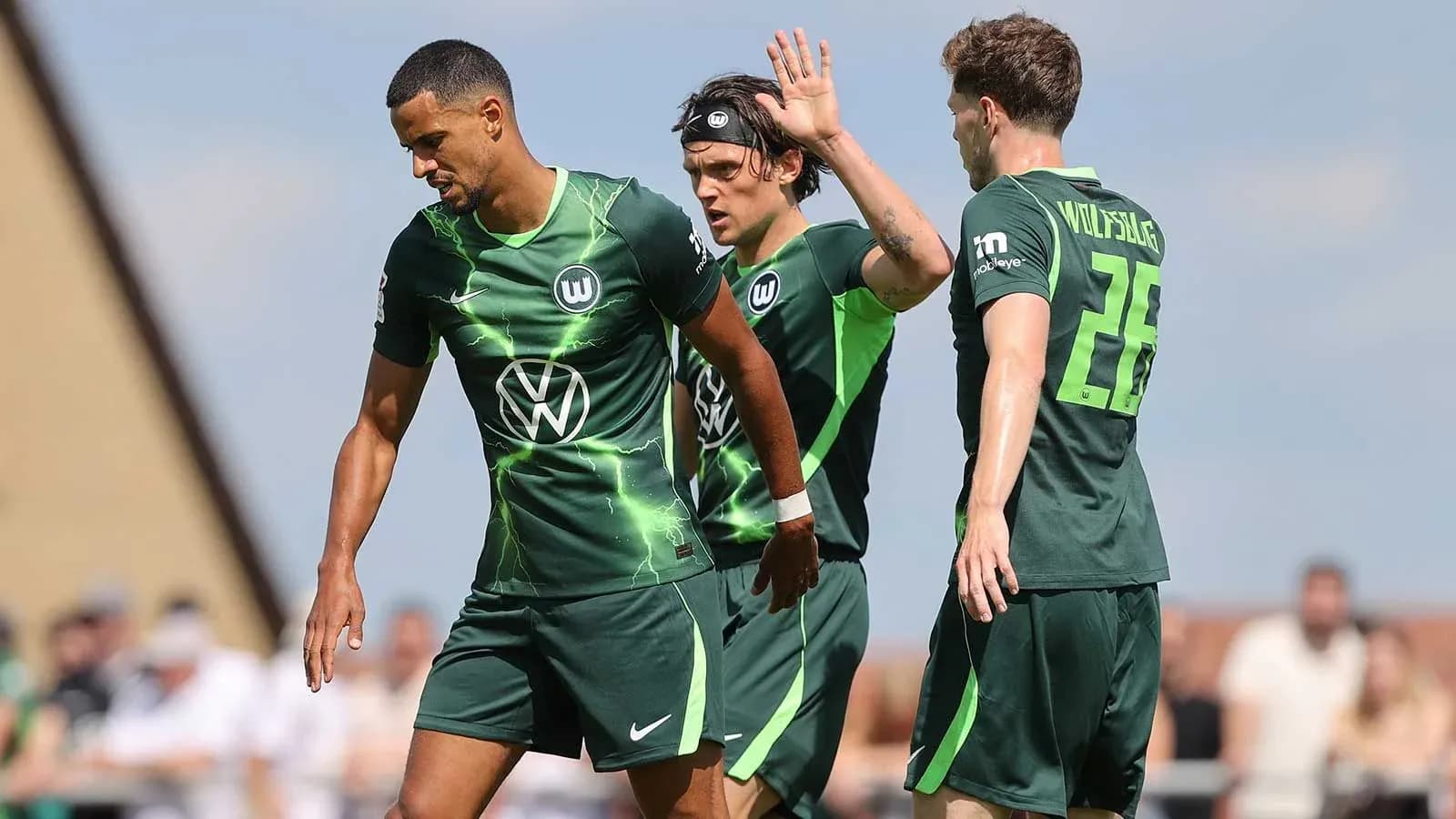
VfL Wolfsburg's Ambitious Transfer Strategy in 2. Bundesliga
VfL Wolfsburg were supposed to fall. Instead, they’ve landed on a cushion stuffed with cash and ambition.
Relegation from the Bundesliga usually means belt-tightening, painful goodbyes and a long, nervous look at the balance sheet. For Wolfsburg, it has meant something else entirely: a transfer campaign on a scale the rest of the 2. Bundesliga can only watch from a distance.
They have already invested 22.7 million euros in new players this summer. The other 17 clubs in the division, combined, have spent just under 19 million in disclosed fees. One club outspending an entire league. In Germany’s second tier.
That isn’t just a quirk of the market. It’s a power statement.
Reese as the symbol of a new reality
No transfer captures the imbalance quite like Fabian Reese’s.
Eight million euros to Hertha BSC for their captain, their figurehead, their symbol of a new, more grounded Berlin. Reese was not just one of the outstanding players in the 2. Bundesliga in recent seasons, he was Hertha’s emotional anchor.
Ninety-one competitive games, 35 goals, 31 assists. A player who dragged Hertha through turbulent years and became the face of a club trying to reconnect with its city after chaos and mismanagement.
Last November, Hertha staged his early contract extension as a manifesto. Reese signed on until 2030. Sporting director Benjamin Wieber declared it no secret that they wanted to tie “Fabi” down long term. The message was unmistakable: this was not just another contract. This was identity, continuity, a public vow.
Reese himself spoke of Hertha as the club closest to his heart, of big plans in Berlin. The deal felt like a rare thing in modern football – a commitment that seemed to stretch beyond the usual business logic.
Less than a year later, that story has been ripped up. Not by Bayern, not by a Premier League side, but by a direct 2. Bundesliga rival.
Wolfsburg put eight million euros on the table and took the player Hertha had presented as the face of their future. For many in Berlin, this is not the routine pain of losing a key man. It is the loss of a symbol, a bond, a promise. And he is going to a club that, in terms of image and structure, could hardly be further from what Hertha want to be.
Sportingly, Hertha lose one of their best players without having brought in a single new signing. Emotionally, they lose an identification figure. Wolfsburg gain both – and underline, with one transfer, the financial chasm inside the division.
A squad built like a promotion machine
Reese is only the headline act. The supporting cast tells the same story.
Fraser Hornby arrives from SV Darmstadt 98 for four million euros – another direct rival stripped of a key player. Muhammed Damar joins from TSG Hoffenheim. Hauke Wahl comes in from a relegated Bundesliga club for 1.8 million euros.
Robert Glatzel costs only around 1.7 million euros, but his signing speaks loudly in another currency: wages. More than 180 second-division appearances, a proven double-figures striker at this level, and a profile that many 2. Bundesliga clubs could never afford to pay over a long contract. Wolfsburg can.
They are acting in the second tier exactly as they did in the first. Big fees. Big salaries. Established professionals.
This is happening even as main backer Volkswagen wrestles with an almost existential crisis and the prospect of up to 100,000 jobs being cut. Out on the factory floor, the talk is of restructuring. At the training ground, Wolfsburg keep spending.
They pay 700,000 euros to SC Freiburg for Swiss centre-forward Alessio Besio, a 22-year-old who did not make a single professional appearance for Freiburg and spent last season on loan at third-division Verl. Timon Wellenreuther arrives from Feyenoord for around one million euros, only to be ruled out for weeks with a knee injury. Elvis Rexhbecaj joins on a free from FC Augsburg, bringing more than 150 Bundesliga games of experience with him – another move that, even without a fee, would stretch the limits of many 2. Bundesliga budgets.
This is not a youth project. The 2009 German champions are assembling a promotion squad, stacked with players who have already proved they can perform either in the Bundesliga or at the top end of the second division.
The scale becomes even clearer in comparison.
Schalke 04, in the 2025/26 second-division season, generated around 8.75 million euros in transfer income and spent just 3.4 million. They finished with a surplus of 5.35 million euros. Their most expensive signing? Christian Gomis, at 1.5 million.
Fabian Reese alone cost Wolfsburg more than twice Schalke’s entire transfer outlay that summer.
Hamburger SV, before their promotion in 2024/25, also worked on a completely different level to Wolfsburg’s current approach. HSV spent around nine million euros on new players, brought in about three million, and their record signing, Alexander Rossing-Lelesiit, cost 2.8 million.
Hannover 96? Eleven million euros in sales in 2025/26, just 4.33 million spent, a surplus of around 6.68 million.
Wolfsburg are playing a different financial game.
Spending big – but not burning money
And yet, this is not simply a case of a relegated club turning on the tap and drowning the league in money.
The Wolves have sold well. Patrick Wimmer to TSG Hoffenheim for around ten million euros. Jakub Kamiński to 1. FC Cologne for 5.5 million. Lovro Majer to AEK Athens for roughly six million. Around 24 million euros in income so far – slightly more than they have spent.
On paper, they have even posted a small transfer surplus during this supposed spending spree.
That matters. Wolfsburg are not being artificially inflated by some new injection of cash. They are recycling their own transfer income straight back into a squad designed for an immediate return to the Bundesliga. The special status lies less in their net spend and more in the simple fact that they can reinvest every euro at this level without blinking.
There is precedent. When VfB Stuttgart went down in 2019/20 and chased immediate promotion, they spent heavily too: around 25.4 million euros on new players. Silas alone cost eight million from Paris FC, Sasa Kalajdzic around six million from Admira Wacker.
Stuttgart’s scale was even bigger than Wolfsburg’s is now. But they also sold players for around 79.5 million euros, ending that window with a colossal surplus of more than 54 million. Heavy investment, but on the back of a fire sale.
Wolfsburg, by contrast, are operating with more moderate sales – and still signing like a Bundesliga club.
Last season they already showed the pattern. Around 37 million euros brought in, about 68 million spent. A transfer deficit of just under 31 million euros. Vinicius Souza cost around 15 million from Sheffield United. Mohamed Amoura, made permanent from Union Saint-Gilloise after a loan, came in at roughly 14.75 million.
For Wolfsburg, million-euro transfers are routine. The only thing that has changed is the backdrop.
In the Bundesliga, they were one of many clubs working in that financial bracket, jostling with Bayern Munich, Borussia Dortmund, Bayer Leverkusen, RB Leipzig and others who regularly invest eight-figure sums in single players. In the 2. Bundesliga, the same model collides with clubs whose entire transfer budget is sometimes lower than the fee Wolfsburg have just paid for Fabian Reese.
The numbers haven’t changed. The context has. That’s why they feel so stark.
The Bayern of the second tier – and then some
Look at the squad values and the picture sharpens.
Reese, Hornby, Glatzel, Wahl, Rexhbecaj, Wellenreuther – the pattern is clear. Wolfsburg want to make this a one-year detour in the 2. Bundesliga. Nothing more.
Key players such as Amoura have stayed on board despite relegation. According to transfermarkt.de, Wolfsburg’s squad is valued at 194.15 million euros. That figure would place them ninth in the Bundesliga.
In the 2. Bundesliga, the nearest challenger is fellow relegated side FC St. Pauli at 45.93 million euros. Roughly 4.5 times less.
To call Wolfsburg the Bayern Munich of the second tier would actually be flattering to the competition. Bayern’s squad, at around 1.07 billion euros, is not even worth twice as much as RB Leipzig’s (currently 604 million). Dortmund are still buying.
Wolfsburg, by contrast, are operating on a completely different financial planet to most of their new rivals.
Only once the season starts will we see whether this disparity turns into a genuine distortion of competition or “just” a massive sporting advantage. The table will decide that, not the balance sheet.
But one thing is already beyond debate: in a league built on tight budgets and careful planning, VfL Wolfsburg are moving money in a way that belongs to another world. The question now is not whether they can afford to go up.
It’s what it will mean for the 2. Bundesliga if they don’t.