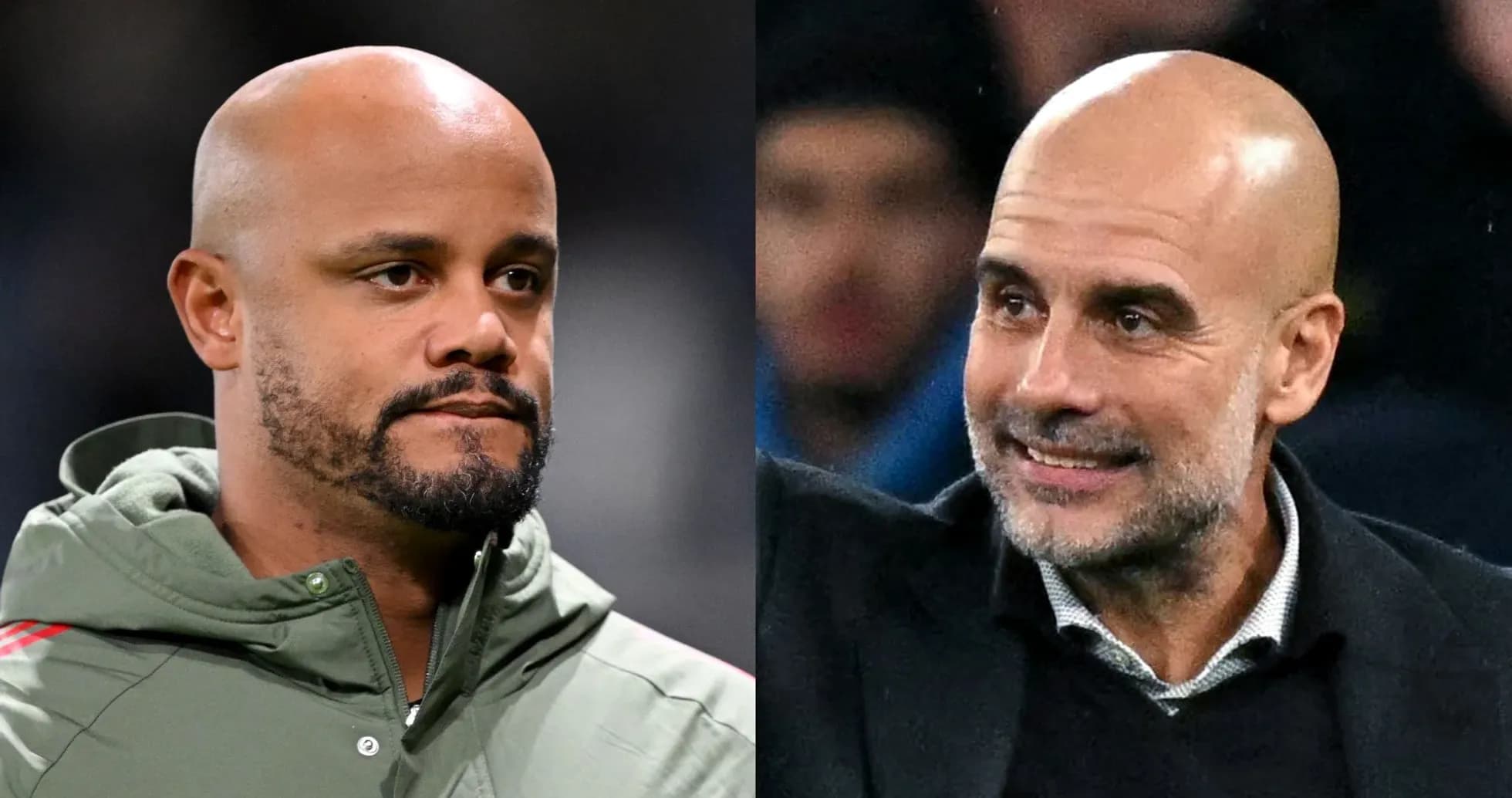
Vincent Kompany: Bayern Munich's Gamble Paying Off
Max Eberl knew the idea would raise eyebrows. A coach fresh from relegation with Burnley, handed the keys to Bayern Munich? At the Allianz Arena, where every season is supposed to end with a trophy parade, that sounded more like a risk than a plan.
Inside the club, doubts piled up. Vincent Kompany’s name sat on the list, but never at the very top. Bayern had spent months chasing the usual giants of the dugout, only to be turned away.
So Eberl reached for the one opinion that could cut through the noise.
A call to Pep
The sporting director laid out the turning point in an interview with German broadcaster ZDF. When the debate around Kompany reached its most delicate stage, he turned to a man who knew both Bayern and the Belgian better than anyone.
"When the question came up whether we were really sure," Eberl recalled, he turned to Karl-Heinz Rummenigge. “‘Kalle, you're so close to Pep, aren't you? Call him and ask what he thinks of Kompany.’ That was the breakthrough.”
Pep Guardiola’s word carried the weight of a decade of dominance. If he vouched for Kompany’s character and potential, the conversation changed. Suddenly, this wasn’t about a coach who had just gone down with Burnley. It was about a former captain who had lived inside Guardiola’s demanding world at Manchester City, a leader trusted in the most exacting environment in club football.
The internal hesitation at Säbener Straße began to crack.
Not the first choice – but the right one
Eberl has never pretended Kompany was the club’s initial dream appointment. Far from it. Bayern’s search after Thomas Tuchel’s departure ran through the usual constellation of heavyweight names.
"I did get the feeling that there were initially some question marks and surprise when I put forward the name [Kompany]," Eberl admitted. The club had already absorbed a string of rejections. Julian Nagelsmann was a serious option. Talks were held with Ralf Rangnick. Oliver Glasner’s name came up. Inside and outside the club, there were voices calling for Hansi Flick to return.
"We don't need to beat around the bush about that," Eberl said. "As I have said before: Vincent Kompany was indeed already on our list. But to be honest – and I am being completely open about this – I didn't dare propose Vincent Kompany first. Instead, we first approached top coaches with name and fame."
Only when those doors closed did Bayern return to the 40‑year‑old whose managerial pedigree was being questioned across Germany. The appointment was branded a gamble. To some, it looked like Bayern had run out of options.
They hadn’t. They had finally decided to trust their conviction.
Silverware as an answer
The response has come on the pitch, and it has come quickly. Kompany has delivered successive Bundesliga titles and a German Super Cup, restoring the sense that Bayern do not just compete – they suffocate rivals over the course of a season.
Results have been matched by a shift in mood. The squad looks harder, more stubborn, less inclined to fold when a game turns ugly. That resilience has become part of Kompany’s signature in Munich.
One match in particular captured it. Against Mainz, Bayern were a mess in the first half, 3-0 down and staring at humiliation. The dressing room at the break was never going to be a quiet place.
Midfielder Leon Goretzka later pointed to the manager’s forceful nature in that moment. The players, he said, received a proper blast. Not a gentle reset. A jolt.
Kompany himself framed the turnaround in terms that went beyond tactics. Passion over patterns. Emotion over diagrams on a whiteboard.
“I’ve experienced moments like that myself during my career, I’ve been in that dressing room when it’s 3-0 down at the break, and it feels like the game is over," he said. "But you have to channel anger, refuse to accept defeat, then go full throttle and keep pressing the opposition until the final minute. That’s exactly what the lads did.”
The comeback underlined why Bayern trusted him. Kompany is not just a strategist; he is a former elite defender who has lived through title races, collapses, and late surges. He understands what a dressing room needs when the season hangs in the balance.
Europe calling
With the domestic job done again, Kompany’s Bayern now stare at the one stage that defines legacies in Munich: the Champions League. They have fought their way to the semi-finals, where Paris Saint‑Germain wait in a tie loaded with narrative and pressure.
Win that, and the final will bring Arsenal or Atletico Madrid. Either opponent would offer Kompany a different kind of examination – the Premier League’s resurgent challenger or Diego Simeone’s snarling, streetwise machine.
For Bayern, it is a familiar objective. For Kompany, it is something else entirely. Three years ago, he was managing in the Championship. Now he stands one tie away from a Champions League final, leading a club that measures itself only against Europe’s elite.
Eberl’s decision, once framed as a gamble, now looks like a calculated leap that landed exactly where Bayern hoped. By trusting Guardiola’s judgement and backing their own instincts, the club have turned initial scepticism into another era of control at home and a serious push abroad.
The question now is no longer whether Kompany belonged at Bayern. It is how far he can drag this new generation on nights when the whole of Europe is watching.