Wales Deaf Football: A Journey from Dreams to Reality
On a damp Friday night in Llandarcy, Wales and England’s deaf men’s sides meet again, but this is about far more than a friendly. It is the next test of a Wales team trying to drag itself back up after a brutal year – and a head coach whose own career has been shaped by both promise and pain.
From dream start to harsh reality
The modern story of Wales Deaf men’s football is barely a year old. Re-established in 2023, they burst out of the blocks: a draw with England, wins over Scotland and Ireland. Three games, unbeaten. A squad riding a wave.
Then 2024 hit.
Full of optimism, the Wales Deaf Football Association (WDFA) took a squad to Turkey for the EuroDeaf Championships. They left with four group defeats and some harsh truths. The momentum that had built so quickly had stalled just as fast.
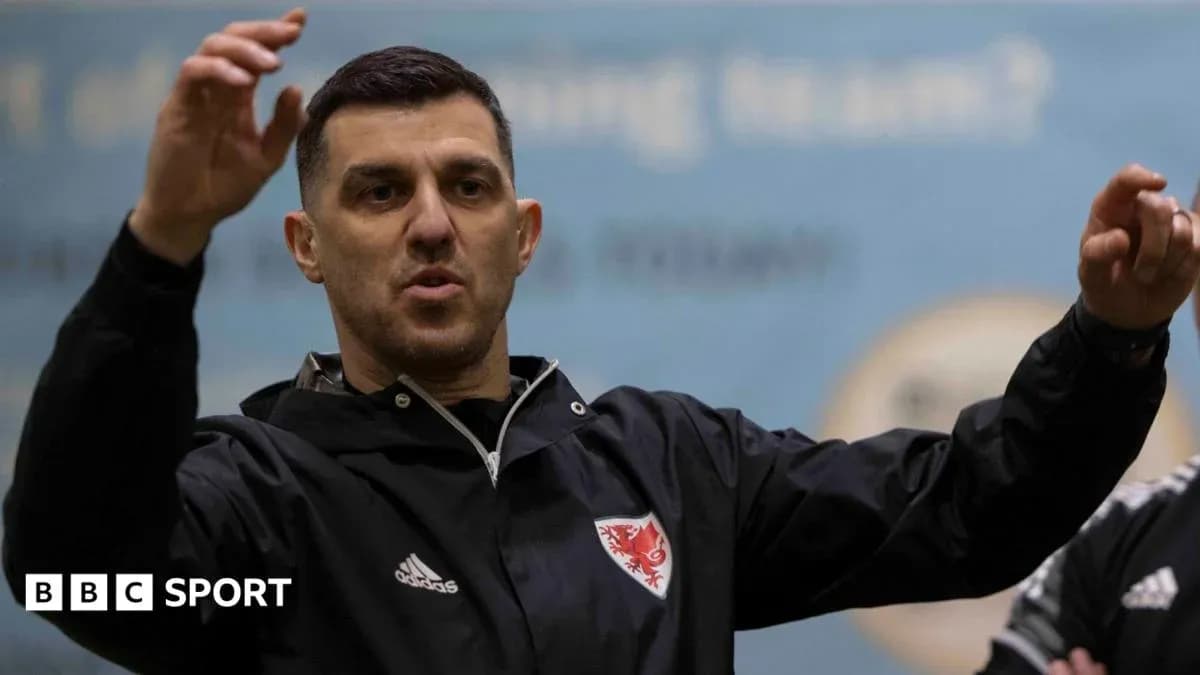
A review followed. Structures behind the scenes changed. A new head coach arrived – someone who knew the shirt, the set-up and the scars: former Wales Deaf forward James Taylor.
‘Jamo’ and the road not taken
Taylor, known as ‘Jamo’, was once a Welsh league forward with a clear target: the professional game. He had the talent. What he didn’t have was full hearing.
Total deafness in his left ear cost him dearly.
"It's probably one of the reasons that let me down in the professional world, because anything that was coming to the left-hand side, I didn't hear," Taylor said.
He had still pushed himself to the edge of the professional game. His story began at grassroots level with Afan Lido, the local club where he grew up in a winning machine.
"I started grassroots football for the local team, Afan Lido. I was fortunate to be in a successful team from the age of eight to 16. We won everything that was possible for us."
One goal changed everything. Playing for Afan Lido’s under-16s against Swansea City, Taylor found the net and caught the eye of Swansea’s scouts. Soon he was in the youth training scheme at the old Vetch Field, spending two years chasing the dream.
His youth team manager was Alan Curtis, the retired Wales forward and Swansea great. Taylor calls him a "legend and a gentleman" – and in the Taylor household, that meant something extra.
"I grew up in a Swansea sporting household. My father was a massive Swansea City supporter," he recalled.
"I was born in the morning and he was on the North Bank in the afternoon watching the Swans. His idol was Alan Curtis, so that just made my father proud as punch.
"When we went to places like Cheltenham and Bristol, we'd normally stop off and pick up my old man, and you can imagine him in a minibus with Alan Curtis driving - he chewed the ear off him!"
Taylor did make a senior appearance for Swansea, against Haverfordwest in the West Wales Senior Cup in the 1997-98 season. It was a glimpse of what might come.
It never did. A serious ankle injury wrecked his second season. The club decided not to take him on as a professional.
"They did reassure me that if I went to any team and carried on scoring goals, they'd put me back in and keep looking at me, but unfortunately, those goals died away," he said.
Taylor went back into the Welsh league, turning out for Afan Lido again, then Port Talbot, Neath and Goytre. The professional dream faded, but football didn’t. At 43, when many players are long retired, he pulled on a different red shirt and won the first of his three caps for Wales Deaf men’s team.
Baptism of fire in the dugout
In February 2026, Taylor stepped into the technical area for the first time as Wales Deaf head coach. The setting was grand – St George’s Park, the FA’s national training centre. The opponents were England. The outcome was brutal.
Wales lost 7-1.
"It hurt, and I believe it hurts harder as a manager. However, it provided a valuable benchmark for where we are as a squad," Taylor said.
That defeat stripped away any illusions. If Wales wanted to compete at the highest level of deaf football, they needed more players, more depth, more games. So the rebuild started.
In June, the WDFA staged a talent identification day at Dragon Park in Newport. More than 20 new players turned up, a sign that the badge still means something.
"It was a real success with a great turnout. There are a few new faces coming in, as well as a couple of familiar faces from old returning," Taylor said.
"The standard of football was good, the players took on board the information really well, and their attitudes and commitment were excellent."
Building towards a World Cup
There is a clear target on the horizon. Wales, like England, want to be at the inaugural Deaf International Football Association Deaf Football World Cup in Australia in November 2027. Six months after that comes the 2028 European Deaf Football Championships in Italy.
Those tournaments demand more than team meetings and training camps.
So Taylor is packing the calendar with games.
"We're not going to be going camp, camp, camp... it's only in a game when you can really see the development in the boys and the squad," he said.
Recently, Wales faced Newport Corinthians, a side from the third tier of the Welsh pyramid. It was wild, open and high-scoring. Wales lost 6-4, but the result only told part of the story.
"The thing that stood out for us against them was that our boys haven't had those minutes in their legs, where Newport Corries I'm sure have had a good pre-season," Taylor said.
Match sharpness. Rhythm. The little details that decide games. He knows his players are chasing all of that.
A statement night in Llandarcy?
Now comes England again, this time in Llandarcy on Friday night (19:30 BST). Another step up. Another measure of where Wales stand.
"We need to start making waves and noises," Taylor said.
He is not interested in empty gestures or social media gloss.
"I haven't taken on this management role just to post a load on social media. My hopes are to make Wales a force in deaf football.
"I'm only interested in the players who are 100% committed to Wales now.
"I'm not saying they haven't in the past, but maybe seeing a bit more competition coming into camp will give them that push, not only for Wales, but in their personal football journeys as well.
"That's all I ever want to do is make the players the best version of themselves on a football pitch."
From Afan Lido to the Vetch, from a lost professional dream to leading his country’s deaf team, Taylor knows how quickly football can turn. In Llandarcy, under the lights, he will find out whether Wales are finally starting to turn with it.