Washington Spirit W Dominates Bay FC in 2–0 Victory
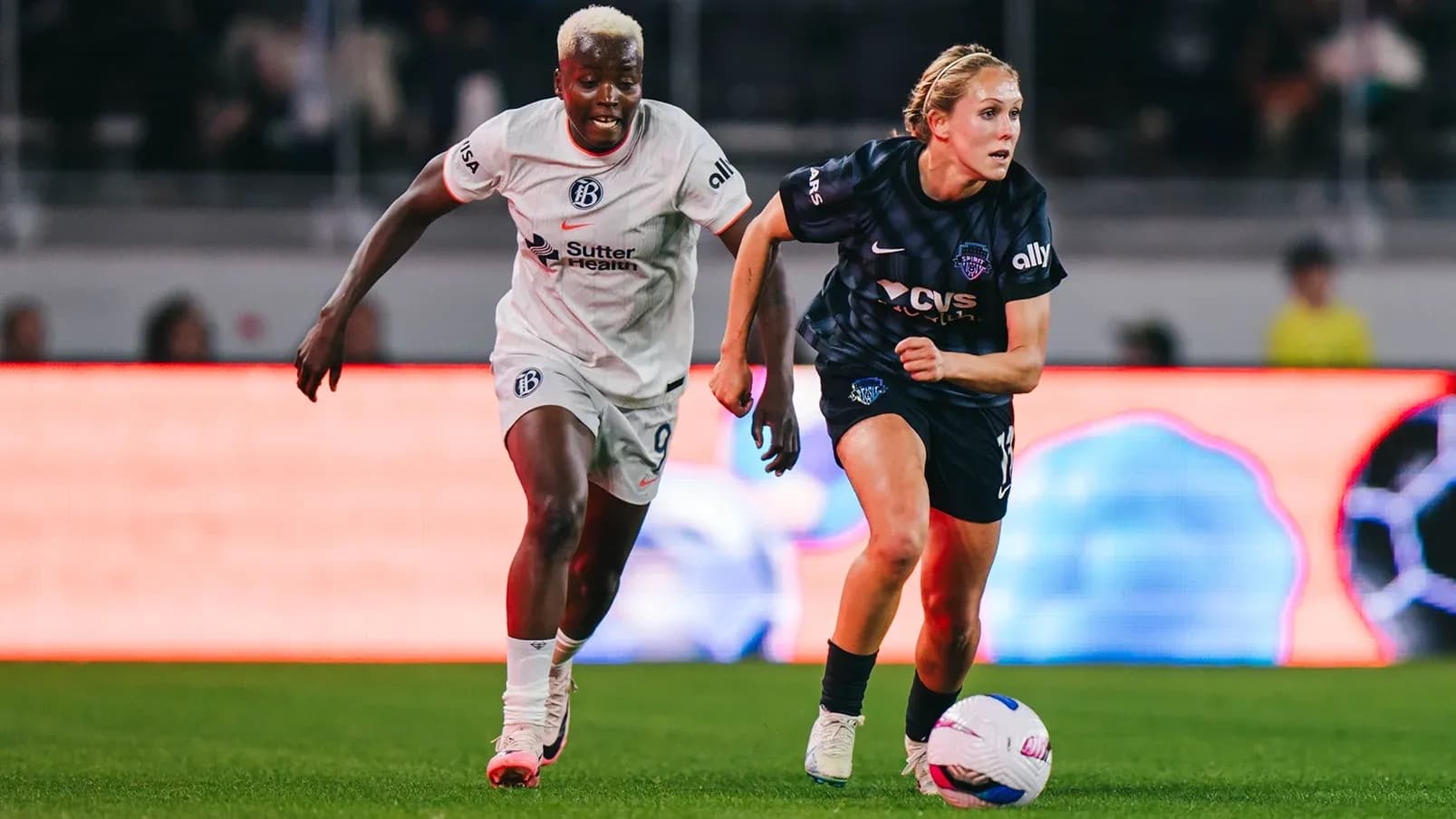
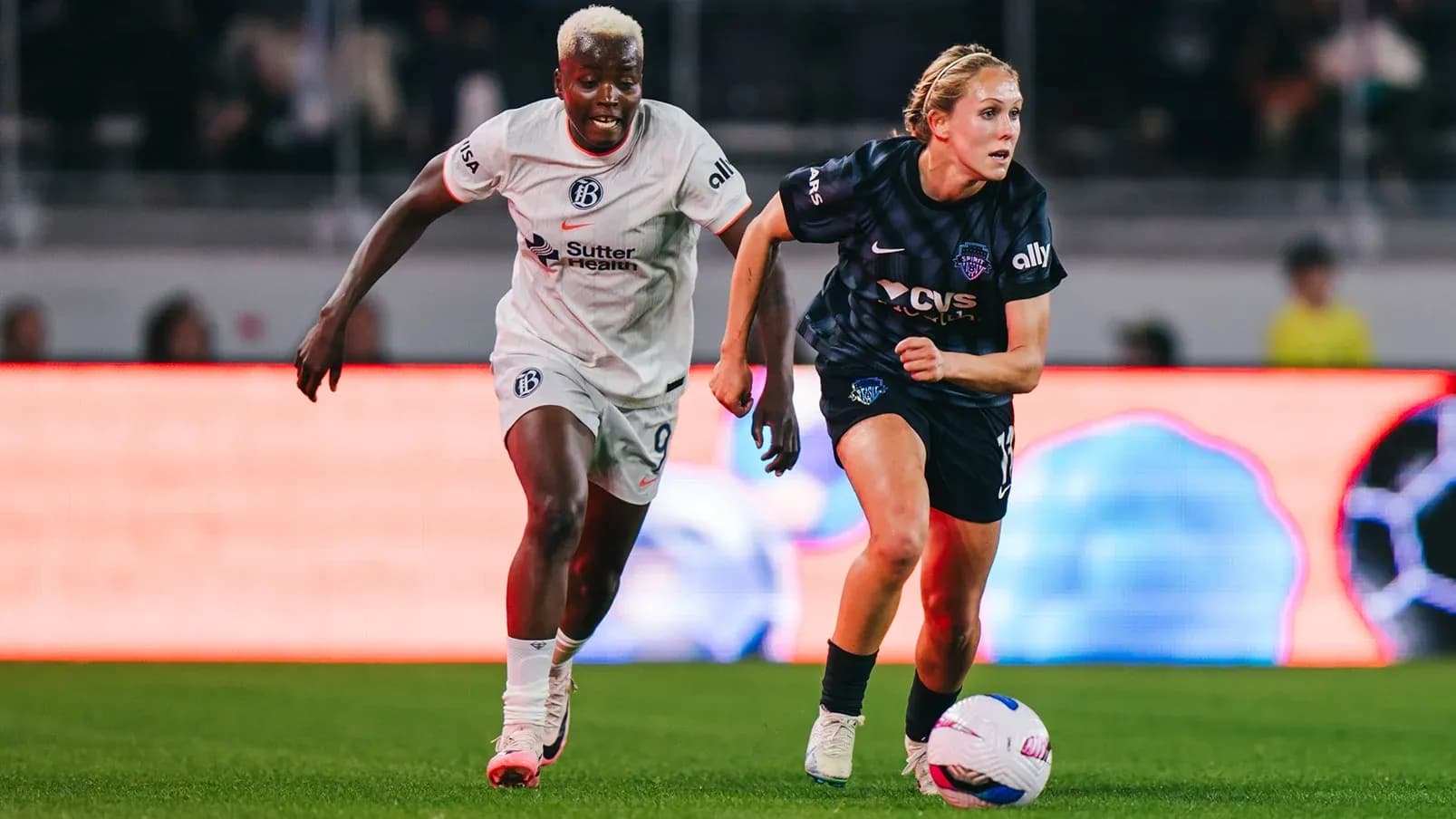
At PayPal Park, Washington Spirit W produced a controlled, territorially dominant 2–0 win over Bay FC in NWSL Group Stage play. Despite the scoreline suggesting routine superiority, the tactical story was defined by Washington’s sustained pressure versus Bay’s deep defensive block and reliance on goalkeeper J. Silkowitz. Washington’s 62% possession, 20 total shots and 12 corners reflect a match largely played in Bay’s half, while Bay managed only 6 shots and 3 corners. An own goal from B. Courtnall broke a stubborn resistance before substitute G. Monday sealed the result, with Silkowitz’s 9 saves preventing a heavier defeat.
Scoring Sequence & Disciplinary Log
The first half ended goalless, with Bay FC successfully compressing space in front of their back four and denying Washington clear central lanes despite conceding territory and set pieces. Neither side registered a goal before the interval, and there were no cards shown in the opening 45 minutes.
Adrian Gonzalez moved first, adjusting Washington’s midfield balance at 45+3' when P. Metayer (IN) came on for right-back L. Di Guglielmo (OUT), a clear signal to tilt even more control into central areas. Immediately after the restart, the forward line was freshened as C. Martinez Ovando (IN) replaced striker S. Cantore (OUT) at 46', maintaining Washington’s pressing intensity from the front.
The breakthrough arrived on 57', and it encapsulated the pattern of pressure Washington had built. Under sustained attacking play from Washington, Bay defender B. Courtnall turned the ball into her own net, registering as an own goal but effectively the product of Washington’s territorial dominance and repeated entries into the box. That made it 1–0 to Washington Spirit W.
Emma Coates responded on 60' by adding more direct threat: C. Conti (IN) came on for wide midfielder K. Barry (OUT), aiming to give Bay an outlet in transition. A double change followed on 71' to stabilize the left side and inject fresh legs: K. Lema (IN) replaced centre-forward C. Girelli (OUT), while M. Moreau (IN) came in for left-back A. Denton (OUT), slightly rebalancing Bay’s defensive line and front structure.
Washington then managed the game with experienced changes. At 76', A. Sullivan (IN) replaced deep midfielder R. Bernal (OUT), adding composure in front of the back four, and Tamara Bolt (IN) came on for advanced midfielder R. Kouassi (OUT), maintaining vertical running between the lines. On 84', the decisive second goal was prefigured when G. Monday (IN) replaced playmaker L. Santos (OUT), introducing a more direct, goal-facing profile in the No.10 band.
Bay’s last structural tweak came at 85', with D. Bailey (IN) taking over from holding midfielder H. Bebar (OUT), a late attempt to push an extra runner from midfield. But Washington’s control was rewarded almost immediately: at 86', G. Monday scored a normal goal to make it 2–0, capitalizing on Washington’s sustained occupation of Bay’s defensive third.
The only booking of the match arrived at 90', when Bay FC defender Brooklyn Jean Courtnall received a yellow card for a foul, capping a difficult night individually after the earlier own goal.
Tactical Breakdown & Personnel
Bay FC
Emma Coates set Bay FC up in a 4-2-3-1 that functioned for long stretches as a low-to-mid block 4-4-1-1 without the ball. The back four of A. Denton, B. Courtnall, A. Cometti and S. Collins stayed narrow and compact, prioritizing central protection and ceding wide areas to Washington’s full-backs and wingers. Double pivot H. Bebar and C. Hutton sat close to the centre-backs, screening passes into L. Santos and T. Rodman between the lines.
In possession, Bay struggled to progress. With only 38% of the ball and 273 total passes (204 accurate, 75%), their build-up was sporadic. J. Silkowitz often went long under Washington’s press, looking for C. Girelli as a focal point with support from the advanced trio of K. Barry, T. Huff and A. Pfeiffer. However, Bay generated only 6 total shots (1 on goal) and no blocked shots, underlining how infrequently they reached threatening positions. Their 3 shots inside the box were isolated moments rather than the product of sustained attacking structure.
Silkowitz was central to Bay’s defensive performance. Her 9 saves were the primary reason the match remained competitive into the final stages; given Washington’s 10 shots on target, she consistently dealt with efforts from both central and wide channels. The own goal by B. Courtnall stemmed from pressure in the box rather than a systemic breakdown, but it tilted the tactical balance against a side that had little attacking margin for error.
Coates’ substitutions reflected a shift from containment to chasing the game. Introducing C. Conti for K. Barry on 60' aimed to add more direct running and counter-attacking threat from wide areas. Later, K. Lema for C. Girelli suggested a move towards more mobility and pressing from the front rather than a traditional target striker. The late swap of D. Bailey for H. Bebar at 85' was an attempt to push an extra body forward from midfield, but by then Washington’s control of territory and tempo limited Bay’s ability to leverage the change.
Washington Spirit W
Washington also lined up in a 4-2-3-1, but their version was ball-dominant and aggressive. The back line of K. Wiesner, T. Rudd, E. Morgan and L. Di Guglielmo held a high starting position, pinning Bay back and enabling repeated recycling of possession. The double pivot of H. Hershfelt and R. Bernal (later A. Sullivan and then P. Metayer joining the midfield unit) controlled central spaces, ensuring Washington could immediately counter-press after losing the ball.
Between the lines, the trio of R. Kouassi, L. Santos and T. Rodman consistently overloaded Bay’s midfield. Their movements dragged Bay’s double pivot out of shape, opening pockets for through balls and cutbacks. S. Cantore initially led the line, working across the back four, before a series of substitutions kept Washington’s front unit fresh and vertical: C. Martinez Ovando, Tamara Bolt and eventually G. Monday all contributed to sustained pressure.
Statistically, Washington’s dominance is clear: 20 total shots, 10 on goal, and 6 blocked shots compared to Bay’s 0 blocked efforts. The 12 corner kicks to Bay’s 3 underline how often Washington forced play deep into the final third. With 447 passes (372 accurate, 83%) and 62% possession, they dictated the rhythm and location of the game.
Crucially, while Washington’s goalkeeper Sandy MacIver made just 1 save, reflecting Bay’s limited attacking output, the structure in front of her minimized risk. The defensive line managed Bay’s transitions well, using early pressure on the ball-carrier and good rest-defense positions to snuff out counters before they reached dangerous zones.
The substitution of L. Di Guglielmo for P. Metayer at 45+3' subtly shifted Washington’s shape, adding another midfield presence and allowing full-backs to step higher. Later changes—Sullivan’s introduction for Bernal and Monday for Santos—were about preserving control while maintaining a goal threat. Monday’s 86' goal was the tactical payoff: a fresh, direct runner exploiting a tiring Bay block.
The Statistical Verdict
The numbers reinforce the tactical narrative. Washington Spirit W’s 62% possession, 447 passes at 83% accuracy, and 20 shots (10 on target) speak to comprehensive control of territory and tempo. Bay FC, with 38% possession and 6 shots (just 1 on target), were largely reactive and dependent on defensive resilience and goalkeeping.
Set-piece and territorial metrics are equally telling: Washington’s 12 corners and 6 blocked shots show repeated pressure on Bay’s box, whereas Bay produced no blocked efforts, underlining how seldom their attacks forced last-ditch defending. Fouls (11 by Washington, 5 by Bay) indicate that Washington were the more proactive side in counter-pressing and tactical disruption high up the pitch.
In goal, the contrast is stark but precise: Silkowitz’s 9 saves kept the scoreline at 2–0, while MacIver’s single save reflects Washington’s effective defensive structure and Bay’s lack of sustained attacking presence. With only one yellow card in the match—Brooklyn Jean Courtnall’s late booking—discipline did not distort the tactical picture. Instead, Washington’s superior structure, ball circulation and bench management translated their statistical dominance into a controlled, deserved two-goal victory.