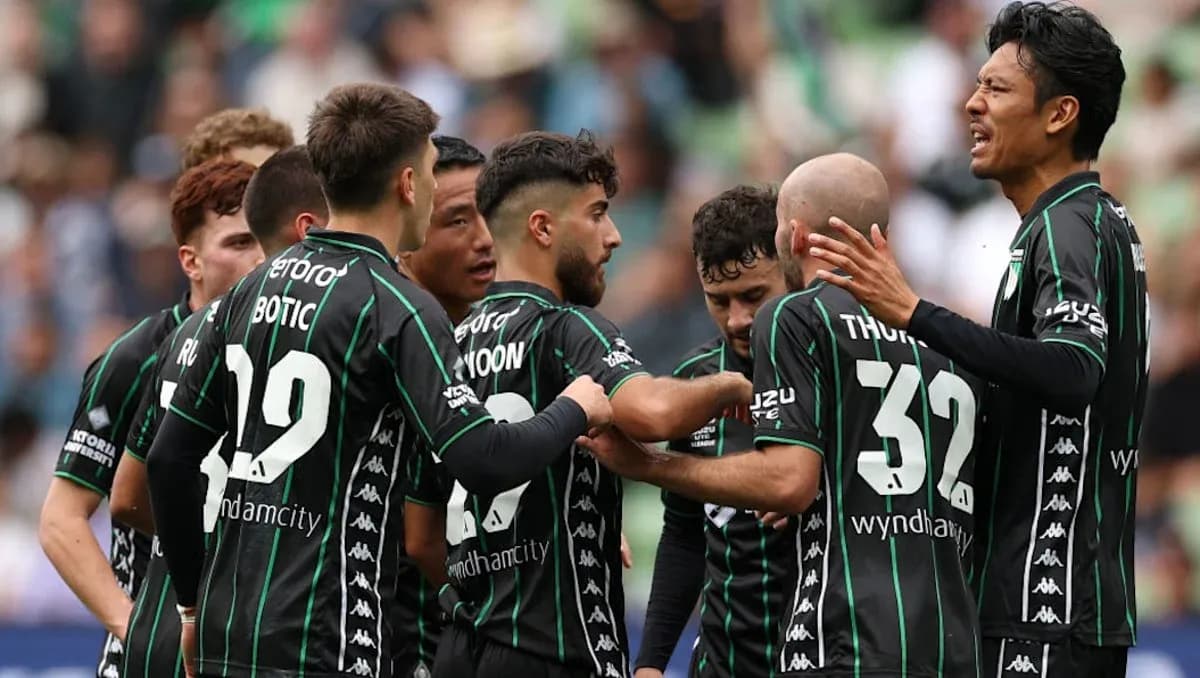
Western United's A-League Licence Terminated: A New Chapter Begins
Western United’s A-League story has officially been cut short, even as the club insists it has just begun a “new chapter”.
On Monday, the Australian Professional Leagues (APL) confirmed what had long felt inevitable: Western United’s licence has been terminated after the club was found to be “in breach of a number of its obligations” under the conditional hibernation agreement struck in September last year.
That agreement was meant to buy time. It instead became a holding pattern before the plug was finally pulled.
From hibernation to liquidation
United had spent months scrambling for a lifeline, chasing a takeover from an American investment group and exploring every possible route back into the competition. None of it landed.
The club’s fate was effectively sealed late last year when it lost its licence with Football Australia and was placed into liquidation amid a tax debt of around $15 million. Players instantly became free agents. The squad scattered. The badge remained, but only on paper.
By then, the project had already lost one of its key pillars. Coach John Aloisi, who had led Western United to its greatest on-field moments, departed in January to take charge of Chengdu Rongcheng FC in China, a move that underlined how uncertain things had become in Melbourne’s west.
APL calls time
The APL’s statement drew a line under Western United’s immediate involvement in both the A-League Men and Women.
They noted the club had worked to navigate “financial, governance and legal matters to try and rebuild”, but the breaches of the hibernation agreement left no room to manoeuvre. The competition had to move on.
“It’s been a difficult period for everyone connected to Western United - and we want to acknowledge the management, staff, players and especially the fans - who have given so much to the club and will no doubt be hurt by this news,” APL chairperson Stephen Conroy said.
The message was clear: the league recognised the effort and the emotional toll, but the numbers and the missed obligations told their own story.
Club turns to the future
Within hours of the APL announcement, Western United tried to reclaim the narrative.
“Today marks a significant moment in our history and the beginning of a new chapter,” the club said in a statement that leaned firmly into the idea of rebirth rather than demise.
United stressed that recent months had been spent working with the APL on “a pathway that gives the club the best opportunity to survive, rebuild and return to the A-League under new ownership”.
The licence may be gone, but the club is determined that the identity survives.
“This creates an opportunity for new custodians, new investment and a fresh start,” the statement continued. The stated target: a return to the A-League for the 2027/28 season.
Identity on the line in Melbourne’s west
For now, Western United exists as an idea more than a team: colours, memories and a promise that this is a reset, not a funeral.
The club has made it clear what comes next must be built on firmer ground. It flagged a push to find a sustainable model in partnership with the APL, Wyndham City Council, various levels of government, prospective owners and the wider football community.
“The objective must now be to preserve Western United’s identity in Melbourne’s west and work towards a return to the A-League for the 2027/28 season,” the club said, before adding a line that will resonate with every supporter who has ridden out the turmoil:
“This should not be the end of Western United. It should be the reset that allows the club to rebuild and return stronger.”
The licence is gone. The debt is real. The squad has dispersed.
What remains is a challenge that Australian football has wrestled with for decades: can a club stripped back to its bare bones truly come back stronger, or does this “new chapter” become the final one?