World Cup 2023: Drama, Giants, and a 40-Year-Old Hero
In a tournament stuffed with goals and plot twists, one game kept coming back in conversation: Paraguay 1-1 Germany, settled by a shootout that tore up the script. Germany do not lose penalty shootouts. Not in the mythology, not in the nightmares of their opponents. Yet here, in a last‑32 tie thick with tension, they did – and they did it spectacularly. A staple of World Cup certainty suddenly vanished in a few kicks from 12 yards.
Not that it was the only night when football felt unhinged. Algeria 3-3 Austria played out like a fever dream, a match that seemed to float just above reality. The expectation beforehand was a biscotto – a gentle, mutually beneficial draw that nudged both sides through. For a long stretch in the second half, it looked precisely that: sterile, pre-arranged, forgettable. Then stoppage time detonated. Chaos, goals, and a result that shredded the script everyone thought they’d read in advance.
Mexico 2-3 England at the Azteca carried a different kind of weight. The build-up started the moment the draw spat it out. The stadium, as monumental as its legend, delivered a soundtrack that rattled the ribs. Thomas Tuchel’s England survived Mexico’s best first half, a storm of noise and pressure, to carve out what many will remember as their greatest away win. It was gripping, fraught, and utterly exhausting – a night when the Azteca felt like the centre of the sport again.
England were also dragged into another wild ride: France 4-6 England, a scoreline that bordered on farce. Goals flew in with comic regularity. Defending appeared optional. It was football as pure entertainment, ridiculous and riveting in equal measure.
Elsewhere, the drama took on a different tone. Egypt 1-1 Iran in Seattle turned into a late‑game siege. Iran had a stoppage‑time winner chalked off, then twice rattled the woodwork in the dying minutes. The draw left them unbeaten but eliminated, another team who had to fight not just opponents but the weight of obstacles off the pitch.
Argentina, as ever, lived on the edge. Their 3-2 win over Egypt in the last 16 felt like a title defence slipping into the abyss. Two goals down, seemingly already thinking about flights home, they were hauled back by Lionel Messi, who orchestrated a comeback that restored order – just – in normal time. The defending champions survived, but only after brushing against disaster.
That was not even their strangest brush with peril. Argentina 3-2 Cape Verde became one of the tournament’s defining spectacles. The minnows refused to bow, and Sidny Lopes Cabral bent in an equaliser that stopped time. It was improbable, audacious, unforgettable. For some, it was the match of the World Cup. For others, England 1-2 Argentina – more familiar, more predictable in its emotional beats – tugged harder at the memory.
Cape Verde’s 2-2 draw with Uruguay in Miami added another layer to their fairytale. Their discipline and attitude turned what might have been a routine win for a heavyweight into a superb contest, the kind that quietly wins hearts.
And then there was “the game no one wanted to play” – Argentina 3-2 Egypt, revisited in the minds of those who saw it as a burden and a blessing. A fixture loaded with narrative baggage, settled by the old master refusing to let the story end early.
Rodri, Vozinha and a cast of stars
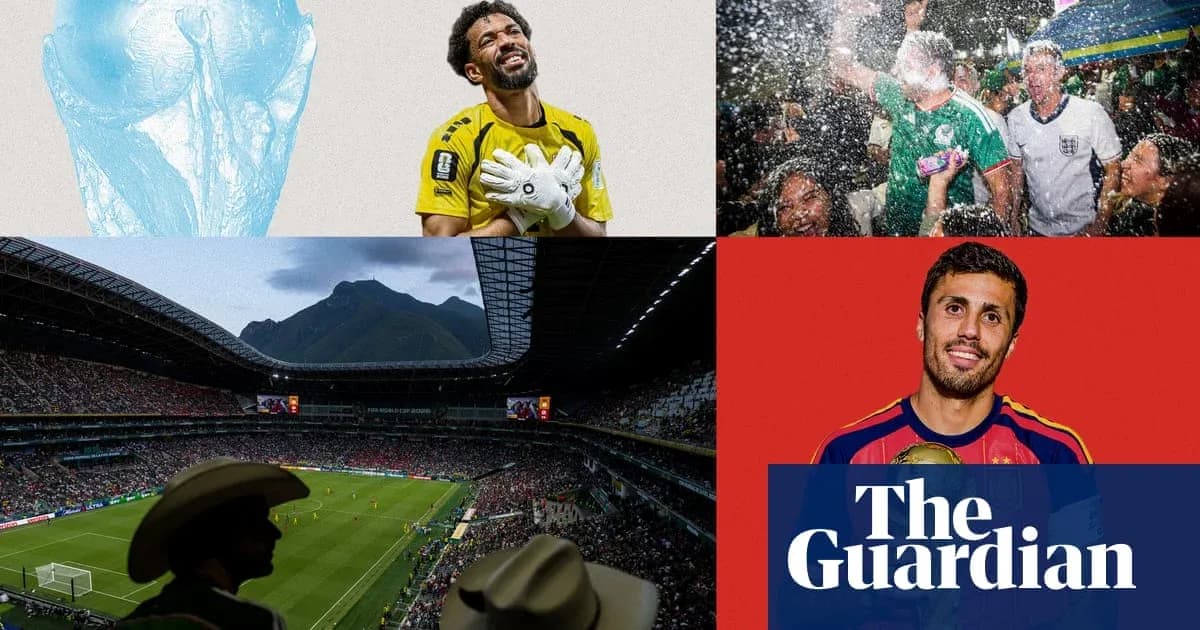
On a stage crammed with marquee names, one figure stood tallest. Rodri, the metronome of Spain’s midfield, emerged as the outstanding player for the best team of the tournament. As Spain drifted back towards a possession-heavy identity, he dictated everything: tempo, territory, the emotional temperature of matches. Capitán, líder, leyenda – and, crucially, the calm at the heart of chaos.
Kylian Mbappé’s Golden Boot owed something to an absurd third‑place game, but the France forward still burned brighter than most, spearheading a side that looked like the class of the field until Spain cut them down in the semi-final. Lionel Messi, even in the autumn of his career, remained a gravitational force. His late‑game interventions – not least in that Egypt comeback – turned matches and reminded everyone why his every World Cup touch still feels like an event.
Erling Haaland left with a different kind of legacy. He powered Norway into a historic quarter-final run, his goals providing both a credible Golden Boot push and a statement of intent for a nation unused to this stage. His second against Brazil, drilled low into the corner from distance, summed him up: ruthless, precise, with just enough swagger to feel inevitable.
Jude Bellingham drove England through their best moments under Tuchel, a presence so commanding it made earlier doubts over his selection look absurd. Michael Olise dazzled as well, even if his failure to complete a hat-trick against England lingered as a what‑if.
And then came the stories that tournaments like this need. Vozinha, Cape Verde’s 40‑year‑old goalkeeper, turned into a cult hero. Without a club, but with a string of performances that defied both age and expectation, he frustrated giants and anchored a debut campaign that felt like an actual fairytale rather than a manufactured slogan. Pau Cubarsí announced himself for Spain. Roberto “Pico” Lopes, putting his body on the line for Cape Verde and Shamrock Rovers, played as if every tackle might change his life.
Rodri still walked away as the rightful Golden Ball winner. Yet the World Cup belonged as much to those who turned their fleeting window into something unforgettable.
A goal that stopped the world
Some tournaments produce debates over the best goal that rage for years. This one had a near-consensus.
Sidny Lopes Cabral’s equaliser for Cape Verde against Argentina was the moment that rewired the competition. A long-range strike hit with outrageous conviction, it curled past a fully stretched Emi Martínez and into the far corner, a shot that seemed to drag the ball through the air by sheer force of will. The context made it even bigger: extra time, knockout football, a minnow refusing to die. His reaction – hands to head in disbelief before he picked out his girlfriend in the crowd – turned a wonder goal into a human story.
Writers kept returning to it. Some exempted it from their nerdy dissections of ball physics and “drag crisis”. Others admitted they could never reproduce the noise they made as it hit the net. For many, it was simply one of the great World Cup goals.
Yet it did not stand alone. Eldor Shomurodov’s instinctive lob for Uzbekistan against DR Congo, from a tight angle that made no sense until the ball dropped in, deserved its own spotlight. Julián Álvarez, largely quiet across the tournament, unleashed a vicious, swerving long‑range effort in extra time against Switzerland that lit up Kansas City. Kerim Alajbegovic, just 18, slalomed through defenders for Bosnia and Herzegovina before blasting in off balance against Qatar, a goal that confirmed the pre‑tournament buzz around him.
Wilson Isidor’s strike for Haiti against Morocco, a long‑range laser that briefly tilted their group, was described as good enough for any World Cup, any era. Harry Kane’s second against DR Congo, Haaland’s clincher versus Brazil, the disallowed long‑range rocket from Uzbekistan that lived only in memory – they all added to a highlight reel that will be replayed for years.
Still, when the conversation settled, it kept circling back to Cabral. One swing of a right boot, and Cape Verde had their immortal moment.
Moments that stayed with you
Away from the scorelines, the tournament stitched itself into memory through smaller scenes.
Eloy Room, at 37, produced a record-breaking goalkeeping display for Curaçao against Ecuador, making more saves in 90 minutes than anyone before him at a World Cup. As Vozinha soaked up the headlines, Room quietly enjoyed his own night in the spotlight, joking that he now deserved a statue back home.
At stadiums across North America, something rare happened once the final whistles blew. With the crowds gone, the protected grass pitches turned into playgrounds for the people who actually kept the tournament running – stadium workers, volunteers, security staff, low-level Fifa employees. They took selfies, played impromptu games, or simply ran around a field they had spent weeks guarding. It was their reward, their private World Cup.
The Azteca, again, left a mark. Mexico’s win over Ecuador produced a noise that seemed to shake the city. Later, Messi’s record-breaking goals against Austria in Dallas turned early Argentina matches into travelling pilgrimages, vast congregations drawn to see him one more time. In Monterrey, the stadium view etched itself into the memory of those who saw it, the kind of vista that lingers long after the last fan goes home.
There were smaller, stranger details. Senegalese journalists sharing a pack of malted milk biscuits during their anthem before a collapse against Belgium. Danny Cipriani turning up in an eight‑a‑side game, drawing a line back to his brief spell training with Tottenham and Harry Kane. A mariachi in a giant sombrero being patiently walked through the permutations that might still bring Spain to the Azteca.
For Scotland, the sound of bagpipes playing Scotland the Brave before their game against Haiti in Foxborough marked the end of a 28‑year World Cup exile. What followed on the pitch is best left to the history books, but the moment of emergence mattered.
Cape Verde’s story gained an extra layer when Vozinha’s mother, against all expectations, made the journey from the islands to see her son play on the biggest stage. In Kansas City and Mexico alike, locals went out of their way to welcome visitors, even those who had just watched their national team lose.
There were more surreal interludes: standing knee-deep in floods in Monterrey to retrieve an iPad that would later be lost again in Houston; watching a Spain team bus motorcade from the same sixth-floor vantage point where Lee Harvey Oswald changed history; shouting “Paraguay. Number 10. Cover his mouth. Decision is RED CARD” as a kind of private running joke.
For Australia, the World Cup spiked early. Nestory Irankunda revived Tim Cahill’s iconic celebration 26 minutes into the Socceroos’ opening win over Turkey, a ceremonial passing of the torch that felt like a statement for a new generation. For England, the high point came under a thunderstorm at the Azteca, Bellingham driving them past Mexico in a match that left everyone drained.
And in the United States, the sheer scale of interest in the sport stunned those who had spent years covering it in the shadows. Conversations about football sprang up in bars, on streets, in queues. In a political climate turned inward, the World Cup became a rare shared language.
Hosts under the microscope
This was a World Cup that sprawled across a continent, a tournament so big it resisted easy generalisation.
In the United States, the level of public engagement surprised even seasoned observers. Americans love an event, but this went deeper: people genuinely followed the stories, latched on to teams, and filled stadiums that were, by any measure, first class. The USA played some of the prettiest football their fans have ever seen, only to fall short against Belgium and wonder what might have been.
The logistics were brutal. Long-haul travel between cities, stadiums marooned far from downtowns, public transport that simply did not exist in some areas – all of it turned covering and following the tournament into a test of endurance. Boston traffic became a running gag. Florida’s car dependency felt like an obstacle course.
Canada, briefly but brightly, seized their moment. Toronto’s first World Cup game on home soil crackled with anticipation and held its buzz even after a draw with Bosnia and Herzegovina. Vancouver and Seattle, with their downtown stadiums and existing soccer cultures, felt like natural hosts. Canada’s 6-0 demolition of Qatar at BC Place showed a team eager to prove they belonged, with Jesse Marsch doubling as coach and hype man.
Mexico, though, offered the most intense football culture. Fervent, febrile, endlessly fascinating, it did not deserve to be overshadowed by its co-hosts. The Azteca once again became a pilgrimage site, not just for fans but for journalists ticking off a professional bucket list, even if some insisted they were only there for the football. Mexico barnstormed Group A, outclassed Ecuador, and then pushed England to the brink before running out of ideas in the final half-hour.
Not everything sat well. The “Balogun situation”, in which the US administration’s involvement and Fifa’s compliance left a sour taste, became a symbol of political meddling in sporting affairs. On the organisational side, Fifa’s decision to take direct control rather than lean on a local organising committee served as a cautionary tale about centralisation and distance from reality.
On the pitch, the US still looked short of an elite development structure and a coach with a clear, ambitious vision. Off it, ordinary Americans, Canadians and Mexicans repeatedly went out of their way to show warmth, hospitality and curiosity. People approached journalists to insist they were not represented by their politicians. Hotel staff, bartenders, reality TV personalities – all chipped in to make visitors feel welcome.
In the end, this World Cup lived in its contradictions: sprawling yet intimate, over‑engineered yet powered by countless unsung workers, dominated by giants yet defined by Cape Verde, Curaçao and others who refused to play their assigned roles.
The next time the world gathers on this scale, the bar – in drama, in chaos, in improbable heroes – will be set here. Who dares say it won’t be topped?