World Cup Drama: Argentina vs Egypt and Colombia vs Switzerland Showdown
The World Cup has hit the point of no return. Every game now feels like a crossroads: legacy on one side, heartbreak on the other.
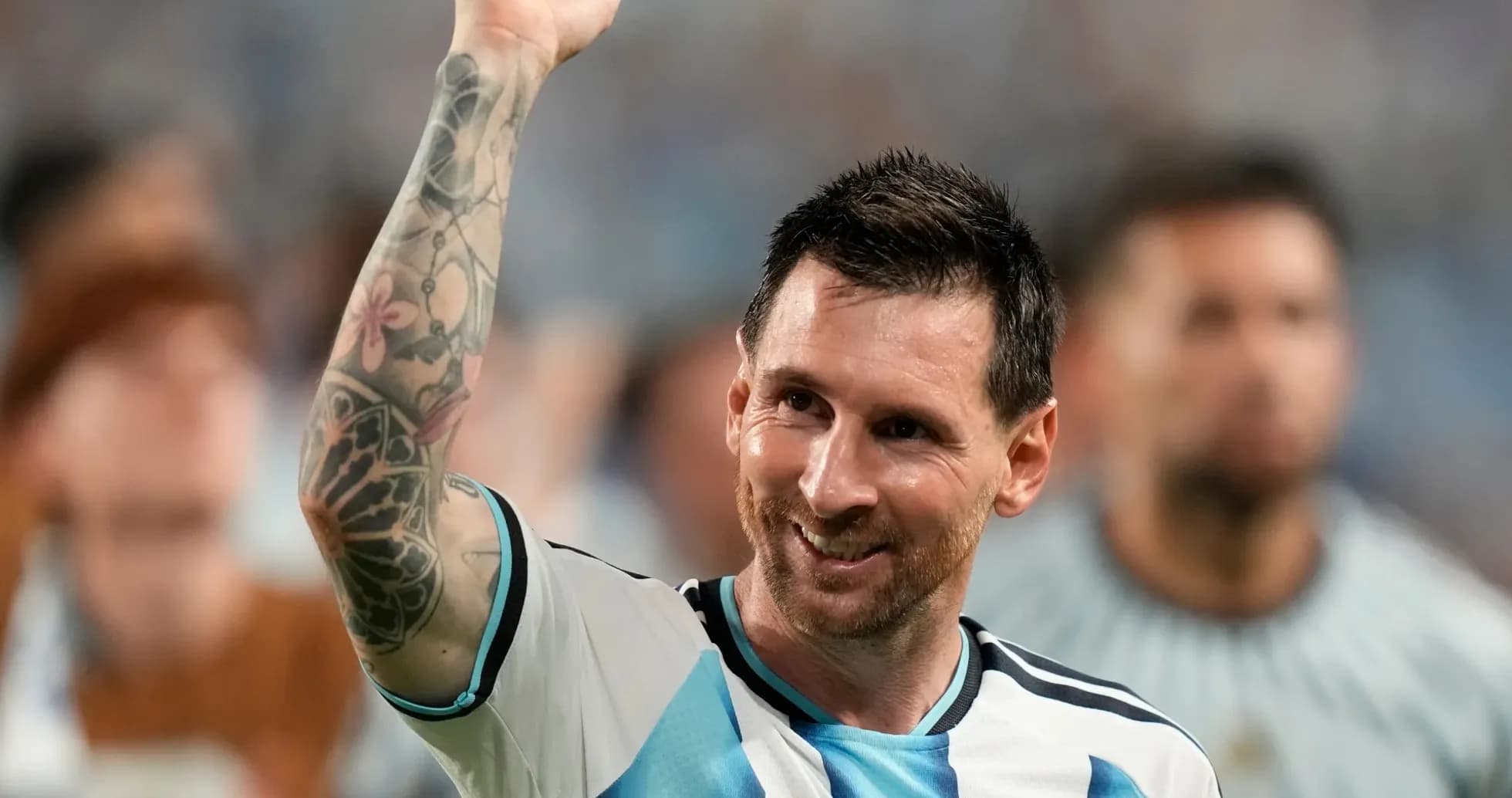
On Tuesday, that weight falls on Atlanta and Vancouver. Argentina, the defending champions, walk into a last-16 tie with Egypt knowing anything less than progression will feel like a collapse. Switzerland and Colombia, in their own way, are chasing history as well.
Around them, the tournament keeps throwing out moments that will be replayed for years: Cristiano Ronaldo’s last World Cup bow, the United States’ dream torn apart in a brutal 10-minute spell, a World Cup press conference turned into a platform for Palestine, and Kylian Mbappe using his voice to confront racism head-on.
This is where the World Cup stops being just a football tournament and starts sounding like a mirror to the world.
Argentina, Egypt and a date with history
Argentina vs Egypt. Atlanta Stadium. Noon local time.
On paper, it looks straightforward. The Opta supercomputer ran the numbers 25,000 times and came back with a clear verdict: Argentina win inside 90 minutes in 69.1 percent of simulations. Egypt win only 12.3 percent of the time. The remaining 18.5 percent? A draw and the tension of extra time.
The numbers back up the history. Argentina have long enjoyed themselves against African opposition at World Cups. They’ve done this before, they know the rhythm of these nights, they know the pressure.
The last time these two met, it was a friendly in Cairo in 2008. Argentina won 2-0, with Sergio Aguero and Nicolas Burdisso on the scoresheet. Lionel Messi did not play that night, ruled out by injury. This time, there is no such absence. This time, the world champions bring the full weight of their status, and their expectations, into a single knockout match.
Egypt arrive as underdogs, but not passengers. The numbers that write them off also leave a door open. A one-in-eight shot at an upset, a nearly one-in-five chance to drag the champions into extra time. For a nation chasing its first-ever World Cup quarterfinal, that is enough to believe. Enough to fight.
For Argentina, this is not just about survival. It is about aura. Champions are judged harshly; the slightest wobble is magnified. A clean, controlled performance keeps the title defence on track. A stumble, even in victory, will raise questions they do not want to hear.
Colombia, Switzerland and a finely balanced duel
In Vancouver, the margins are thinner.
Switzerland vs Colombia. BC Place. 1pm local time.
These two know each other, but only in passing. Three of their last four meetings have been friendlies, the most recent in March 2007. Colombia won that one 3-1, with Edixon Perea, Jhon Viafara and Andres Chitiva scoring for Los Cafeteros. That result is history, but it colours the mood.
The Opta model tilts slightly towards Colombia. Across 25,000 simulations, they win 41.9 percent of the time in normal time. Switzerland come out on top in 28.2 percent, while a draw lands in 29.9 percent of runs.
Those numbers tell a simple story: this is a tight, nervy knockout tie where one moment, one mistake, one flash of brilliance can swing everything. Colombia carry the edge, the flair, the attacking threat. Switzerland bring structure, resilience, and a knack for surviving exactly these kinds of games.
One of them will step into the quarterfinals with their story expanding. The other will leave knowing they were close enough to taste it.
Ronaldo’s last World Cup
Some exits feel inevitable long before they happen. That does not make them easier.
Cristiano Ronaldo has played his final World Cup match.
The Portugal forward, now 41, walked off the biggest stage in the sport for the last time after his country’s elimination. Six World Cups, a career’s worth of pressure, goals, and scrutiny, all ending with a defeat that did not fit the script he had written in his mind.
“I’m sad to be leaving the World Cup like this,” Ronaldo said. “I gave everything I had, I did my best, and I leave with a clear conscience. It was my last World Cup, yes, but now I’ll have time to reflect and spend time with my family. I won’t make any decisions in the heat of the moment.”
He chose his words carefully. He refused to confirm whether this was also the end of his Portugal career, not wanting his own future to overshadow the team. Even on the way out, he understood the stage he was on.
Six tournaments. A span of time that stretches from prodigy to icon. The World Cup will move on. Ronaldo’s shadow will linger for a long time.
USA’s home dream shattered by ruthless Belgium
In another corner of this World Cup, the United States saw their dream ripped apart in brutal detail.
The images told the story before the scoreboard did. Christian Pulisic lying on the turf, clutching his ankle in pain. Matt Freese frozen, hands on his head, after a mistake that will haunt him. Chris Richards flat on the grass, frustration pouring out of him. Mauricio Pochettino, usually composed, lashing out and kicking a rack near the bench, sending bottles flying.
Belgium did not care about the occasion, or the sentiment. They were ruthless.
Charles De Ketelaere took the game away from the hosts almost by himself, scoring twice and setting up another in a 4-1 win that sent the Red Devils into the quarterfinals and sent the USA out of their own World Cup.
“It stinks,” Tyler Adams said, summing up the mood. “This was a moment to have an opportunity to advance and really try and do something special. We fell short.”
The return of Folarin Balogun, cleared to play after FIFA lifted his red-card suspension in controversial fashion, should have been a lift. Instead, defensive errors buried the United States. Two mistakes in the first half gave Belgium control. A second-half error from Freese gifted them another goal and with it, the tie.
A home World Cup run that was supposed to build momentum for a generation ended in a harsh lesson in knockout football.
Hossam Hassan turns the microphone towards Palestine
While the football world fixated on how Egypt would handle Argentina, their head coach chose a different subject.
Hossam Hassan walked into his pre-match press conference ahead of the round-of-16 clash and used it to talk about Palestine.
He had already made a visual statement, holding up a Palestinian flag after Egypt’s win over Australia in the previous round. This time, he used his words. For more than four minutes, he spoke about the suffering of Palestinians, the human cost, the lack of empathy he sees in parts of the world. When he finished, several journalists in the room applauded.
“If there is anyone in the world who does not feel for the Palestinian people, then they are not human, whether they are Arab, European, or American,” Hassan said.
He drew a stark comparison, arguing that the global reaction to civilian deaths in Gaza should at least match the intensity shown for animal welfare. It should never be normal, he stressed, for thousands of people to lose their lives in a single day.
All this came as Egypt prepared for the biggest match in their football history, a shot at reaching the World Cup quarterfinals for the first time. On the eve of that moment, Hassan chose to widen the lens. For him, the World Cup platform was not just about tactics and lineups. It was about conscience.
Mbappe confronts racism after Paraguay senator’s tirade
Kylian Mbappe’s World Cup is not only about goals and knockout ties. It is also about the fight he has chosen off the pitch.
After France knocked Paraguay out in the round of 16, Paraguayan senator Celeste Amarilla launched a racist tirade on X, targeting Mbappe with slurs and questioning his identity, calling him a “colonised Cameroonian, desperately trying to pass himself off as French” and a “brute” who had not learned to write. She went as far as to say Paraguay’s players should have slapped him after the match.
Mbappe did not stay silent.
He responded with a statement that did not just defend himself, but also shielded Paraguay’s players from being dragged into the ugliness of her words.
“Madame Celeste Amarilla, you are a despicable woman and unworthy of your position. You do not represent Paraguay, that country which has sweated passion and honour throughout the competition,” he wrote.
He accused her of allowing racism to eclipse the achievements of her own national team, saying that through her recklessness and brazen racism, the world had already forgotten the journey and the historic effort of Paraguay’s players at this World Cup. He vowed never to allow people like her the freedom to spread hatred and racism across the world.
Amarilla later deleted her posts and issued an open letter to Mbappe, saying she regretted using insults she herself had experienced as a mixed-race person. The damage, and the response, had already travelled far beyond Paraguay.
On the pitch, France marched into the quarterfinals and a meeting with Morocco on Thursday. Off it, their captain made it clear he intends to use his platform for more than football.
The World Cup will keep delivering goals, shocks, and late drama in the coming days. But as Argentina chase survival, Egypt chase history, Colombia and Switzerland battle for a place among the last eight, and France prepare for Morocco, one thing is unmistakable: this tournament is being played on two stages at once — one of football, and one of conscience.