World Cup Final: Messi, Mbappé and England’s Exit
The World Cup is drifting towards its final act, but the noise around it is only getting louder. On one side of the Atlantic, Lionel Messi and Kylian Mbappé are level in the Golden Boot race, split only by the finest of margins. On the other, England are still arguing about substitutions in a tournament they are no longer part of. In between, presidents, prime ministers and football’s power brokers are jostling for their place in the spotlight.
This is what the end of a World Cup feels like: football at the centre, everything else orbiting around it.
Messi, Mbappé and the Golden Boot dilemma
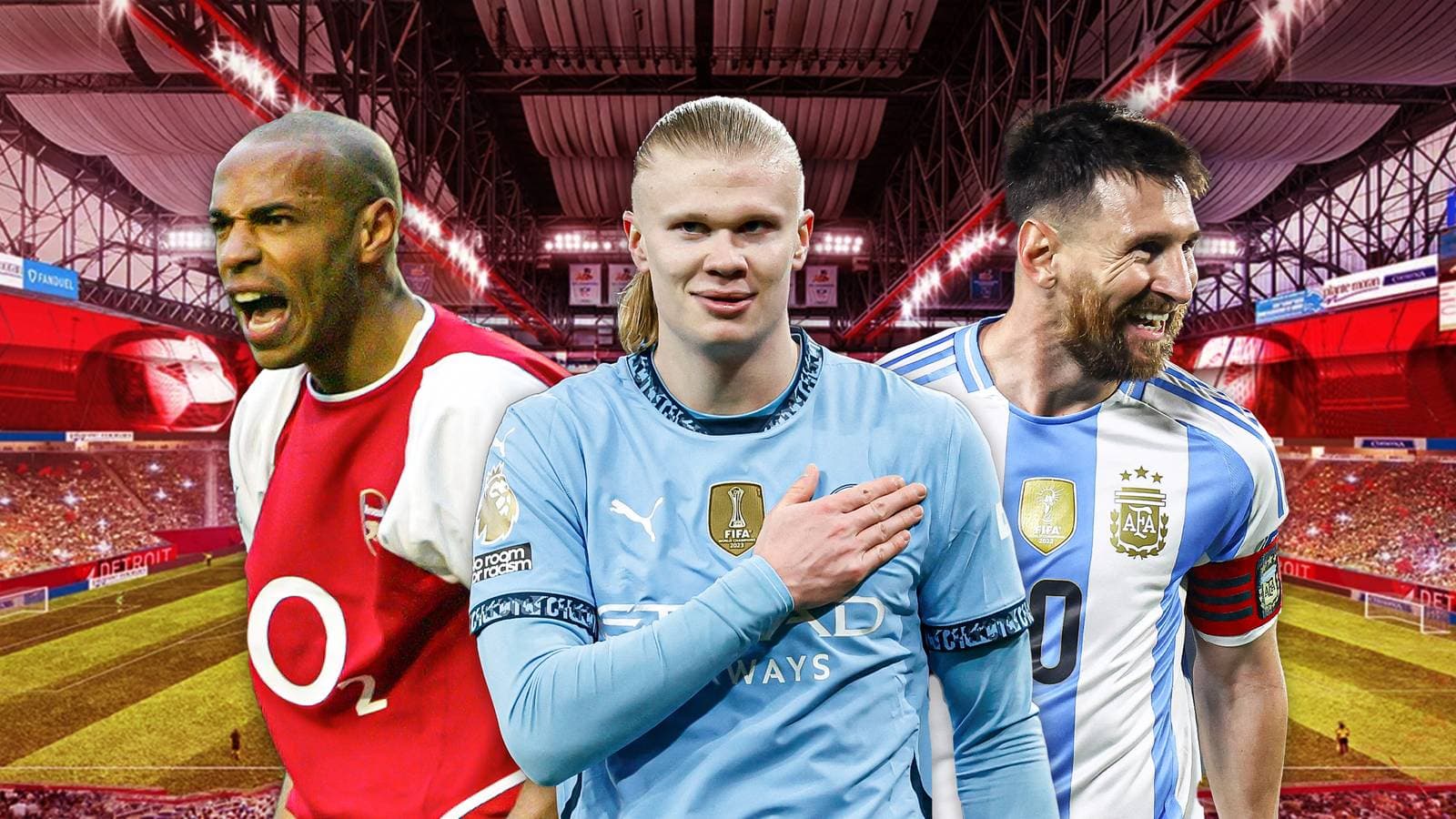
Messi and Mbappé go into the final locked together on goals, the Argentina captain edging ahead in the standings thanks to one extra assist. It’s the most modern of tie-breakers: not who scored first, not minutes played, but creativity.
That hasn’t stopped an old argument resurfacing. Should goals in the final carry more weight than those in the third-place play-off? Is a winner in the 90th minute of a World Cup final really worth the same as a consolation strike in a sleepy Saturday fixture between two exhausted semi-final losers?
For now, the rules are clear. The debate, as ever, is not.
Rodri’s renaissance and a Manchester City question
Away from the glare of the final, there’s been quiet satisfaction in watching Rodri reassert himself on the biggest stage. After an ACL injury, there were genuine fears he might never quite be the same player again. It took time for him to trust his body, to hit that familiar rhythm where he dictates games rather than merely survives them.
At this World Cup, he has looked like his old self: sharp, assured, authoritative. The sort of midfielder who makes everything around him look calmer.
Yet a suspicion lingers over his club future. There’s a sense this might have been his last major tournament as a Manchester City player, that the next few weeks could bring a decision that reshapes both his career and his club. For now, it’s just a hunch. But it hangs in the air all the same.
Trent, Mourinho and a new Real Madrid order
Back in club land, one of the more intriguing relationships of the coming season is already taking shape in Madrid. Trent Alexander-Arnold, a year into life at Real and fresh from an injury-hit debut campaign, has a new boss: Jose Mourinho, back for a second spell at the Bernabéu.
Alexander-Arnold has never hidden his admiration for Mourinho and now finds himself working under a coach whose demands are famously unforgiving. He describes it as “a pleasure” and talks about intensity, principles and a squad eager to learn. Mourinho’s reputation is built on control and structure; Alexander-Arnold’s on creativity and risk from right-back. The collision of those ideas could define Madrid’s season.
The departure of Dani Carvajal in May has cracked the door wide open. After months of rotating in and out of the side, the 27‑year‑old has a clear runway to claim the right-back spot as his own. He speaks of finally being fit, of laying foundations, of using this summer as a springboard. Madrid, and Mourinho, will expect that to translate into trophies.
England’s autopsy and Tuchel’s tightrope
England, meanwhile, are stuck in that familiar purgatory between elimination and closure. The third-place play-off looms, unloved and unconvincing, while the inquest into their exit rolls on.
Thomas Tuchel stays in the job. His substitutions, which veered from bold to baffling as the tournament went on, have not cost him his position. They have, though, sharpened the scrutiny. Tuchel was widely praised earlier in the competition for game-changing adjustments from the bench. Yet the pattern became impossible to ignore: if the substitutes kept rescuing matches, what did that say about the starting XI?
One view is simple: in an era of five substitutions, managers plan with “finishers” in mind. Another is harsher: England were fortunate to reach the semi-finals at all and were the weakest of the last four by some distance.
The third-place game poses its own question. Does Tuchel chase a cosmetic win or treat it as a live training session? There’s a strong case for rotation: a half each for the goalkeepers, a chance for Ollie Watkins and Ivan Toney to lead the line, minutes for Kobbie Mainoo, who has earned a taste of the stage he’s been watching from the fringes. Whatever he chooses will feed into the wider conversation about what England are, and what they want to become.
Power, politics and the World Cup stage
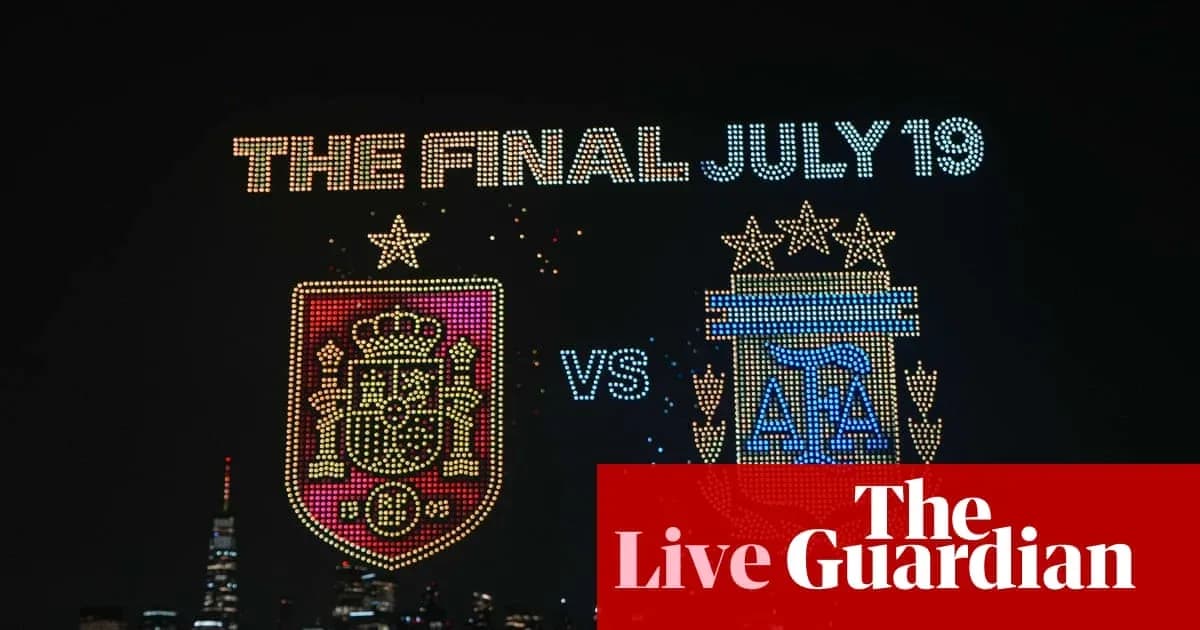
The final in New Jersey will not just be about Messi, Mbappé or the next great chapter of Spain versus Argentina. It will be a summit of power, soft and otherwise.
Spanish Prime Minister Pedro Sánchez will be there, a high-profile presence backing his national team before heading to Algeria for an official visit. Donald Trump is also expected in the stands, the White House confirming the US president’s attendance and hailing the tournament as proof of America’s capacity to host the world on “the grandest stage”.
Beyond the politicians, the most entrenched power of all sits in Zurich. Gianni Infantino is on course for a fourth term as Fifa president, armed with the formal endorsement of more than 200 of the 211 member associations. Only a handful have yet to send letters of support, with a small group of European federations – Germany among them – holding out so far.
The scale of his backing underlines a familiar truth: whatever the scandals, whatever the unrest, Fifa’s machinery keeps rolling. As one observer once noted of its previous leaders, the game has survived Sepp Blatter, Jack Warner and Chuck Blazer. It will, they argued, survive Infantino too.
Argentina’s edge and the Falklands flashpoint
On the pitch, Argentina arrive at yet another final with a spine that feels battle-hardened. Cristian Romero, described as the hardman of the back line, has been a constant presence in their run. Next to Lisandro Martínez, he has often been the last barrier between attackers and Emiliano Martínez. Strip away the star power of Messi and the theatrics of the Aston Villa goalkeeper, and Romero has a strong claim to being Argentina’s most consistent performer of this campaign.
Off the pitch, the mood around the Albiceleste is more complicated. Their semi-final win over England was followed by players displaying a banner asserting Argentina’s claim to the Falkland Islands. That image has travelled fast and far.
UK prime minister Keir Starmer, through Downing Street, has backed the idea of Fifa investigating the incident. It’s the sort of flashpoint that reminds everyone how quickly a football celebration can bleed into geopolitics, and how little room there is for missteps when the world is watching.
Broadcast farewells and a changing soundscape
As the tournament winds down, the broadcasters are also clearing the decks. In the United States, Fox’s coverage is heading for a final flourish and a wave of goodbyes. Geoff Shreeves, long a familiar presence on the touchline, signs off. Tom Rinaldi, with his polished monologues and pocket squares, follows. Chef Nick, whose early culinary experiments were as outlandish as some of the group-stage defending, retreats as the menu – and the tournament – narrows. Even Jameis Winston’s hyperactive fan dispatches, always on the edge of chaos, are coming to an end.
The World Cup soundtrack is changing. New voices will replace old ones by the time the next ball is kicked on this stage.
The restless calm before the final
Back in England’s camp, the mood is oddly split. There is the lingering frustration of what might have been, the bemusement at tactics that didn’t quite make sense to those asked to execute them, and the knowledge that the postmortem will not be kind. There is also the mundane reality of preparing for a bronze-medal match that few truly want.
Outside, fans are bracing for the comedown. Weeks of late nights and early alarms are almost over. Some are already wondering what to do when the nightly drama disappears – maybe a renewed interest in South American leagues, maybe MLS, maybe just sleep.
And then there is the final itself: Messi against the next generation, Spain against Argentina, a Golden Boot on the line, a World Cup at stake, presidents in the stands and a sport that, despite everything and everyone around it, keeps dragging us back.
The only real question now is what kind of ending this wild, sprawling tournament thinks it deserves.