World Cup Highlights: Messi, Goals, and Unforgettable Moments
Lionel Messi bent his ageing body towards the ball and, for a split second, time stopped.
The pass into him was awkward, skidding and bouncing as it arrived at pace. He killed it on the run with a velvet touch, shifted his weight, and with barely a pocket of space to work in, guided his second touch into the top corner. Cape Verde’s resistance shattered, Argentina’s World Cup charge re-ignited. At 39, Messi was still deciding games with the same ruthless delicacy that has defined a generation.
It was one of many outrageous strikes in a World Cup littered with them, a tournament where technique and audacity kept crashing into the top corner.
Goals that bent the tournament out of shape
Sidny Cabral answered Messi’s masterpiece with one of his own. Deep into extra time against the world champions, Cape Verde’s 40,000-strong dream seemed to be fading. Then Cabral, from the angle just inside the box, wrapped his right foot around the ball and sent a curling drive screaming beyond Emiliano Martinez and into the top corner. The stadium fell into disbelief. Argentina would eventually edge it 3-2, but Cabral’s 103rd‑minute equaliser instantly joined World Cup folklore.
Kerim Alajbegovic wrote his name into the group-stage scrapbook with a solo run for Bosnia-Herzegovina against Qatar. He weaved past defenders, rising with every stride, before launching a rising right-foot shot that screamed past the keeper. It was the sort of goal that announces a player to the world in a single, unstoppable movement.
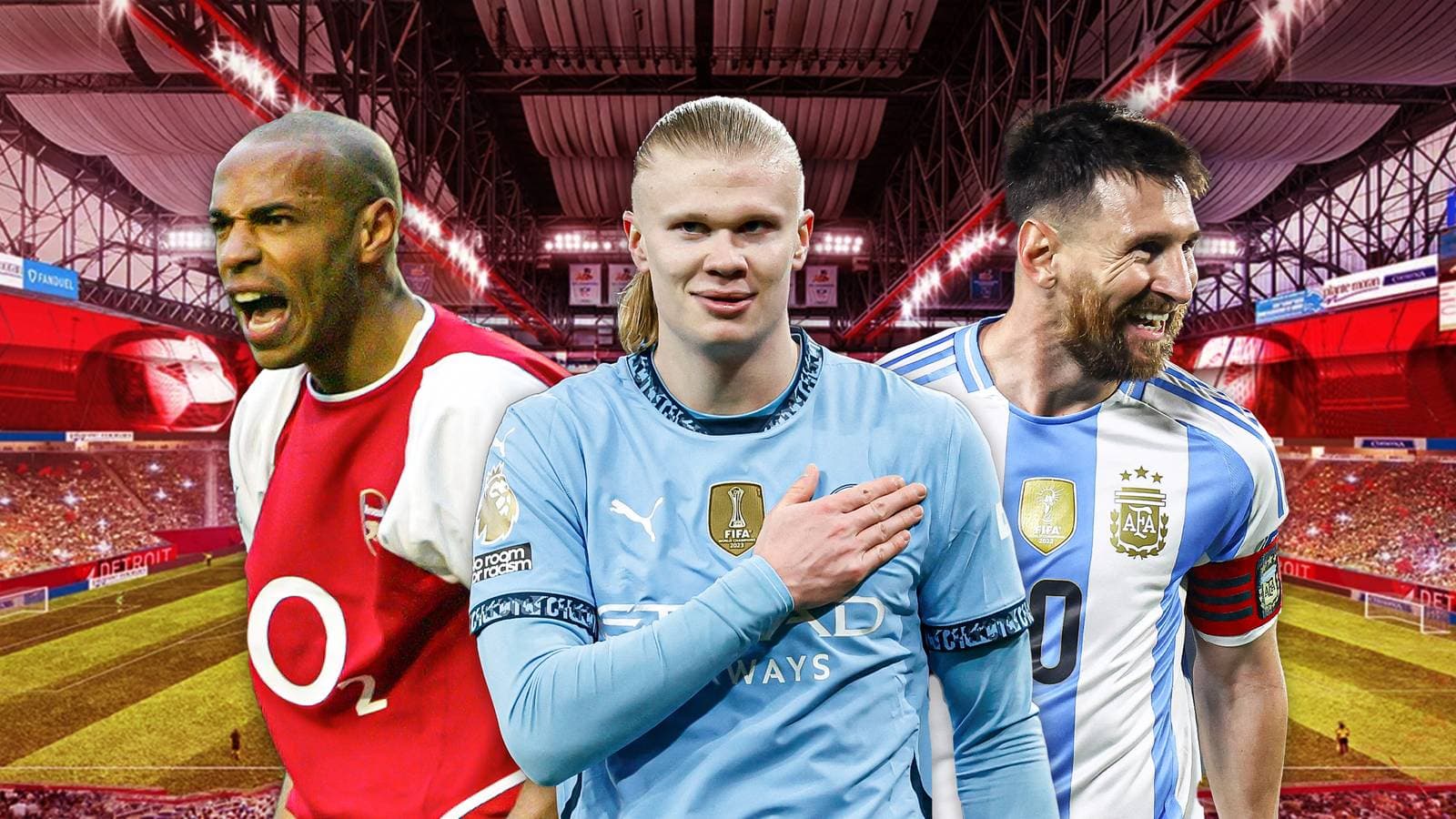
Erling Haaland’s contribution against Brazil in the last 16 looked, at first glance, almost casual. A swing of the right boot, nothing more. In reality, it was a finish of brutal precision and power, lasered into the corner to crown a match-winning performance for Norway and send a ponderous Brazil home.
When Argentina’s quarter-final with Switzerland tightened into a knot, Julian Alvarez cut through it. In extra time, from long range, he unleashed a swerving right-foot drive that ripped into the top corner. One strike, pure and vicious, separated the sides and kept Messi’s campaign alive.
Norway, riding a wave of belief, found another jewel in Antonio Nusa. Against Ivory Coast, he shimmied in the area, feinted a defender out of the picture and then curled a precise finish into the top corner. It was the sort of calm, crafted opener that belongs to players who look born for this stage.
Keepers who refused to be beaten
For every thunderbolt, there was a goalkeeper determined to script a different ending.
Johny Placide’s double save for Haiti against Morocco was pure defiance. First, he blocked with his legs, then sprang up to claw a follow-up one-handed to his left. It was the kind of sequence that leaves forwards staring at the turf, wondering what more they could possibly do.
In the cauldron of the Azteca Stadium, Jordan Pickford held his nerve as England stunned Mexico. His early low dive to the left to keep out Raul Jimenez’s header was a turning point, a crucial moment that underpinned one of England’s most memorable World Cup wins.
Orjan Nyland produced one of the tournament’s most remarkable stops for Norway against Brazil, and it came from his own defender. Kristoffer Ajer inadvertently diverted the ball towards his own goal, sending Nyland scrambling backwards. Somehow he leapt, twisted, and turned the ball against the post, an astonishing display of anticipation and agility.
Aymen Dahmen, for Tunisia against Japan, reacted with almost impossible speed to keep out Takehiro Tomiyasu from close range. The ball seemed destined to cross the line, did everything but, yet Dahmen still found a way to repel it.
Patrick Beach, in Australia’s group game with Turkey, flung himself away to his right to get the faintest touch on Abdulkerim Bardakci’s rising 30-yard strike, tipping it on to the post. Iran’s Alireza Beiranvand matched that level of disbelief against Belgium, recovering from an initial Kevin de Bruyne effort to somehow react in time to block Maxim de Cuyper’s shot from inside the six-yard box.
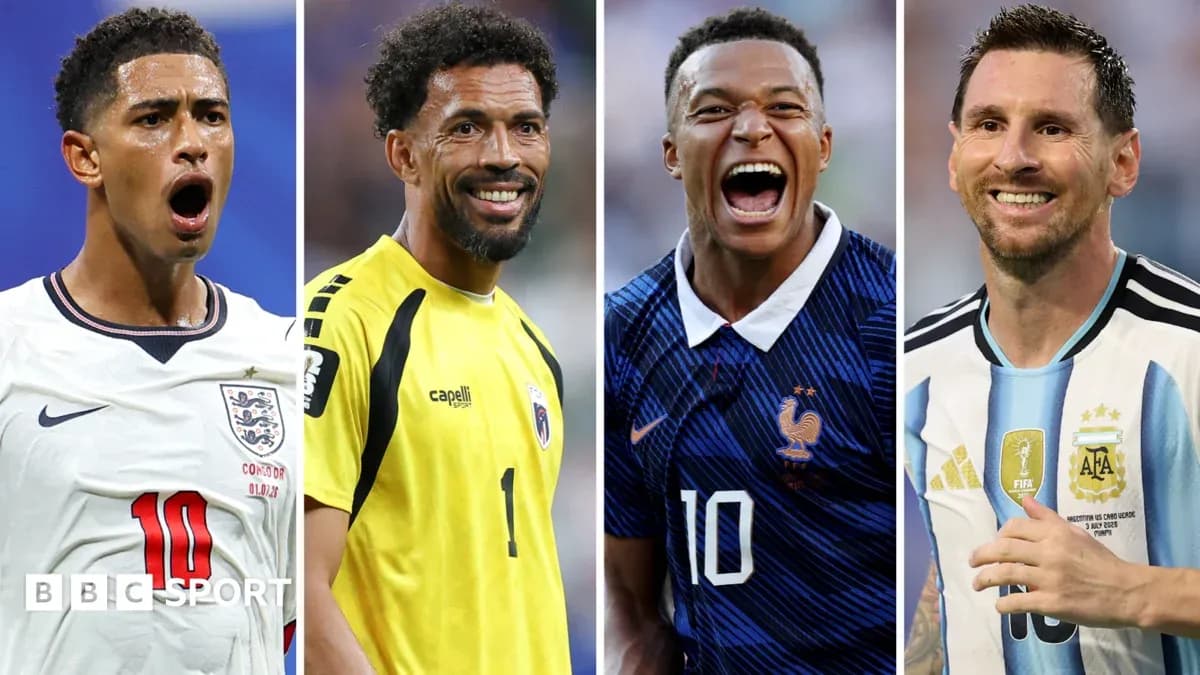
And then there was Vozinha. Cape Verde’s 40-year-old goalkeeper began his World Cup with seven stunning saves in a goalless draw with Spain, then finished it by repelling Argentina time and again as his side pushed Messi’s team to the brink of elimination. His heroics turned him into an unlikely global phenomenon, his social media following exploding from about 50,000 to more than 29 million.
Kings of the ball: Rodri, Messi and the elite
When the dust settled, the official verdict was clear. Spain captain Rodri walked away with the World Cup Golden Ball as the tournament’s best player, the metronome and shield at the heart of a team that conceded only once all tournament.
Messi, with eight goals and four assists in eight games, took the Silver Ball. Kylian Mbappe claimed the Bronze. On paper, that was the podium. In the stands, in press boxes, in hotel lobbies, the debate ran far deeper.
Messi’s influence went beyond numbers. He orchestrated Argentina’s dramatic semi-final comeback against England, dropping deep, dictating tempo, pulling strings when the game frayed into chaos. At 39, he seemed to bend the laws of physics and time, still the leader, still the decision-maker in the biggest moments.
Mbappe arrived with a different kind of energy. Relaxed, confident, almost serene in his early news conferences, he then translated that attitude into performances laced with pace, goals, leadership and an increased shift off the ball. He played like a man determined to stamp his name across the tournament.
Jude Bellingham, for many, was the heartbeat of England’s run. The Real Madrid midfielder dragged his country through games by sheer force of will, then elevated his level again as the stakes rose. His equaliser against Norway in Miami, coming seconds after their fans taunted England with “You’re going home,” summed up his sense of timing.
Others made quieter, but no less compelling, cases. Michael Olise lit up the competition with seven assists for France and a scissor-kick against Sweden that crashed against the post yet lived on in the minds of those who saw it. Rodri, irreplaceable for Spain as he is for Manchester City, anchored the best side in the tournament with icy authority. For some, that alone made him the standout.
A new generation steps into the light
The best young player award went to Pau Cubarsi, Spain’s 19-year-old centre-back who played every minute of their campaign. Calm, composed and fearless, he marshalled a defence that allowed just one goal all tournament and produced a magnificent display against France in the semi-final. Barcelona have a star of the future – and, already, a pillar of the present.
He was not alone in announcing himself. Morocco’s Ayyoub Bouaddi, already admired by Lille supporters and Ligue 1 watchers, exploded on to the global stage with an exceptional performance against Brazil at the New York New Jersey Stadium. His movement off the ball, clever and constant, drew comparisons with Patrick Vieira and Luka Modric.
Erling Haaland hardly fits the usual “breakout” label, yet in the US he became something else entirely: a household name beyond football’s usual borders, a towering forward turned cultural figure.
Switzerland’s Johan Manzambi, just 20, played with a smile and a showman’s instinct, scoring three times in four games before injury cut short his tournament. His imminent move to Aston Villa for a fee in the region of £50m underlined how quickly the world had taken notice.
Mexico unearthed 17-year-old midfielder Gilberto Mora, who forced his way into the starting line-up and carried himself with the poise of a seasoned playmaker. He moved with the air of a future star, destined for the top.
And in the United States, full-back Alex Freeman caught the eye despite the hosts’ last-16 exit. His performances were so assured that Mauricio Pochettino publicly suggested he could become one of the best in the world in his position.
Nights and nations that will not fade
Some moments felt bigger than any single game.
The Azteca Stadium for Mexico v England was one of them. A wall of noise, colour and emotion, an atmosphere described as perhaps the finest in seven World Cups. The Mexican national anthem rolled around the stands with such force it felt almost physical, a spine-tingling surge that turned a football match into a national event.
Outside stadiums, stories unfolded in smaller, but no less powerful, ways. In Boston, Paraguay fans left Germany stunned after one of the most dramatic penalty shootouts in World Cup history. A father and son, wrapped in Paraguay flags and in tears, called it the best day of their lives. Around them, supporters streamed away in disbelief, proof of how deeply this tournament can cut into people’s memories.
Mexico’s love for football framed the entire event. In Mexico City, the night before their clash with England, an MC in a restaurant asked diners where they were from. When one table answered “England”, the whole room broke into spontaneous applause. In Los Angeles, Mexico’s victories set off fireworks across the city, green shirts flooding the streets.
Norway’s fans brought their own signature. The Viking row swept through stadiums, a choreographed, rhythmic celebration that became a global sensation. After matches, players and supporters united in those long, low, synchronised “rows”, a shared ritual of joy. Their sense of humour travelled too; in Miami, they serenaded England with “You’re going home” while leading 1-0, only for Bellingham to silence them moments later.
Argentina’s travelling army turned US venues into sky-blue enclaves. Twice, in Miami and Kansas City, their support swelled beyond 60,000, a rolling chorus that never stopped singing and created the most intense atmospheres many had ever experienced.
Curacao’s followers, from a nation of just 150,000, made a noise that felt wildly out of proportion to their size. Colombia’s fans turned Arrowhead Stadium in Kansas City into a party. Brazil’s support, as always, did not just fill stadiums – they colonised entire cities, transforming Philadelphia into a slice of Rio or Sao Paulo for 48 hours.
Fallen giants and missed chances
Not everyone left with their reputation enhanced.
Brazil, under Carlo Ancelotti, trudged through the tournament. Slow, uninspired, un-Brazilian, they were picked apart by Norway in the last 16, every weakness laid bare. For a nation that measures itself only in trophies, it was a sobering exit.
Portugal and Cristiano Ronaldo suffered their own anti-climax. Tipped as contenders, they went out with a flat 1-0 defeat to Spain in the last 16. Ronaldo scored three times in five matches, but Portugal never found the level many expected. Another World Cup ended in frustration.
The USA rode a wave of early optimism as hosts, only for controversy around Folarin Balogun and a limp defeat by Belgium in the last 16 to puncture the mood. Scotland, meanwhile, missed out on third-place qualification and then endured the agony of waiting days for confirmation of their fate.
Senegal, armed with arguably the most talented squad in their history, unravelled off the pitch. Problems behind the scenes bled into performances. Even when they led Belgium 2-0 in the last 32, poor game management and tactical errors dragged them to a damaging collapse. For a gifted generation, it felt like a squandered chance.
France, stacked with attacking talent, delivered a strangely flat semi-final against Spain, their star-studded frontline blunted and lifeless. Ancelotti’s Brazil, again, fell far shorter than they believed they would. Even the choice of venue drew criticism: a World Cup final at MetLife Stadium in New Jersey, a giant bowl in the middle of nowhere, expensive and awkward to reach. Philadelphia, with its purpose-built sports complex, had its admirers.
A World Cup that belonged to the people
For all the tactics, awards and arguments, this World Cup belonged to the people who followed it.
Reporters on the road across six US cities were handed beers and sausages from the back of pick-up trucks, pulled into selfies by fans delighted just to meet “the guy from the BBC”, and met the same question over and over: “Is it coming home?”
In the stands, Mexico’s passion set the tone, their fans in the Azteca and beyond described as the beating heart of the tournament. Brazil’s supporters turned every stop into a carnival. Norway’s Viking row became a shared joke and a shared celebration. Argentina’s numbers and noise shook stadiums to their core.
On the pitch, Messi scored a hat-trick in his first game to announce he was not done yet. Cabral’s wonder goal against Argentina turned Cape Verde into the smallest nation ever to truly frighten a defending champion in the knockouts. Rodri anchored a near-impenetrable Spain. Bellingham dragged England along with him. Haaland, Mbappe, Olise, Cubarsi, Mora and Manzambi pointed towards football’s future.
The tournament closed with Messi still bending games to his will and Rodri crowned as its official king. But the real legacy may rest with the voices that echoed long after the final whistle – the Viking rows, the Mexican anthems, the Cape Verde roar after Cabral struck – and the sense that the next generation is already hammering at the door.