World Cup Nights and Morning Risks: Durham Police's Breathalyser Checks
In the grey half-light of Thursday’s rush hour, just outside Durham city centre, the World Cup met the real world with a jolt.
Engines idled, windows slid down, and drivers – some still in their work clothes, some in football shirts from the night before – were waved over by officers and asked to blow into roadside breathalysers. No collision, no erratic driving, no obvious offence. Just random stops, and a clear message.
England’s 4-2 win over Croatia in Dallas had lit up Wednesday night. Durham Constabulary wanted to make sure it didn’t ruin Thursday morning.
World Cup nights, dangerous mornings
The force has the numbers to back up its concern. On England match days, collisions rise by around 20%. That’s not a marginal bump. It’s a pattern.
And this tournament carries its own twist. With World Cup games in North America kicking off later in the evening in the UK than fans are used to, the drinking window stretches deep into the night. The fear is simple: people who feel fine when they wake up may still be over the limit when they get behind the wheel.
On Thursday, none of the drivers stopped while the Press Association watched failed the test. One, though, was stunned to find they were close to the limit. The point landed.
Sergeant Sarah Manser, overseeing the operation, did not dress it up.
“We come out this morning to give that message that alcohol still might be in your system the next morning,” she said. “We’ve had a couple this morning already who haven’t blown over the limit, but they have had alcohol in the system. Please just don’t and drink-and-drive, it’s just as simple as that.”
The campaign is blunt by design. The football euphoria is not the enemy – the consequences are.
From “Palace in Dallas” to a lay-by in Durham
The contrast could hardly be sharper.
In Dallas, England’s opener against Croatia turned the so‑called “Palace in Dallas” into something between a cup tie and a Super Bowl. The crowd lurched from chaos to carnival: a 4-2 scoreline, Harry Kane matching Gary Lineker’s World Cup goals record, Jude Bellingham and Marcus Rashford ripping through Croatia in a ferocious second half.
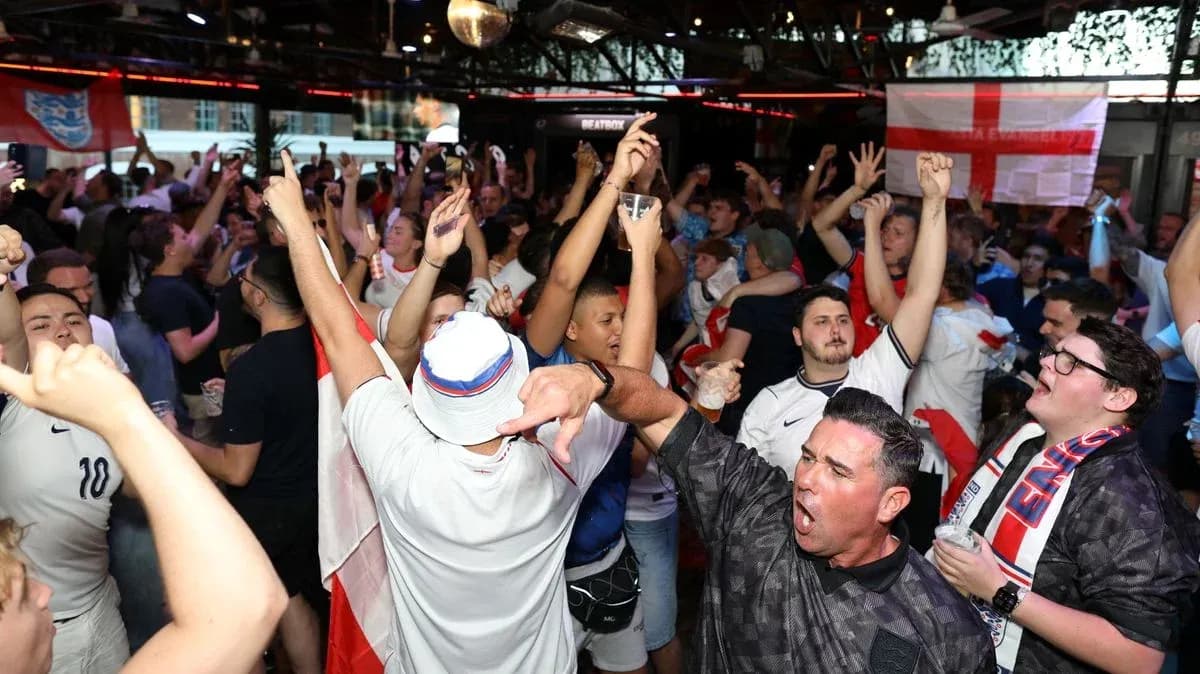
Inside the Londoner Pub in Dallas, the tills told their own story. Hundreds of England fans packed into the venue, lured by a later closing time and the promise of a big night. By the end, more than 5,000 beers had been sunk – 2,352 of them bottles – with takings topping £30,000 in a single evening.
The scenes spilled over. Police moved in during the match as the pub hit maximum capacity, with videos showing officers ushering supporters out even as they belted out the national anthem. Only two security guards were on duty. The Londoner later revealed the fire marshal had ordered it to close for the rest of the day, the owners insisting the headline sales figures were “overinflated” once damage to property and landscaping was taken into account.
Back in Durham, those same celebrations were reduced to a number on a screen and a slow exhale into a tube.
Driver Louis Renwick, who blew clear with no alcohol in his system, backed the clampdown.
“There’s too many deaths on the roads through drink-driving,” he said, watching the operation from the driver’s seat rather than the bar stool.
The hangover risk
Police forces know the pattern. The danger isn’t always the drive home from the pub; it’s the school run, the commute, the morning delivery route after a night that ran too long.
That risk is magnified when kick-offs creep later and later into the night. Fans drift from one bar to another, or from pub to living room and back again. The final whistle sounds, the songs keep going, and the clock moves past midnight almost unnoticed.
Durham’s roadside checks are a direct response to that. The message is not anti-football. It’s anti-complacency.
The numbers from Dallas – thousands of beers in a single venue – serve as a vivid backdrop. The World Cup has always been a drinking tournament as much as a football one for many supporters. This edition, with its time zones and late starts, simply shifts when that drinking is most likely to spill into the next day.
Euphoria meets responsibility
England’s win over Croatia has already been framed as a statement: Kane chasing a second Golden Boot, Bellingham playing with what he calls a “chip on my shoulder”, Rashford off the bench to finish the job. Thomas Tuchel’s side roared into life in that second half in Texas, and the bookmakers reacted instantly, cutting England’s odds to win the tournament.
For supporters, that kind of performance is fuel. It keeps them in the bars longer, keeps the songs going, keeps the rounds coming. It turns an ordinary Wednesday into something unforgettable.
Durham’s officers are working on the morning after, when the memories blur and the judgement can, too.
Sergeant Manser’s warning strips away the romance.
Alcohol does not clock off when the game ends. It lingers in the bloodstream, invisible until the blue lights flash in the rear-view mirror – or until something far worse happens.
The real result that matters
On this particular morning, the breath tests brought a measure of reassurance. No one over the limit while reporters watched. A few close calls. A few raised eyebrows. No arrests.
That doesn’t mean the campaign is unnecessary. It means it might be working.
England’s World Cup run will surge and dip with every game. The nights will get louder, later, more emotional if Tuchel’s team go deep into the tournament. The roads, though, will stay the same: unforgiving, indifferent to who scored, who sang, who drank what and when.
The football story will be written in Dallas, Mexico City, and beyond.
The other story – the one Durham Police are trying to influence – will be written at roundabouts, junctions and slip roads across England, long after the final whistle.