World Cup Thursday: Mexico vs South Korea Highlights Day of Storylines
The World Cup rolls into Thursday with the tournament already crackling: giants wobbling, newcomers refusing to blink and a Golden Boot race that has barely waited for the paint to dry on the opening fixtures.
Four games frame the day, but one stands out.
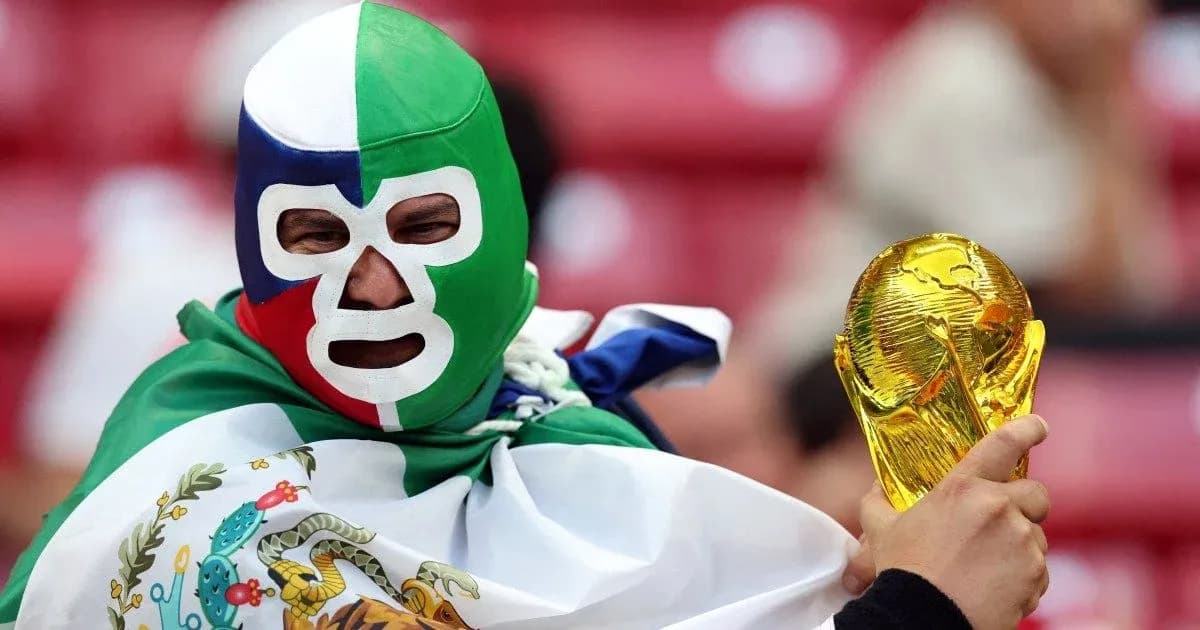
Mexico and South Korea meet in Guadalajara with both sides already buoyed by opening wins. One match, yes. But it already feels like a hinge point in Group A.
The day’s slate
The schedule stretches across North America:
- Czechia vs South Africa – Atlanta Stadium, Atlanta – noon (16:00 GMT)
- Switzerland vs Bosnia and Herzegovina – Los Angeles Stadium, Los Angeles – noon (19:00 GMT)
- Canada vs Qatar – Vancouver Stadium, Vancouver – 3pm (22:00 GMT)
- Mexico vs South Korea – Guadalajara Stadium, Guadalajara – 7pm (01:00 GMT Friday)
Four games, four very different storylines, all feeding into a World Cup that has started with a jolt rather than a jog.
Mexico vs South Korea: history on El Tri’s side
Mexico do not just like playing South Korea at World Cups. They tend to beat them.
El Tri have won both previous meetings on this stage, including that sharp, nervy 2-1 victory at Russia 2018. The matchup returns now with both sides already on the board and eyeing a fast track to the knockouts.
Numbers back Mexico to lean on history. Opta’s supercomputer ran 25,000 simulations of this Group A clash and gave Mexico victory in 49.1 percent of them. South Korea took 24.3 percent, while 26.6 percent ended all square.
The margins suggest this is no formality. But if the data is right, Guadalajara could be set for another Mexican night that crackles with confidence.
Czechia vs South Africa: contrasting histories collide
Czechia and South Africa barely know each other as opponents. Just one previous meeting. No shared World Cup history. That changes in Atlanta.
South Africa arrive with a quiet, stubborn record against European sides at this tournament. They stunned France 2-1 on home soil in 2010 and have lost only one of their last four World Cup games against European opposition.
Czechia’s own reference point against African teams is far less pleasant: a 2-0 defeat to Ghana in their only such World Cup encounter.
Even so, the models lean heavily towards the Europeans. Opta’s simulations give Czechia a 54.9 percent chance of victory, with South Africa at 21.8 percent. The rest – 23.3 percent – belongs to the draw.
The numbers say one thing. The World Cup’s habit of ignoring them says another.
Switzerland vs Bosnia and Herzegovina: new ground on the biggest stage
Switzerland and Bosnia and Herzegovina have never met at a World Cup. Their only previous encounter came in a 2016 friendly in Zurich, when Bosnia won 2-0 thanks to Edin Dzeko and Miralem Pjanic.
That night belongs to the archives now. On this stage, Switzerland carry the weight of expectation.
Opta’s supercomputer makes them clear favourites: 61.6 percent of its 25,000 simulations ended in a Swiss win. Bosnia and Herzegovina prevailed in 17 percent of scenarios, with 21.4 percent finishing level.
The friendly in Zurich proved Bosnia can hurt Switzerland. Today will show whether they can do it under the World Cup lights.
Canada vs Qatar: history points to the hosts
Canada step into Vancouver Stadium with history at their back. Whenever a World Cup host has faced an Asian federation side, the hosts have walked away smiling.
Mexico beat Iraq in 1986. France brushed aside Saudi Arabia in 1998. Russia crushed Saudi Arabia in 2018.
The pattern is clear, and the algorithms expect it to hold. Opta’s model gives Canada a dominant 72.9 percent chance of victory. A draw appears in 16.5 percent of simulations. Qatar, written off in most scenarios, are left with just a 10.6 percent shot at an upset.
If Qatar want to rip up the script, they will have to do it against a host nation riding the energy of home soil and history.
Golden Boot race: Messi sprints out of the blocks
The tournament’s first week has barely closed its eyes, yet the Golden Boot race already looks ferocious.
Lionel Messi has wasted no time. Three goals, a hat-trick in Argentina’s opening win over Algeria, and he sits alone at the top of the scoring charts.
The chasing pack is heavyweight and crowded. Seven players are one goal back:
- Kylian Mbappe (France)
- Erling Haaland (Norway)
- Folarin Balogun (USA)
- Kai Havertz (Germany)
- Yasin Ayari (Sweden)
- Elijah Just (New Zealand)
- Harry Kane (England)
Big names, big reputations, and one Argentine already setting the pace.
DR Congo’s historic night
Some moments cut through everything: rankings, reputations, predictions. DR Congo’s draw with Portugal was one of them.
Yoane Wissa etched his name into World Cup history with the DRC’s first-ever goal at the tournament, in their first appearance in 52 years. The Newcastle United forward rose in Houston to head home shortly after half-time, cancelling out Joao Neves’s early strike.
Portugal came in as FIFA’s fifth-ranked team. The Leopards arrived with history and hope. They left with a 1-1 draw and a point that felt far bigger than a number in a group table.
For Congolese fans in the stadium and across the world, it was a night to remember – and a reminder that the World Cup still belongs to the dreamers.
Colombia back on the big stage with a win
Colombia’s return to the World Cup, after missing Qatar 2022, began with exactly the sort of performance they wanted: controlled, confident, and carried by star quality.
They beat debutants Uzbekistan 3-1 at Mexico City Stadium, and Luis Diaz took centre stage. The winger set up Daniel Munoz for the opener, then scored Colombia’s second after the break.
Uzbekistan did not simply fold. Abbosbek Fayzullaev briefly levelled the match, forcing Colombia to reset and reassert themselves. They did, wresting back control and closing out the game with authority.
The result gives Colombia early momentum in Group K and a platform to chase a return to the knockout rounds.
Shock results and new realities
The first round has already handed the tournament its first jolt.
Cape Verde’s 0-0 draw with Spain stands out as the headline shock. World Cup newcomers, up against one of the favourites, in their first match on this stage. They held firm, rode the pressure, and walked away with a historic point.
DR Congo’s 1-1 draw with Portugal belongs in the same bracket, a reminder that reputations do not win group games.
Iran’s 2-2 draw with New Zealand also raised eyebrows. Many expected Iran to control their Group G opener. New Zealand refused to play the role of underdog and left with a result that reshapes the group’s early dynamics.
The pattern is clear already: the gap between the so-called elite and the rest is narrowing, one surprise at a time.
A World Cup of many faces
Look closely at the lineups and you see another story running through this World Cup: teams built across cultures, faiths and continents.
England, France, Spain and Sweden all field squads that blend players from different ethnic and religious backgrounds, including both Christian and Muslim footballers. Spain’s teenage prodigy Lamine Yamal and Sweden’s midfielder Yasin Ayari are part of a growing wave of Muslim players at the game’s highest level.
On the pitch, the picture is simple: they score, they celebrate, they pray in different ways, then they embrace. The debates about immigration, identity and integration rage elsewhere. Here, the evidence of cooperation is written in goals, tackles and shared joy.
Ronaldo’s sixth World Cup begins with frustration
Cristiano Ronaldo has stepped into yet another slice of history. At 41, he has joined Lionel Messi as one of only two players ever to appear at six World Cups.
The landmark, though, came with a sting.
Against DR Congo, Ronaldo had chances in the second half but could not find the net. On a day when Messi, Mbappe, Haaland and Kane all scored in their opening games, his blank felt particularly stark.
Portugal’s 1-1 draw in their Group K opener leaves them chasing a response. For Ronaldo, the question is blunt: how many more chances at this level will there be?
Hydration breaks: protection or disruption?
One of the tournament’s new features is already dividing opinion.
FIFA has introduced formal hydration breaks to help players deal with the summer heat in the US, Canada and Mexico. The intention is clear: protect player welfare in demanding conditions.
The reality on the pitch has proved more complicated. Critics argue the breaks puncture the rhythm that makes football unique, creating stoppages that resemble timeouts and giving coaches extra windows for tactical tweaks.
The debate sharpened after Curacao’s meeting with Germany in Houston. Curacao scored before a hydration break, then conceded twice before half-time in what became a 7-1 defeat. Former England striker Alan Shearer said the stoppage “killed their momentum”. Roy Keane likened the breaks to timeouts and railed against the interruption of flow.
FIFA stands by the policy. The arguments will not stop any time soon.
Africa’s record presence – and its obstacles
Away from the immediate drama of results and scorelines, this World Cup is also a landmark for sub-Saharan Africa.
Six teams from the region are here, more than ever before. South Africa’s Bafana Bafana opened the tournament with a 2-0 defeat to Mexico, but the continent’s established powers are present and ambitious.
Ghana’s Black Stars, quarterfinalists in 2010 and heirs to the legacies of Cameroon in 1990 and Senegal in 2002, are back. Senegal themselves return. Ivory Coast, twice crowned champions of Africa since 2014, are here again after a long absence from the World Cup.
Then there are the stories that have already lit up the group stage. DR Congo, back for the first time since 1974, when they played as Zaire. Cape Verde, the Blue Sharks, who have already taken a point off Spain in their debut campaign. Many of their players, like several in the Congolese squad, were born in Europe, underlining the role of the African diaspora in shaping these teams.
The journey has not been smooth. Some teams, officials and fans have wrestled with travel and visa issues. A requirement for many African passport holders to post $15,000 bonds to enter the United States was eventually dropped, but not before, critics say, it wrecked travel plans for some supporters.
One sound from Africa’s last World Cup on home soil is missing. The vuvuzela, the plastic horn that turned South Africa 2010 into a constant buzz of noise, is banned this time.
Yet the support will still be loud. More than three million people of African birth live across the US and Canada. With six sub-Saharan teams in the tournament, the stands are primed to become a patchwork of flags, drums and colours as these sides chase not just results, but a sense of representation on the sport’s grandest stage.
The question now is simple and compelling: with this platform, and this level of backing, how far can they push the story of African football at this World Cup?