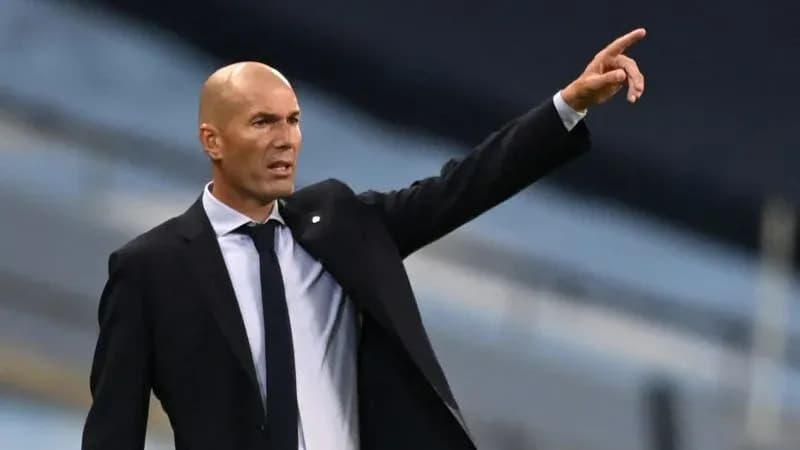
Zinedine Zidane Returns as Head Coach of France
Zinedine Zidane is back where many always believed he belonged. Not in Madrid, not in Turin, but at the heart of French football.
On Tuesday, the French Football Federation confirmed the 54-year-old as the new head coach of France on a four-year deal, ending years of speculation and quiet waiting. He succeeds Didier Deschamps, who stepped down after the 2026 World Cup – a campaign that began with expectation and ended in deflation for a squad tipped to dominate in North America.
France fell to eventual champions Spain in the semifinals, then lost to England in the third-place match. For a team built to win it all, fourth place felt hollow. The mood needed lifting. The federation has turned to the man who once changed the country’s footballing history almost single-handedly.
“Nothing greater than the French national team”
Zidane has never hidden what this job means to him. This was the one role he waited for after leaving Real Madrid in 2021, resisting club offers as Deschamps extended his tenure. Patience has finally met opportunity.
“I have often said there is nothing greater than the French national team. It is therefore a joy and obviously a great honor to become the coach of France. It is also a responsibility,” Zidane said at his unveiling, thanking federation president Philippe Diallo, the Executive Committee and saluting the “fourteen years of Didier and his staff.”
“I also have a special thought today for all my teachers. Needless to say, I have a lot of ambition for the French Team!”
Ambition is the bare minimum. Zidane now walks the same tightrope Deschamps mastered for more than a decade: managing egos, refreshing cycles, and keeping a supercharged squad aligned with the weight of a nation on its back.
He also has a chance to join one of football’s most exclusive clubs. Having won the World Cup as a player in 1998, he can now aim to add his name to the list of those who have lifted it as both player and manager.
From hero to headbutt – and back again
For France, Zidane is not just another appointment. He is a living reference point.
As a player, he was the face of a new era. The 1998 World Cup, the first star above the cockerel, belongs to many, but the final belongs to him. Two thundering headers against Brazil in a 3-0 win turned a generation’s dreams into reality. In those moments at the Stade de France, “Zizou” went from star to symbol.
Two years later at Euro 2000, he was again decisive as France became the first reigning world champions to add the European Championship. That two-year spell remains one of the most powerful statements of dominance in modern international football.
The ending, though, was brutal. His last act in a France shirt came in the 2006 World Cup final in Berlin, where he was sent off for headbutting Marco Materazzi. Italy lifted the trophy after a penalty shootout. The image of Zidane walking past the World Cup, head bowed, cut deep into the French psyche.
Now he returns not as a player seeking redemption, but as a manager entrusted with “righting the wrongs” of that night in a very different way: by leading France back to the summit.
A serial winner steps into a new arena
This is Zidane’s first job in international management, but his résumé from club football needs little embellishment. At Real Madrid, he built one of the most formidable dynasties of the Champions League era.
Three consecutive Champions League titles. Two La Liga crowns. Two Club World Cups. A run that reshaped modern perceptions of what dominance looks like in knockout football.
He managed a dressing room loaded with superstars and pressure. Cristiano Ronaldo, Sergio Ramos, Luka Modrić, Karim Benzema – Zidane kept them winning, kept them believing, kept them together. That experience now becomes central to his France project.
International football is different. Less time on the training ground, fewer matches, more scrutiny on every selection. But Zidane’s success in high-stakes, short-run competitions with Real Madrid offers a blueprint. His Champions League record is precisely the kind of pedigree that convinces players when the margins tighten in a quarterfinal or semifinal.
The expectation is clear: France must challenge for the 2030 World Cup. Anything less will feel like underachievement.
The puzzle: Mbappé, the stars and the balance France craves
Zidane inherits a squad bursting with attacking talent and, at times, tactical imbalance. Since the 2018 World Cup triumph, France have swung between exhilarating and exasperating, often struggling to find the right blend between their offensive firepower and defensive solidity.
Kylian Mbappé remains the headline act, the global superstar and the natural focal point of the team. Around him, Ousmane Dembélé, Michael Olise, Désiré Doué and Bradley Barcola offer pace, creativity and unpredictability. On paper, it is an embarrassment of riches. On the pitch, it can become a tactical headache.
Zidane’s challenge is to do what he did so well at Real Madrid: create harmony among big talents without blunting their edge. At Madrid, he allowed his stars to shine while building a structure behind them that could absorb pressure and control key moments.
France have long sought that equilibrium. Too open, and they get picked off by elite opponents. Too cautious, and their attacking gifts are wasted. Zidane must find the line in between, where Mbappé and company can attack with freedom, backed by a unit that does not crack when games turn chaotic.
A new era, familiar expectations
The appointment closes the Deschamps chapter, one defined by longevity, stability and major trophies. It opens a new one driven by a different kind of aura. Deschamps was the ultimate pragmatist, a master of tournament management. Zidane brings that same winning pedigree with an added layer of romance and technical refinement in the public imagination.
He steps into a job he has openly coveted, at a moment when France stand on the edge of another cycle. Veterans need phasing, young talents need elevating, and the scars of 2026 must be turned into fuel rather than baggage.
The welcome for Zidane will be emotional. The demands will be unforgiving. His legacy as a player is untouchable; his legacy as France manager is unwritten.
He has four years to script it – and, in 2030, a chance to put a second star on his own managerial résumé to match the one he helped earn on France’s shirt.