Arsenal vs Burnley: Tactical Analysis and Match Insights
Under the Emirates Stadium lights, this felt less like a routine league fixture and more like a final exam in control. Following this result, Arsenal sit top of the Premier League table on 82 points, their +43 goal difference carved from 69 goals scored and 26 conceded overall. Burnley, by contrast, remain 19th on 21 points, their season defined by a brutal -37 goal difference: 37 for, 74 against. The 1-0 scoreline on the night captured the story of the season in miniature—one side polishing a title-winning identity, the other fighting simply to stay afloat.
I. The Big Picture – Structures and Seasonal DNA
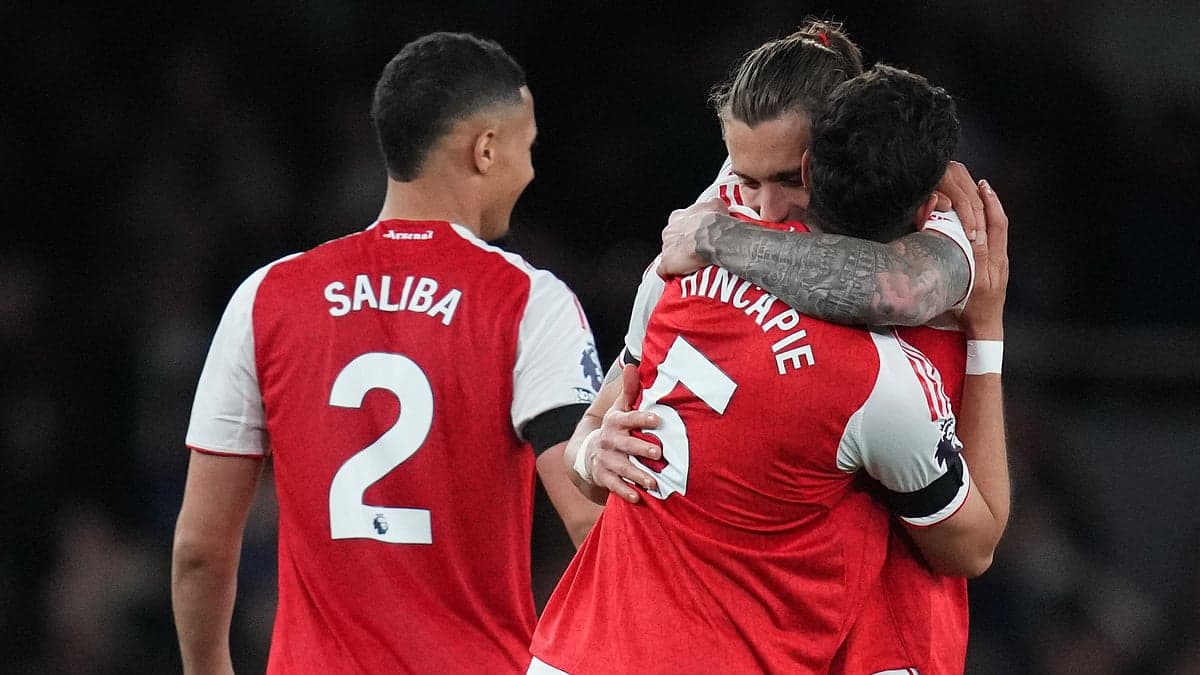
Arsenal’s XI told a clear tactical story. Mikel Arteta returned to his favoured 4-3-3: David Raya behind a back four of Riccardo Calafiori, Gabriel, William Saliba and C. Mosquera. Ahead of them, Declan Rice anchored the midfield with Martin Ødegaard and Eberechi Eze as dual interiors, while Bukayo Saka and Leandro Trossard flanked Kai Havertz in a fluid front three.
This shape dovetails with Arsenal’s statistical profile. Heading into this game, they had played 37 league matches, winning 25 overall. At home they had been formidable: 15 wins from 19, scoring 41 goals at an average of 2.2 per game and conceding just 11 at an average of 0.6. Eleven home clean sheets underline the defensive platform that allows Arteta to commit numbers forward.
Burnley arrived in London knowing the scale of the task. Nineteenth in the table with just 4 wins overall from 37, they had lost 14 times on their travels, conceding 46 away goals at an average of 2.4 per game. Mike Jackson’s choice of a 4-2-3-1 was pragmatic rather than expansive: M. Weiss in goal; a back four of Lucas Pires, Maxime Esteve, Axel Tuanzebe and Kyle Walker; Florentino and Lesley Ugochukwu as the double pivot; a three of Jaidon Anthony, Hannibal Mejbri and Loum Tchaouna supporting lone forward Zian Flemming.
Burnley’s season-long numbers framed their approach: only 4 clean sheets overall, none away, and 74 goals conceded at an average of 2.0 per match. Against the league’s most balanced attack–defence profile, survival at the Emirates was always likely to be about damage limitation first.
II. Tactical Voids – Absences and Discipline
Both coaches had to navigate key absences. Arsenal were without Mikel Merino (foot injury), Jurrien Timber (ankle) and Ben White (knee). The absence of White reshaped the right side of the defence, pushing Mosquera into a starting role and placing more onus on Saliba’s organisational authority. Without Merino, Arteta leaned fully into Rice as the single pivot, with Ødegaard and Eze responsible for linking and pressing high.
Burnley’s issues were structural as much as individual. With Jordan Beyer (hamstring) and Josh Cullen (knee) missing, Jackson lost both a centre-back option and a midfield organiser. That made Florentino and Ugochukwu’s double pivot non-negotiable and reduced Burnley’s ability to rotate or change the game state from the bench in central zones.
Disciplinary trends added another layer. Arsenal’s yellow card distribution this season reveals a late-game edge: 26.00% of their bookings come between 76-90 minutes, the single highest window, with another 20.00% between 61-75. This suggests a side that maintains intensity and aggression into the closing stages—useful when defending narrow leads like this 1-0.
Burnley’s card profile is more chaotic. Their yellow cards peak in the 16-30 minute window at 20.31%, then flare again late: 18.75% between 76-90 and another 18.75% between 91-105, with a small 3.13% unassigned. Red cards have been scattered across 31-45, 76-90 and 91-105 (33.33% each), hinting at a team that can lose emotional control when stretched. That volatility, combined with Arsenal’s sustained pressure, made Burnley’s defensive discipline a fragile foundation.
III. Key Matchups – Hunter vs Shield, Engine Room Battles
The headline duel was “Hunter vs Shield”: Arsenal’s attacking armoury against Burnley’s porous away defence. Overall, Arsenal average 1.9 goals per game, with 2.2 at home. Burnley concede 2.4 goals on their travels. The arithmetic was stark, and the 1-0 scoreline arguably flattered the visitors.
Within that, individuals defined the narrative. Viktor Gyökeres, Arsenal’s leading league scorer with 14 goals and 3 penalties scored from 3 attempts, began on the bench but loomed as a late-game weapon. His 40 shots (22 on target) and 19 key passes this season mark him as a penalty-box reference point with link play. That threat alone forced Burnley’s centre-backs to defend deeper, creating pockets for Ødegaard and Eze between the lines.
Zian Flemming, Burnley’s top scorer with 10 league goals and 2 penalties scored, carried the visitors’ counter-attacking hope. With 37 shots (20 on target) and 268 duels contested, he is a volume outlet as much as a finisher. His 5 blocked shots this season show a willingness to shoot through traffic, but against Saliba and Gabriel—backed by a team that has kept 19 clean sheets overall—his touches were inevitably rationed.
In wide areas, Saka’s duel with Lucas Pires and the covering Ugochukwu was decisive. Saka’s season—7 goals, 5 assists, 63 key passes and 50 successful dribbles from 101 attempts—embodies Arsenal’s ability to tilt the pitch. Every time he isolated his full-back, Burnley’s back four had to compress, freeing Trossard on the opposite flank. Trossard himself, with 6 goals and 6 assists, plus 36 key passes, functioned as both finisher and creator, constantly rotating with Havertz to disrupt Burnley’s defensive reference points.
In midfield, the “Engine Room” battle pitted Rice and Ødegaard against Florentino and Ugochukwu. Rice, as the single pivot, allowed Arsenal to keep their rest defence high, pinning Burnley’s counters before they formed. Ødegaard, with 6 assists, 40 key passes and an 84% pass accuracy, dictated the rhythm between the lines, repeatedly finding Saka and Trossard in half-spaces. On the other side, Florentino and Ugochukwu were forced into reactive work—screening, shuttling, and rarely able to step beyond the ball.
At the back, Kyle Walker’s duel with Trossard and Eze was a test of endurance and discipline. Walker’s 9 yellow cards this season, alongside 55 tackles, 10 blocked shots and 44 interceptions, show a defender who lives on the edge. Here, his experience and recovery pace were vital, but every time he stepped out to engage, space opened for Arsenal’s interior runs.
IV. Statistical Prognosis – xG Echoes and Defensive Solidity
Even without explicit xG numbers, the statistical scaffolding points in one direction. A home side averaging 2.2 goals scored and 0.6 conceded at the Emirates, facing an away defence shipping 2.4 per match, will almost always generate the higher Expected Goals profile. Arsenal’s 11 home clean sheets and 19 overall suggest that Burnley’s chances were limited to low-quality, sporadic efforts, especially with the visitors having failed to score in 5 away games and 14 overall this season.
Burnley’s best route to bending the xG curve was set pieces and Flemming’s opportunism, but against a defence that has conceded just 26 goals in 37 games overall, those margins are razor-thin. Arsenal’s penalty record—4 scored from 4 overall—meant any reckless challenge in the box could have settled matters even more emphatically.
Following this result, the 1-0 feels less like a narrow escape and more like the logical outcome of two seasons colliding: Arsenal’s controlled, data-backed march towards the summit against Burnley’s statistical and structural fragility. The numbers, the shapes and the individual matchups all pointed the same way; the Emirates simply watched the story unfold.