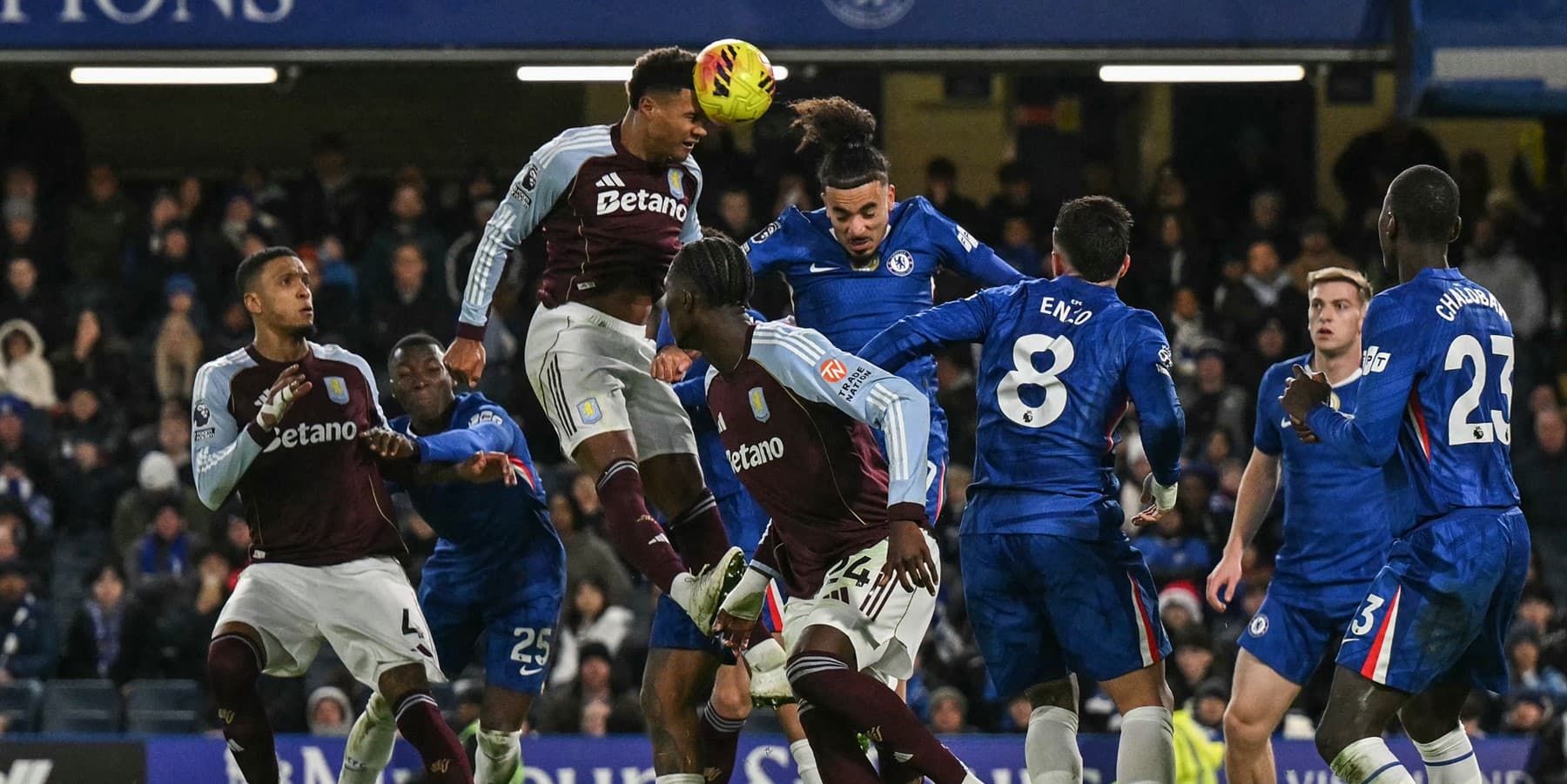
Aston Villa's Stunning Comeback Against Chelsea at Stamford Bridge
In a dramatic night at Stamford Bridge, Aston Villa overturned a first-half deficit to beat Chelsea 2–1, producing another statement comeback in the Premier League’s 18th round. Chelsea controlled long stretches and generated the clearer volume of chances, but Villa’s second-half surge — sparked by Unai Emery’s changes — proved decisive. The result keeps Villa firmly in the Champions League places and tightens their grip on third, while Chelsea’s push to stay inside the top-four conversation took another hit.
First Half Analysis
Chelsea began with authority, pressing high and circulating possession with confidence. Enzo Maresca’s side lined up in a 4-2-3-1 and pinned Villa back for much of the opening period, forcing the visitors into a reactive, compact shape. The breakthrough arrived in the 37th minute from a set-piece: Reece James swung in a dangerous corner that was turned in from close range by João Pedro, giving the home crowd the lead their dominance seemed to deserve.
By halftime, the narrative was clear. Chelsea had dictated tempo and territory, but their finishing never matched the control they established. They reached the interval ahead, yet the underlying wastefulness lingered — a theme that would define the final outcome. Villa, largely subdued before the break, needed a response both in intensity and in threat if they were to avoid drifting out of the contest.
Second Half Narrative
Emery provided that response with personnel and a shift in momentum. Villa’s turning point came just before the hour when Ollie Watkins was introduced as part of a triple substitution, instantly giving the visitors a more direct outlet and sharper running behind Chelsea’s back line. Five minutes later, Watkins equalised in the 63rd minute after a quick move opened space, and the ball eventually broke in Villa’s favour in the box, allowing the substitute to force the finish and swing belief toward the away end.
Chelsea, now chasing control rather than commanding it, became increasingly frantic. Their frustration showed in the discipline column — the hosts finished with five yellow cards and conceded 16 fouls — as Villa grew bolder and more efficient in the key moments.
The decisive blow arrived in the 84th minute and again came from a dead-ball situation. Youri Tielemans delivered a corner, and Watkins rose to power a header home, completing the turnaround and sending Villa’s travelling support into celebration. It was a ruthless finish to a second-half spell in which Villa, despite seeing less of the ball, repeatedly found the higher-value moments.
Statistical Deep Dive
Statistically, the match read like a classic story of control versus conversion. Chelsea finished with 62.9% possession and 14 shots, but only three on target, alongside an xG of 2.14 that underlined how much they left on the pitch. Villa, by contrast, produced 11 attempts and an eye-catching eight shots on target, turning 1.19 xG into two goals through sharper execution and superior timing. The visitors also edged corners 7–6, a detail that mattered when the winning goal arrived via Tielemans’ delivery.
Individual Performances
Ollie Watkins was the match-winner in every sense — a substitute brace that flipped the game and reinforced Villa’s growing reputation for impactful bench interventions. For Chelsea, João Pedro’s opener and the early dominance offered promise, but the collective story was defined by missed chances and a late collapse in control.
Match Significance & Conclusion
In the table, the outcome is significant. Aston Villa remain third with 39 points after 18 matches, and the win extended their remarkable run to 11 consecutive victories in all competitions, keeping them within three points of leaders Arsenal. Chelsea stay fifth on 29 points, three adrift of the top four, and will need to translate possession and territory into a more consistent end product as the season enters its next phase.