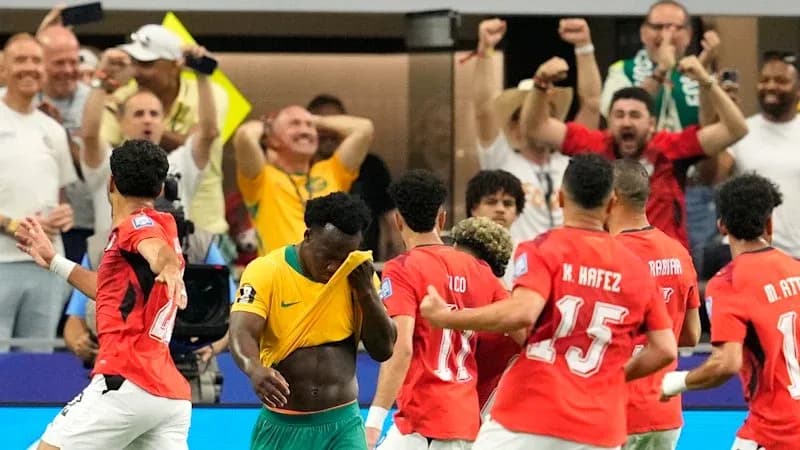
Australia Frustrated by Soft Goal Against Egypt
Australia went into the break trailing Egypt 1-0, frustrated by a soft goal, a lenient referee, and the loss of one of their most dangerous outlets in a half that always felt within reach.
Egypt strike, Australia seethe
The decisive moment came from the type of situation Australia usually own. A set piece, poorly handled. A cheap concession in a game where the Socceroos pride themselves on their organisation.
They were slow stepping out, the line not quite in sync, and Egypt pounced. The finish stood, the flag stayed down, and suddenly the Pharaohs had something to cling to. For a side happy to sit in and spoil, it was the perfect platform.
Inside the Australian camp, the annoyance was clear. They know they don’t normally give that sort of goal away. They know that, with their aerial power and defensive structure, those moments should be theirs. Instead, they spent the rest of the half chasing a game they felt they should have been controlling.
A referee under the microscope
The sense of injustice did not end with the goal.
Australia felt a key Egyptian challenge should have brought a yellow card, with the referee initially playing advantage but never returning to his pocket. The decision, or lack of it, left the Socceroos bristling. The message from the bench was blunt: disappointing, but move on and be better after the break.
Then came the stoppage-time flashpoints. A cross into the box, a weak header squeezed between two defenders, and the ball appeared to brush Rabia’s arm. It was more ball-to-arm than deliberate handball, but it was enough for Australian players to appeal. Nestor gestured to his own arm, as if inviting another look. Nothing doing.
Behind them, Cristian Volpato was hauled down by Havez at the back post. Again, no whistle. Two penalty shouts, no reward. The anger simmered.
All this on top of a first half that saw a three-minute hydration break, a goal, constant Egyptian time management, and yet only five minutes added on. For a side chasing the game, it felt like another decision going against them.
Socceroos carry the threat
Strip away the noise, though, and the football itself told a different story. Egypt had the lead, but Australia carried much of the attacking intent.
Behich repeatedly drove at Hany down the left, one surge deep into Egypt’s defensive third sparking a spell of pressure that ended with a long throw from Circati. The big men came: Irvine, Souttar, the “tall timber” rising in the box. They couldn’t quite get the decisive touch, but the ball dropped kindly enough for Irankunda to recycle it, feeding Behich again on the edge.
This time, Behich let fly. The shot arrowed low towards the right post, and Egypt’s goalkeeper had to get down sharply to keep it out. A proper chance. A proper warning.
Moments later, Irankunda almost made another break count. His presence alone changed the tempo, dragging Egypt’s defenders into awkward positions and forcing them to scramble. The Socceroos started to stitch together the kind of passing sequences they wanted: five, six, seven passes, moving Egypt around, opening those pockets of space between the lines. Every time they did, the game tilted their way.
The belief was simple: keep the ball better, and the chances will keep coming.
Salah subdued, Egypt cling on
On the other side, Egypt’s threat was sporadic but sharp when it appeared. They forced Australia to run, to chase, to work for every loose ball. They hit hard in the tackle and then milked every contact, every fall, every pause.
Mo Salah, carrying hamstring tightness, never fully opened up. He drifted, probed, and picked his moments rather than tearing through the game. His quality still flickered – clever movement off Souttar’s shoulder, a neat touch, a quick release – but Herrington read one of those runs superbly to snuff out a dangerous break.
When Egypt earned a free-kick on the edge of the final third, Salah stood over it. Instead of going for goal, he rolled it square to Attia, who unleashed a fierce, precise drive from distance. Australia’s back post coverage held firm, bodies in the way, danger averted.
Egypt’s goal aside, they lived mostly on moments, not dominance. The side that looked likelier to score again, before and after the opener, wore green and gold.
A cruel blow to Bos
Then came the sight no Australian wanted: Jordan Bos on the turf and staying there.
One of the Socceroos’ most dynamic players, Bos eventually rose with the help of two trainers, unable to put any weight on his left foot. As he was carried from the field, the half took on a different tone. It wasn’t just about the scoreline now; it was about the loss of a key weapon for the rest of the night and possibly beyond.
For a team that relies on his energy and direct running, it was a gut punch.
All to play for
Despite the complaints, despite the injury, the game remained there for Australia. Egypt’s lead was fragile, built on a single lapse. Their approach – tough in the challenge, relentless in exaggerating contact, content to sit on what they had – invited pressure.
The Socceroos had already shown they could find space when they strung passes together. They had already forced the goalkeeper into action. They had already made Egypt uncomfortable.
The message for the second half was clear: tidy up the ball, turn territory into goals, and make sure those missed moments don’t define the night.