Barcelona vs Atletico Madrid: Hansi Flick's Pressing Strategy
Hansi Flick did not dress it up. Atletico Madrid are coming, and for his Barcelona side that means one thing above all: every forward runs, or everyone suffers.
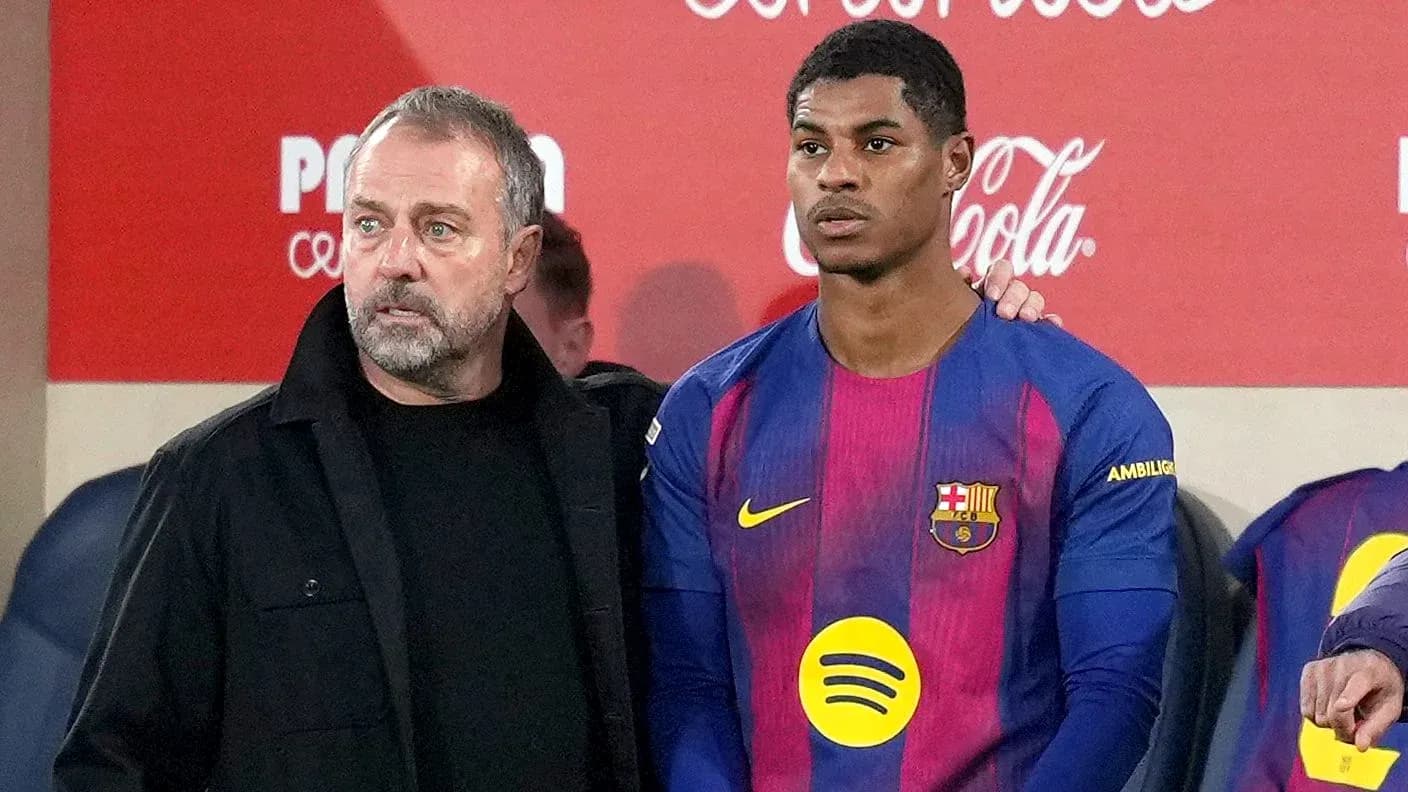
Marcus Rashford has impressed his new coach since arriving in Catalonia, but Flick made it clear that the Englishman’s attacking spark will not excuse him from the hard yards when Atleti’s wide threats start to surge.
“It’s not just about pressing with the ball; in the end, you also have to defend,” Flick said in his pre‑match press conference, the warning as much for his front line as for anyone else. “But he’s doing things well and has adapted. We’re going to play against Atletico, and they are good down the wings.”
That is the crux of it. Rashford’s adaptation is a positive story, yet Flick’s Barcelona are being built on collective work without the ball. Any crack in that structure, any winger switching off for a moment, and Atletico’s wide players will pounce. Flick knows it. So do his defenders.
The German spoke with the conviction of a coach who has seen what happens when the press goes missing. He went straight back to a painful reference point: the 2-1 La Liga defeat to Girona in mid-February, a night that still stings but, in his mind, changed something.
“We have our style and we know how we want to play,” he said. “When we don't press, it's easier for the opponent to find space. We saw that with the first goal; we didn't pressure the ball.”
That Girona loss has become a line in the sand. From that setback, Flick believes, came a sharper, more aggressive version of his young team.
A young back line under the spotlight
The most striking symbol of that youth is at the heart of Barca’s defence. Pau Cubarsí and Gerard Martin have been thrown into the fire, asked to anchor a side expected to compete on all fronts while still learning what it means to live at this level.
“After the match against Girona, we played at a better level,” Flick reflected. “Our team is very young. The two center-backs, [Pau] Cubarsí and Gerard [Martin], are doing a fantastic job, but it's normal that in some situations they don't make the right decision. They are young, and adapting to this level is difficult to see.”
There was no criticism in his voice, only realism. Mistakes will come. The question is whether the structure around them — the press from the forwards, the protection from midfield — can limit the damage while those defenders grow.
That is where Rashford and the rest of the attacking cast come back into focus. Flick is not simply asking his forwards to close down for show. He is demanding that the first line of pressure becomes a shield for Cubarsí and Martin, a way to keep Atleti’s dangerous wide men from isolating his centre-backs in the channels.
Champions League standards
All of this unfolds under the brightest lights. This is the Champions League, a stage Flick reveres and one he repeatedly framed as a privilege that comes with a price.
“Now we're talking about the Champions League, it's a fantastic competition that everyone wants to play in,” he said. The implication was obvious: if you want to stay in it, you run. You close down. You defend as if your place in the tournament depends on it — because it does.
Barcelona arrive at this tie as a work in progress with elite expectations. A young core. A coach with a clear idea. A new signing in Rashford who has already shown he can fit the system, but who will be judged just as much on what he does when Barca lose the ball.
Atletico will test every part of that structure, especially out wide. Flick has drawn the lines. Now his players have to live inside them.