Barcelona’s New Era: Deco Envisions Future Success
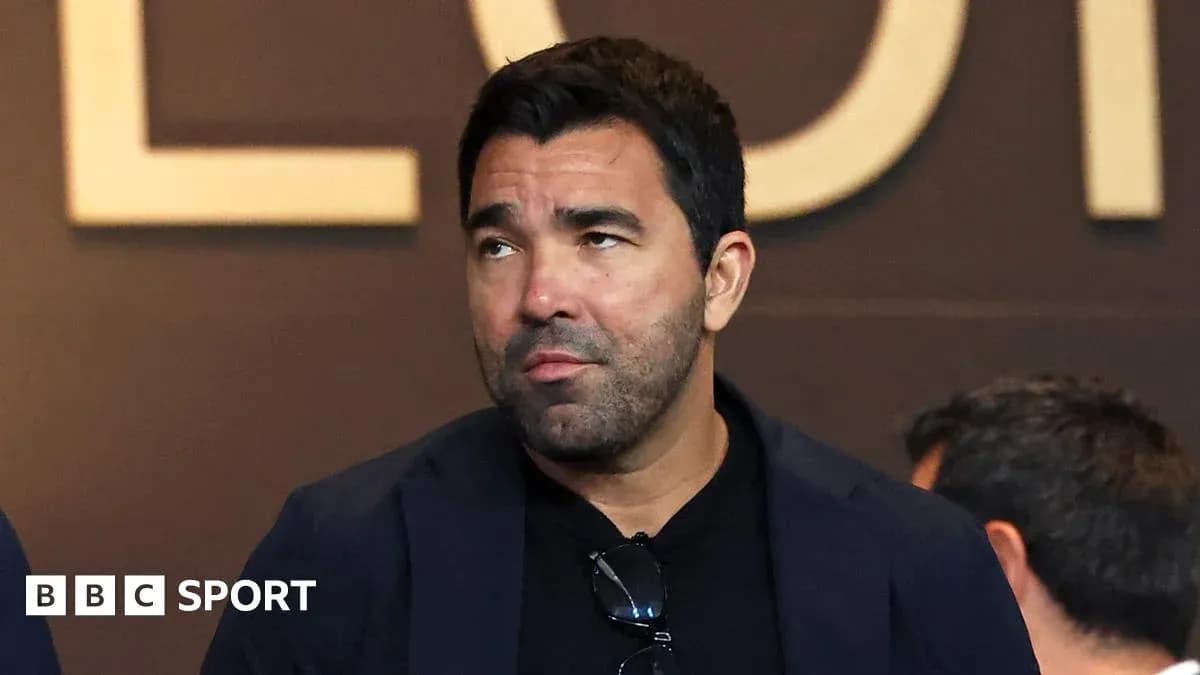
Barcelona have their trophy. Deco insists they’ve only just found their team.
La Liga wrapped up with three games to spare, Real Madrid beaten to the line, and Hansi Flick’s reshaped side stringing together an 11-game winning run that felt less like a sprint and more like a statement. Yet inside the club, there’s little sense of completion. For Deco, this is not the end of a cycle. It’s the opening chapter.
“We won two La Ligas but these players want to win more, they believe that they can win more,” the sporting director told BBC Sport, framing the back-to-back titles not as an achievement to be admired, but as a platform to be attacked.
La Masia at the Heart of a New Identity
The spine of this Barcelona is unmistakably homegrown. Lamine Yamal, Pau Cubarsí, Fermin Lopez – names that, a short while ago, belonged to academy reports and youth tournaments – now carry the weight of a club that measures itself in eras, not seasons.
Deco sees that as decisive. Not just for what they’ve done, but for what they think they can still do.
“If the players believe they can achieve more important things, you see they still want to do something important,” he said. “I believe that this team for me is the beginning of the era, the beginning of the history of this team because they are so young and still want to win something important.”
This is not nostalgia for La Masia. It’s a plan. Flick has leaned into the academy talent, trusting teenagers and early‑twentysomethings in pressure games, and the payoff is a squad that looks built for the long run rather than patched together for a single push.
The consequence? Barcelona, Deco argues, no longer need to tear everything up every summer.
In guiding the club to a second straight title, Flick has shaped a group strong enough that, in Deco’s words, they won’t have to “go to the market for four to five players.” The days of emergency overhauls and panicked shopping sprees are, for now, on hold.
Rashford’s Loan, and a Defining Free-Kick
Barcelona’s Champions League campaign ended in the quarter-finals, a reminder that this project is still under construction. But one of the most intriguing threads of the season came from outside the club’s usual talent pipeline.
Marcus Rashford arrived on loan from Manchester United, a high-profile forward stepping into a new league and a demanding context. His future remains unresolved, yet the 28-year-old has already made it clear he would like to stay in Spain next season.
Deco refused to be drawn into specifics over what happens next. What he did make clear was the club’s appreciation for what Rashford has delivered.
He pointed straight to El Clásico. The free-kick. The moment.
Although Rashford has not been a guaranteed starter, he produced one of the defining snapshots of the title race with a stunning set-piece to break the deadlock against Real Madrid. It was the kind of goal that shifts narratives as much as scorelines.
“We knew he had these kinds of skills, I saw him scoring at United many times, but this goal was unbelievable. It was a fantastic goal,” Deco said.
Rashford’s impact stretches beyond one strike. Across 32 league appearances, he scored eight times and laid on seven assists, numbers that speak of steady influence rather than cameo flashes. In the Champions League, he added six goals and three assists in 11 matches, carrying his threat onto the European stage even as Barcelona fell short of the semi-finals.
Responsibility, Reaction, and a Decision to Make
Rashford did not walk into a vacant role. He arrived with a clear brief: cover for, and in many ways replace, Raphinha. That is not a simple assignment at a club where every wide forward is measured against a long line of superstars.
“Marcus has helped us a lot because he came on loan, it is not easy to come on loan as a player like him because he is a top player,” Deco said. “He helped us a lot because he had the responsibility to replace Raphinha, it is not easy but he did very well.”
There were spells on the bench. There were rotations, tactical tweaks, and nights when Rashford had to watch others start ahead of him. Deco highlighted how the forward handled that challenge.
“Sometimes he [is] on the bench and it’s not easy but he reacted very well and he did everything,” he explained. “His season was very good and we are happy he won La Liga with us. He deserves [it], he works a lot and works hard to be here. We are happy with him.”
Behind the scenes, the arithmetic is straightforward enough. Barcelona have the option to sign Rashford permanently for 35m euros (£30m). For a player with his output and profile, that figure will tempt many within the club, especially given how comfortably he has adapted to Flick’s system and the demands of Spanish football.
Yet Deco stayed firmly away from any public commitment. No promises, no declarations – only praise for what has already been done.
What is not in doubt is that Rashford has earned his medal. He arrived on loan, slotted into a title-winning machine, accepted rotation, and still found ways to decide big games. For a player whose career has often been scrutinised through the lens of expectation, this season in Catalonia has offered something more tangible: a major league title and a sense of belonging in a side on the rise.
A Young Core, an Established Standard
Barcelona’s season ends with a familiar sight – a La Liga trophy – but the mood around the club feels different. This is not an ageing team squeezing out one last triumph. It is a young core, backed by an ambitious sporting director and a coach with a clear structure, setting a new standard for what comes next.
Deco’s language is deliberate. He talks about “the beginning of the era,” “the beginning of the history of this team.” Those are big words in a place where eras are measured against Johan Cruyff and Pep Guardiola.
The difference now is that Barcelona are not chasing an identity. They seem to have one: a blend of La Masia graduates, targeted signings, and players like Rashford who can step in, adapt quickly, and raise the level.
Two titles in two years is a return to domestic dominance. The real test, as Deco knows, lies ahead. Can this group, still so young and still so hungry, turn a promising start into something that genuinely deserves to be called an era?