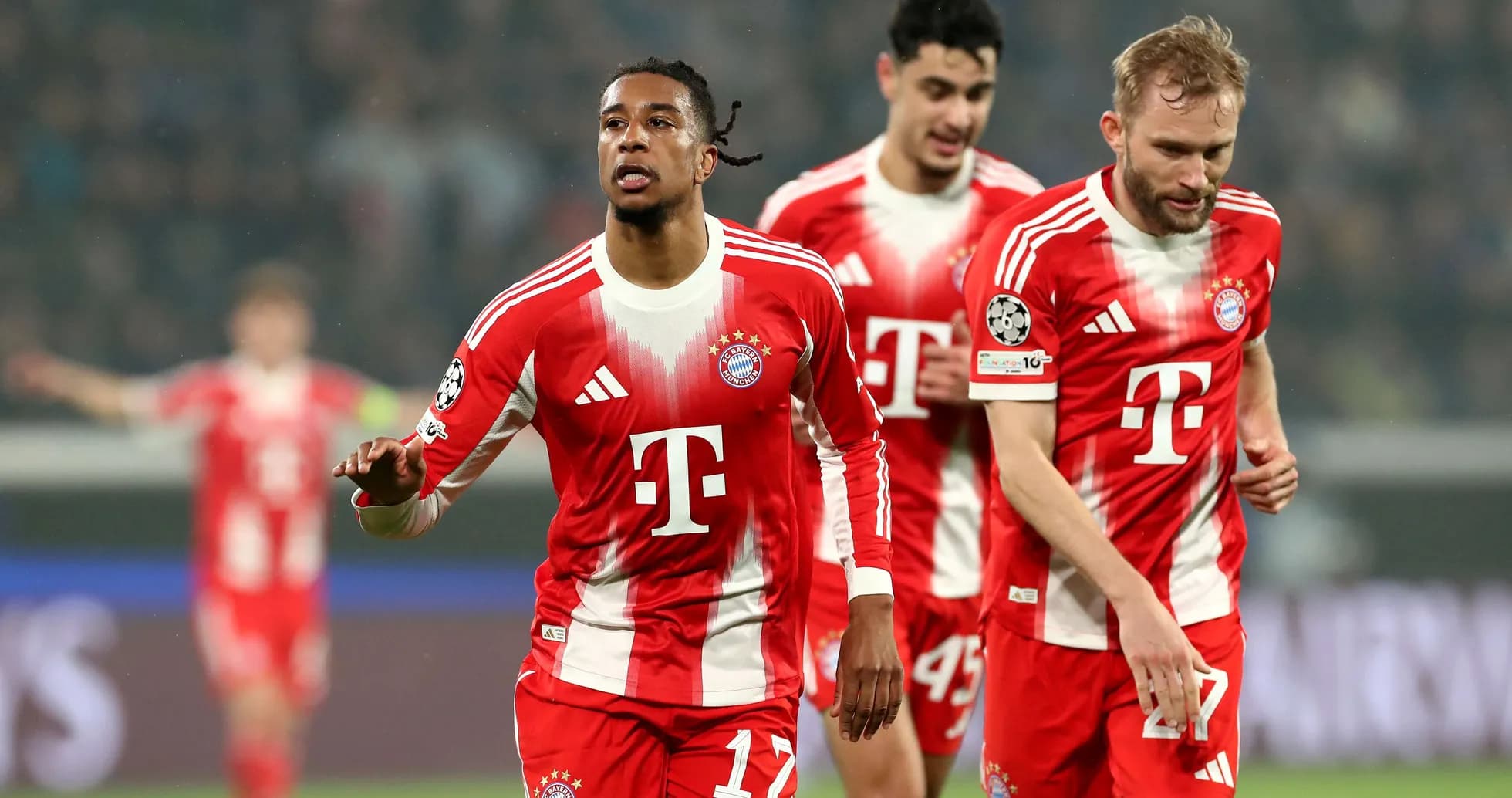
Bayern München vs Atalanta: Champions League Second Leg Preview
The second leg in Munich comes with the tie apparently decided on the scoreboard but still highly relevant for both clubs’ 2025 UEFA Champions League trajectories. Bayern return home after a dominant 6-1 away win in Bergamo in the first leg, while Atalanta face a near-impossible task to overturn a five-goal deficit at Allianz Arena.
The first leg & head-to-head implications
The first leg in Bergamo was brutally one-sided. Bayern München’s 6-1 victory away at Atalanta has effectively put the Italian side in a desperate position. Bayern led 3-0 at half-time and never lost control, underlining a huge gap in efficiency and game management on the night.
Statistically, that result aligned strongly with Bayern’s broader Champions League profile. Across all phases of the competition, Bayern’s biggest away win is listed as 1-6 – exactly the scoreline achieved in Bergamo. Atalanta’s season data also records a 1-6 home defeat as their heaviest home loss, again matching this first leg. The numbers confirm that this was not an outlier in isolation, but the most extreme expression of existing trends: Bayern as a high-scoring, ruthless side; Atalanta as vulnerable when games open up.
With no other head-to-head matches provided, the tie’s narrative is dominated by this single, emphatic Bayern success. The five-goal cushion means Bayern can approach the second leg with a focus on control, rotation, and injury avoidance, while Atalanta must balance pride, realism, and resource management for the rest of their European and domestic year.
The global picture: league phase vs all phases
In the league phase, Bayern’s numbers were those of a leading contender. They sit 2nd in the overall Champions League table with 21 points from 8 matches, winning 7 and losing just 1, with a goal difference of +14 (22 scored, 8 conceded). At home in the league phase they were perfect: 4 wins from 4, scoring 12 and conceding only 2. That home defensive record – just 0.5 goals conceded per game – is a major barrier to any Atalanta comeback.
Across all phases of the competition, Bayern’s attacking power looks even more imposing. They have played 9 matches, winning 8 and losing only once, with 28 goals scored (an average of 3.1 per match) and 9 conceded (1.0 per match). At home across all phases, they average 3.0 goals scored and 0.5 conceded. Bayern have yet to fail to score in any Champions League match this campaign and have kept 2 clean sheets, reinforcing the sense that even a rotated side is likely to add to the aggregate.
Atalanta’s league-phase performance shows why they reached this stage but also why the tie has turned so heavily against them. They rank 15th with 13 points from 8 matches (4 wins, 1 draw, 3 defeats), with a neutral goal difference (10 for, 10 against). Away in the league phase, they have been inconsistent: 2 wins and 2 losses, scoring 4 and conceding 5. That 1.0 goal per away game in the league phase is far below what they would need in Munich even to threaten the aggregate.
Across all phases, Atalanta have played 11 matches, winning 5, drawing 1, and losing 5. They average 1.4 goals scored and 1.7 conceded per match. Away from home, the attack drops to 0.8 goals per game (4 goals in 5 matches), while they concede 1.4 on their travels. Their biggest away win across all phases is 0-3, but their heaviest away defeat is 4-0, illustrating a wide variance and a tendency to collapse when overmatched. The first leg’s 1-6 home loss already represents their worst defensive night of the campaign.
Seasonal impact for Bayern München
For Bayern, the second leg is less about survival and more about shaping the rest of their 2025 Champions League campaign. With a 6-1 lead and an almost flawless record in the league phase, failing to progress from this position would be one of the biggest collapses in modern European history. Realistically, this match is an opportunity to:
- Manage minutes for key players while maintaining rhythm.
- Preserve their perfect home record in the league phase (4 wins from 4 so far) and extend their overall run to 9 wins from 10 across all phases.
- Further boost confidence in their 4-2-3-1 structure, which they have used in all 9 Champions League matches.
Conceding early or losing the match on the night would not jeopardize qualification, but it could dent the aura built by an attack averaging over 3 goals per match. Conversely, another convincing win would reinforce Bayern’s status as one of the main favourites to win the 2025 edition.
Seasonal impact for Atalanta
For Atalanta, the aggregate context radically changes the target. Overturning a five-goal deficit against a side that concedes 0.5 goals per home game in the league phase is statistically implausible. Instead, the second leg’s impact is more psychological and reputational:
- Limiting the damage after a 1-6 home defeat is crucial. Another heavy loss could drag down their overall defensive metrics (currently 1.7 goals conceded per match across all phases) and affect confidence for future European campaigns.
- A competitive performance, even in elimination, can stabilize a season that already shows streakiness: a longest winning run of 3 but also a longest losing streak of 3 across all phases.
- Scoring in Munich would matter. They have failed to score in 4 of 11 Champions League matches across all phases; avoiding another blank away from home would show that the first leg was a collapse rather than a structural mismatch.
Verdict: what this match means for the 2025 campaign
The tie is essentially decided, but the second leg still carries meaningful seasonal consequences. For Bayern, it is about confirming their dominance: protecting an outstanding home record, maintaining an elite goals-per-game rate, and arriving in the quarter-finals with momentum and minimal physical or disciplinary issues. Any sign of defensive looseness or complacency could be a warning for tougher rounds ahead.
For Atalanta, the Allianz Arena trip is about damage control and pride. Progression is beyond realistic expectation; instead, the focus is on restoring credibility after their heaviest home defeat across all phases, showing tactical resilience, and using the experience to refine a flexible but fragile 3-at-the-back system for future European campaigns. The aggregate may be decided, but the performance in Munich will still shape how both clubs carry their 2025 Champions League story into the later months of the year.