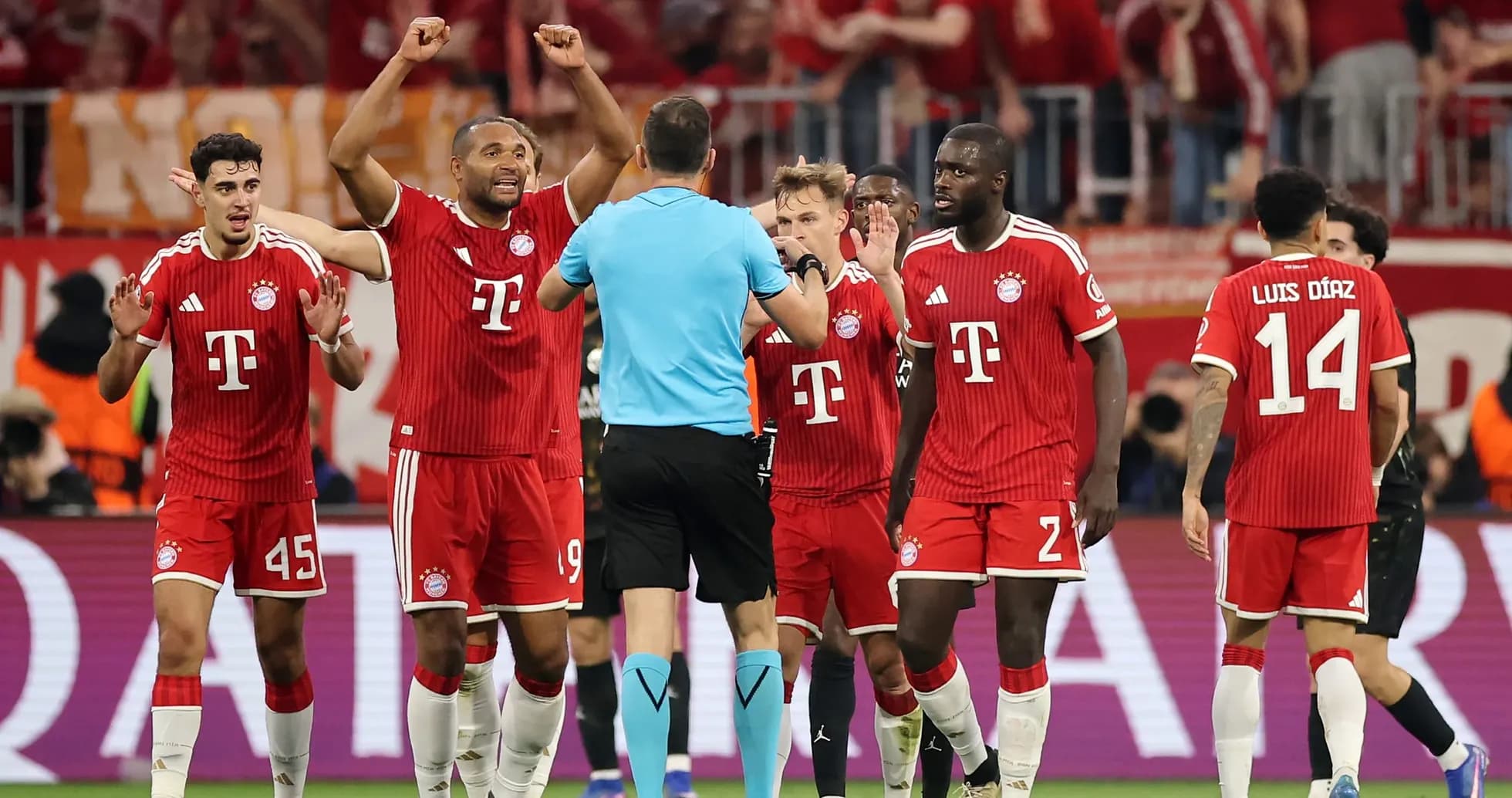
Bayern München vs PSG: A Tactical Clash in the Champions League Semi-Final
Under the Allianz Arena lights, this semi-final felt less like a single match and more like two footballing ideologies colliding. Bayern München, with their familiar 4-2-3-1 under Vincent Kompany, met Paris Saint Germain’s 4-3-3, a shape that has become second nature for Enrique Luis’s side. The 1–1 draw leaves everything delicately poised, but the patterns revealed here will define the tactical chessboard for the return leg.
I. The Big Picture – Two Heavyweights, One Narrow Margin
Heading into this game, Bayern had carved out a ruthless Champions League profile. Overall they had played 14 matches, winning 11, drawing 1 and losing just 2. At home they were close to flawless: 7 fixtures, 6 wins, 1 draw, 0 defeats, with 21 home goals scored and 7 conceded. That is an average of 3.0 goals scored at home against 1.0 conceded, an attacking avalanche protected by a solid, if not watertight, back line.
Paris Saint Germain arrived with a different kind of authority. Across 16 matches they had 10 wins, 4 draws and 2 losses. On their travels they had played 8 times, winning 5, drawing 2 and losing only 1, scoring 19 away goals and conceding 8. An away average of 2.4 goals scored and 1.0 conceded underlined that this was no timid visitor; this was a side comfortable imposing itself in hostile arenas.
The league table context sharpened the contrast. Bayern sat 2nd in the Champions League standings with 21 points and a goal difference of 14, built from 22 goals for and 8 against. PSG were 11th with 14 points and a goal difference of 10, from 21 scored and 11 conceded. Both sides carried serious firepower; both had learned to live with the risks that come with it.
II. Tactical Voids – Absences That Bent the Game’s Shape
The team sheets were as notable for who was missing as for who started. Bayern were without S. Gnabry, M. Cardozo, C. Kiala, W. Mike and B. Ndiaye. Gnabry’s absence in particular removed a direct, vertical runner from the bench, limiting Kompany’s capacity to change the rhythm in the wide areas. It forced even more creative burden onto L. Díaz and M. Olise, both already high-usage players in this campaign.
PSG’s issues were concentrated in the back line. A. Hakimi, L. Chevalier and Q. Ndjantou were all unavailable. Without Hakimi, Enrique Luis lost his most aggressive overlapping outlet on the right and one of his top assist providers in this competition. That absence pushed W. Zaire-Emery into the back four, subtly altering the balance of the midfield and the way PSG could defend Bayern’s wide rotations.
Disciplinary trends from the season also hovered over the contest. Bayern’s yellow-card profile shows a pronounced late-game spike: 37.04% of their cautions arrive between 76–90 minutes. PSG mirror that late volatility, with 42.86% of their yellows also coming in the 76–90 window. This shared tendency towards late-game edge and risk-taking foreshadowed a second half that was always likely to be stretched and emotionally charged, even if this particular night stayed just short of full combustion.
III. Key Matchups – Hunter vs Shield, Engine vs Enforcer
Hunter vs Shield: Harry Kane against PSG’s defensive core
H. Kane entered as the competition’s most ruthless finisher in this tie: 14 goals and 2 assists in 13 appearances, from 36 shots and 25 on target. His penalty record is revealing – 4 scored but 1 missed – a reminder that even his efficiency carries a human margin of error. Around him, Bayern’s season-long attacking numbers were intimidating: overall they had scored 43 goals, with an overall average of 3.1 goals per game.
Against him stood a PSG defence that, on their travels, had conceded only 8 goals in 8 matches, an away average of 1.0. Marquinhos and W. Pacho formed the central wall, flanked by N. Mendes and Zaire-Emery. It is a back line built for front-foot defending: Pacho’s aggression, Marquinhos’s reading of space, Mendes’s recovery speed.
The duel was less about pure man-marking and more about managing zones. Kane’s habit of dropping off to link play drew Marquinhos into uncomfortable midfield pockets, opening lanes for J. Musiala and L. Díaz to attack the half-spaces. PSG’s shield held in open play, but the constant threat of Bayern’s box occupation meant every cross and second ball felt like a live grenade.
Engine Room: Kimmich and Pavlovic vs Vitinha and Neves
If Kane and Kvaratskhelia were the headline acts, the true story unfolded in midfield. Bayern’s double pivot of J. Kimmich and A. Pavlovic is a blend of orchestration and steel. Kimmich, with 1,117 passes this campaign and 30 key passes, is the metronome and the enforcer in one body, but his 4 yellow cards underline how often he walks the disciplinary tightrope. Alongside him, Pavlovic offers verticality and calm progression.
PSG’s answer was a three-man engine: Vitinha, F. Ruiz and J. Neves. Vitinha, with 1,553 passes and 23 key passes, plus 6 goals, has evolved into a complete Champions League midfielder – press-resistant, incisive and relentless. Neves and Ruiz gave him the platform to step higher, to engage Kimmich not just as a destroyer but as a rival playmaker.
This 2-vs-3 central battle defined the game’s structure. When Bayern’s full-backs, K. Laimer and J. Stanisic, tucked in, they could briefly create numerical parity. When they stayed wide to manage K. Kvaratskhelia and O. Dembélé, Vitinha often found the spare pocket. The result was a pendulum: Bayern controlling with structured possession spells, PSG slicing through with faster, three-pass transitions.
Flanks of Fire: Díaz and Olise vs Mendes and Dembélé
On Bayern’s left, L. Díaz – 7 goals and 3 assists in this Champions League run, plus a red card in his disciplinary record – played with his usual blend of flair and edge. His duel with N. Mendes was one of fine margins: Díaz drifting inside to combine with Musiala, Mendes trying to time his forward bursts without leaving Marquinhos exposed.
On the right, M. Olise, with 5 goals and 6 assists and 34 key passes, was Bayern’s most creative conduit. His direct opponent was N. Mendes when Bayern switched play quickly, but structurally his influence was felt most against PSG’s right half-space, where Zaire-Emery and Dembélé had to decide whether to track him inside or pass him on.
For PSG, K. Kvaratskhelia and O. Dembélé offered mirror threats. Kvaratskhelia’s 10 goals and 6 assists, plus 51 dribble attempts with 29 successes, made him the most complete wide forward on the pitch. Dembélé, with 7 goals and 2 assists, added the chaos factor: a winger who can break any pressing structure with a single touch if given room.
IV. Statistical Prognosis – Margins, xG Logic and the Road Ahead
Even without explicit xG values, the season data points to a second leg shaped by attacking inevitability. Bayern’s overall average of 3.1 goals scored per match and 1.4 conceded, against PSG’s 2.8 scored and 1.4 conceded overall, suggests a tie that naturally gravitates towards multiple high-quality chances at both ends.
Bayern’s penalty record – 4 scored from 4 overall in this campaign, with no misses recorded in the team statistics, contrasted with Kane’s personal miss – hints at a side generally composed from the spot but not infallible. PSG, with 2 penalties scored from 2 and no misses, bring their own quiet ruthlessness.
Disciplinary trends will matter. Bayern’s late yellow-card surge (37.04% between 76–90) intersects dangerously with PSG’s own late spike (42.86% in the same period). In a second leg likely to be decided in the final quarter-hour, fatigue and emotion could easily tilt the balance through a single rash challenge or second yellow.
Following this result, the tactical verdict is clear: Bayern’s structured, high-volume attack versus PSG’s efficient, transition-heavy threat is a duel of philosophies that neither side can fully smother. The statistical profile leans towards a narrow, high-stakes contest where expected goals on both sides are significant but not overwhelming – the kind of match where one clinical moment from Kane or Kvaratskhelia, one line-breaking pass from Vitinha or Kimmich, can swing an entire season.
The semi-final is not just balanced on the scoreboard; it is balanced in the numbers and in the matchups. The second leg will not be about inventing something new, but about doubling down on what this night in Munich already revealed – and surviving the margins where these two super-teams are almost, but not quite, equal.