Bayern's Youth Revolution: A New Era of Debuts
The boiled sausages at Bayern’s campus canteen have become an unofficial barometer of the club’s youth revolution. Every debutant from the academy earns a Weißwurst breakfast, and under Vincent Kompany the pots have barely had time to cool.
Since Lennart Karl stepped onto the pitch at the Club World Cup last summer, nine youngsters have made their professional bow. In recent weeks, the pace has been frantic. A minor injury crisis ripped open the door and the kids came streaming through: Maycon Cardoso in early March against Gladbach, then Deniz Ofli, Filip Pavic and, most recently, Erblin Osmani. The chefs and sausage suppliers have been run ragged.
Youth chief Jochen Sauer turned up in the kitchen again not long ago and could only shake his head. “Here we are again – sooner than expected,” he joked to the staff. The latest feast was meant to celebrate Cardoso, but the queue of debutants just kept growing. Earlier in the season, Wisdom Mike, David Santos Daiber, Cassiano Kiala and Felipe Chavez had already been honoured. Nine academy debuts in a single campaign. A club record.
Sauer knows exactly what that means. Bayern have never before handed so many first-team debuts in one season to their own academy products, never given them so many minutes, never done it with such a low average age. He proudly points out that no other club in Europe’s top leagues can match that combination. The Weißwurst tradition is now on pause, partly to spare the overworked kitchen. A summer barbecue is planned instead – a different kind of celebration for what Bayern see as a record-breaking season for their academy.
The symbolism matters. Only a few years ago, this kind of pathway barely existed. The consequences are now scattered across the Bundesliga and beyond.
The “slap in the face” that sent Stiller away
No case illustrates the old problem better than Angelo Stiller.
Today, Stiller is one of the most complete midfielders in Germany, thriving at VfB Stuttgart under Sebastian Hoeneß and pushing for a World Cup squad place. But his Bayern story ended with what he called a “slap in the face” – a decision that said more about the club’s former transfer policy than about his talent.
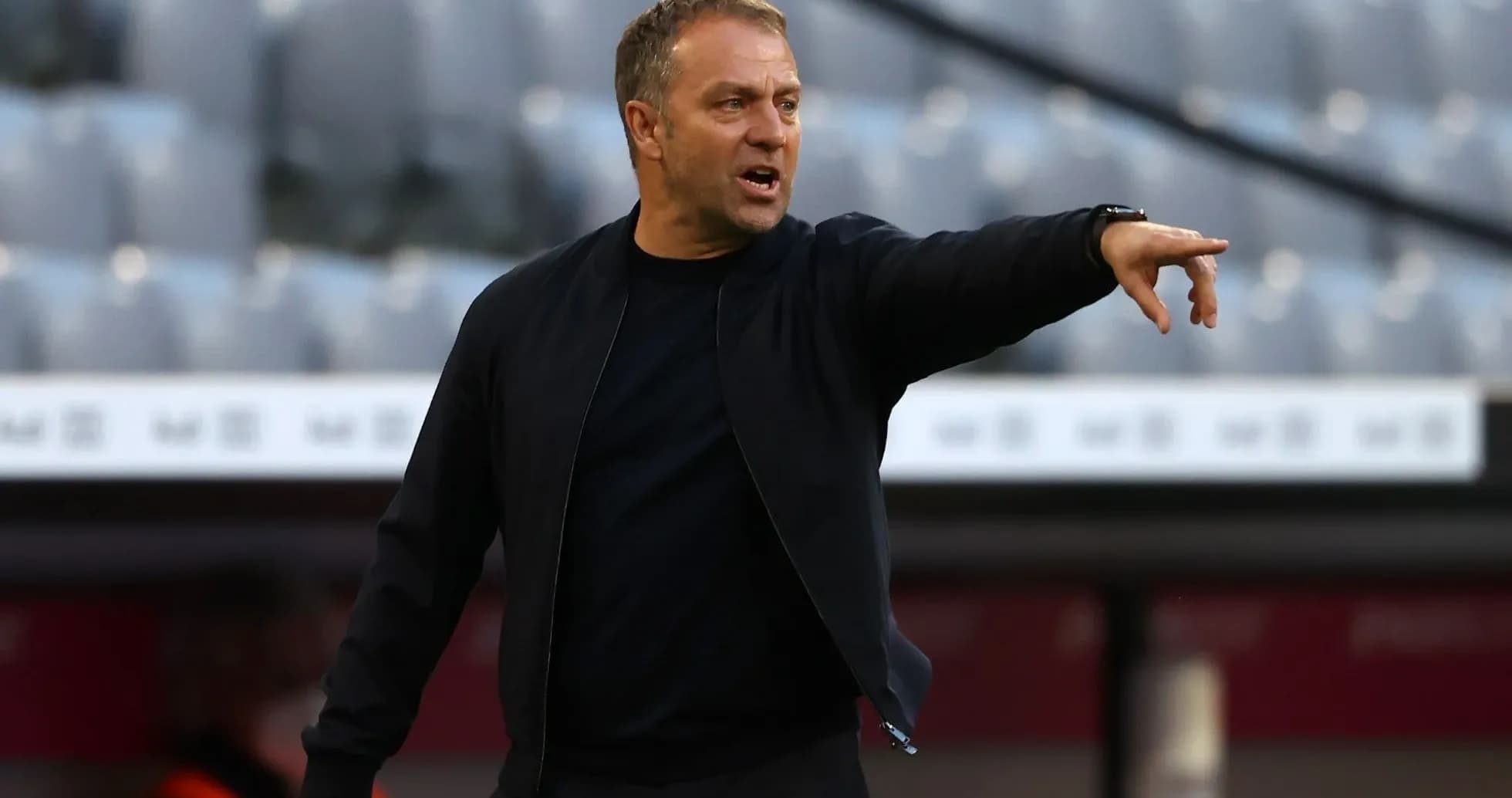
Rewind to 2020. Hansi Flick’s Bayern had just completed the treble and were charging towards the sextuple. Because of the pandemic, the transfer window stayed open until 5 October, and Bayern’s hierarchy responded with a frenzied late spree. Within 24 hours they announced five signings: Marc Roca for €9 million, Bouna Sarr for €8 million, Eric Maxim Choupo-Moting on a free, Douglas Costa on loan, and Tiago Dantas, a 19-year-old Portuguese midfielder, also on loan. Sporting director Hasan Salihamidzic fronted the business.
Two years later, that burst of activity looked like one of the most misguided transfer flurries of the modern Bayern era, a panicked reaction to a 1-4 defeat at TSG Hoffenheim. Only Choupo-Moting delivered lasting value. Sarr and Costa never truly helped the team. Roca and Dantas, meanwhile, clogged the pathway for two Munich-born academy midfielders: Stiller and Adrian Fein, now at SSV Jahn Regensburg. Some of those signings cost serious money; the homegrown options cost nothing but trust.
At least Bayern recouped a small profit on Roca, selling him to Leeds United for around €12 million. The Dantas deal proved far more contentious. The loan from Benfica was largely driven by Flick, who had admired the youngster during his time as sporting director at the DFB and, according to reports, pushed the move through against Salihamidzic’s wishes. “Brazzo” had other ideas for the midfield.
The controversy didn’t take long to erupt.
Flick’s favourite vs the local boy
By the turn of the year, murmurs from Säbener Straße grew louder. Dantas, training regularly with the first team, seemed to be leapfrogging Stiller in the pecking order, even though he wasn’t eligible to play until 1 January. Bayern had submitted the final paperwork too late, missing the registration deadline. The optics were awful: an outside talent, unable to play, apparently being favoured over a local academy product.
The reporting lit a fuse. Flick bristled.
"That’s not true," he snapped when confronted with the claims. He complained that people were always trying to drive a wedge between the first team and the academy, insisting that communication was constant and that “we speak with one voice” when issues arise.
Yet the sense of injustice never really went away. In November 2021, Stiller himself lifted the lid. He described the arrivals of Roca and Dantas as a “slap in the face” and admitted that, by then, he knew his Bayern career was effectively over. “Ultimately, it was clear to me that my time at Bayern would be over after this season,” he told SPOX.
He let his contract run down and left on a free transfer for TSG Hoffenheim, where he quickly became a regular under Hoeneß. When the coach moved to Stuttgart for the 2023/24 season, Stiller followed – and his development kicked up another level.
Now 24, he has grown into one of the standout midfielders in the country. During the March training camp, in the first gathering of the World Cup year, he started twice for the DFB. Julian Nagelsmann had initially left him out, a decision that baffled many observers. Injuries to Aleksandar Pavlovic, another Bayern academy graduate, and Felix Nmecha opened the door. Stiller stepped straight into the starting XI and, with that, revived his World Cup dream.
The irony for Bayern is obvious. The club that once blocked his path now celebrates its academy-first season as a badge of honour.
Dantas, the globetrotter who found a home
And Dantas? His story took a very different route.
The slight, technically gifted midfielder never reached the level Bayern had hoped for. Flick himself soon realised the gap. Physically, Dantas struggled to cope with the demands at Säbener Straße. He made just two Bundesliga appearances, both fleeting. When Flick departed in the summer after a series of public and private clashes with Salihamidzic and later crashed out as Germany coach, Bayern also quietly closed the Dantas chapter. They chose not to activate the €8 million purchase option.
Benfica didn’t have a clear plan for him either. Dantas became a footballing nomad. Three more loan spells followed: CD Tondela in Portugal, PAOK Thessaloniki in Greece, AZ Alkmaar in the Netherlands. He collected experiences, not stability.
Only in the summer of 2024 did he finally sign a deal that offered him a starting role, joining Croatian side NK Osijek on a one-year contract. For the first time in his professional career, he became a regular in a senior team.
The strengths that had once seduced Bayern’s decision-makers remained. His passing range stood out, his feel for tempo and angles obvious. One-on-one duels still exposed him, but on the ball he could dictate. That was enough to earn another move, this time on a free to HNK Rijeka.
At Rijeka, 2017 champions and multiple cup winners, Dantas has become the heartbeat of the midfield. He not only connects play; he hurts opponents. Eight goals and ten assists in 44 competitive games underline his impact and hint at the player Bayern once thought they were getting.
He almost had the chance to show that growth to a German audience. Rijeka reached the Conference League round of 16, only to fall to Racing Strasbourg. The French side now face Mainz 05, and Dantas remains on the outside looking in.
Even so, the season is far from lost. Rijeka sit third in the league, well behind Dinamo Zagreb, but the cup offers a genuine shot at silverware. For Dantas, that would be something different: a title won as a key figure, not as a fringe player. His honours list already includes a league title and a Club World Cup with Bayern, but those medals came with him as a regular substitute, not a protagonist.
That could change soon. Rijeka’s quarter-final against Hajduk Split in the Croatian Cup turned into chaos and theatre. Three goals in stoppage time, a 3-2 thriller, and Dantas right at the centre of it – nerveless from the spot to make it 1-1 deep into added time. The comeback set up a semi-final against his former club Osijek.
For Bayern, the story loops back on itself. One academy graduate they pushed away now anchors Stuttgart’s midfield and fights for a World Cup ticket. Another midfielder they once prioritised over their own youth has finally found a stage in Croatia, chasing his first major title as a leading man.
When Kompany fires up the grill on campus this summer and the club toasts its record number of debuts, the question will hang in the air: has Bayern truly learned from the days when Angelo Stiller slipped through their fingers and Tiago Dantas slipped through their plans?