Beşiktaş Dominates Marseille 4–1 in Europa League Clash
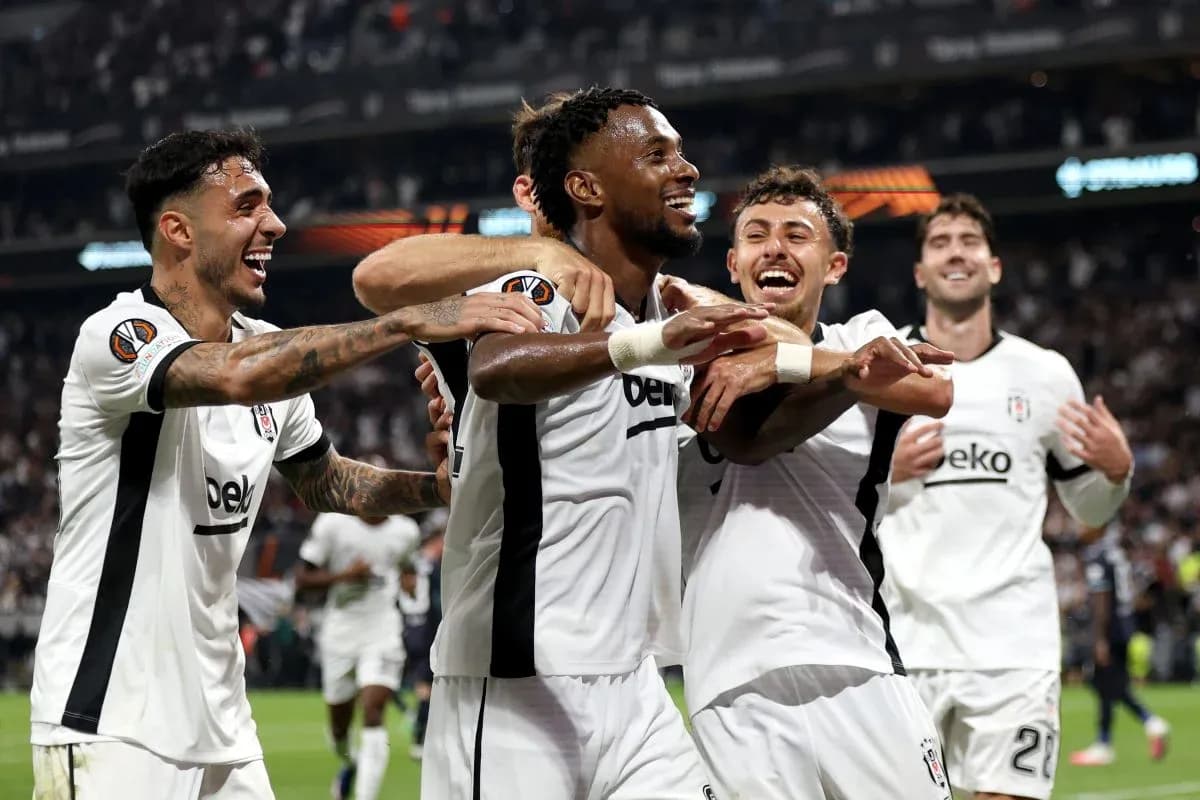
Under the lights of Tüpraş Stadium, Beşiktaş announced their return to European relevance with a performance that felt less like a group opener and more like a statement of intent. In a UEFA Europa League League Stage clash that began delicately balanced at 1–1 by half-time, the hosts accelerated after the break, dismantling Marseille 4–1 and bending the evening to their own aggressive, front-foot rhythm.
This was not an isolated surge. Following this result, Beşiktaş sit 4th in the League Round standings with 3 points, a goal difference of +3 (4 goals scored, 1 conceded) from their single match. That snapshot mirrors a broader European campaign defined by control and efficiency: overall they have played 7 Europa League matches, winning 6 and losing only 1, with 12 goals scored and just 2 conceded. At home, the numbers are even more imposing: 4 wins from 4, 9 goals scored and only 1 conceded, an average of 2.3 goals for and 0.3 against at Tüpraş Stadium. This is a side whose seasonal DNA is clear—proactive with the ball, ruthless at home, and structurally secure.
Marseille arrive at the opposite end of the spectrum. Their League Round table position—32nd, with 0 points and a goal difference of −3 (1 goal scored, 4 conceded)—is stark. On their travels in this competition, they have played 1, lost 1, scoring once and conceding 4, an away average of 1.0 goal for and 4.0 against. It is a fragile platform for a club that set up in Istanbul with a nominally solid 4-2-3-1, but never fully imposed their defensive structure.
Tactical Overview
The tactical story of the night began with the white-and-black 4-1-4-1 that Vincenzo Italiano has clearly imprinted on Beşiktaş. In front of goalkeeper A. Nübel, the back four of A. Murillo, E. Agbadou, E. Topçu and K. Ouattara formed an assertive line that squeezed high when the hosts had sustained pressure. S. Özcan, the single pivot, was the hinge: dropping between centre-backs in build-up, then stepping into midfield to throttle Marseille’s transitions.
Ahead of him, the quartet of V. Černý, J. Olaitan, O. Kökçü and I. Fakili offered the structure that has underpinned Beşiktaş’s campaign form of WWWWWLW. Černý, already one of the Europa League’s standout performers with a rating of 7.87 across 7 appearances and 1 goal, played as a wide midfielder with license to drift inside. His blend of direct dribbling—4 attempts with 3 successful in the competition—and intelligent passing (88% accuracy, 2 key passes overall) gave Beşiktaş a recurring outlet on the flank.
Inside him, the creative axis of Olaitan and Kökçü controlled the half-spaces. Olaitan, who sits near the top of the competition’s assist charts with 2 assists and an 8.34 rating over 7 appearances, again operated as the advanced organiser: receiving between the lines, turning Marseille’s double pivot, and threading passes into D. Vlahović. Kökçü, also on 2 Europa League assists this season, balanced that by dropping closer to Özcan when needed, ensuring the hosts always had at least two passing options around the ball.
I. Fakili, another of the competition’s quiet revelations, contributed with his usual blend of vertical running and neat combinations. With 1 goal, 1 blocked shot and 91% passing accuracy in the tournament, he represents the modern interior midfielder: technically clean, tactically disciplined, and constantly available between lines.
Up front, Vlahović was the reference point that made the whole structure cohere. His presence pinned Marseille’s centre-backs C. Egan-Riley and D. Cornelius, opening the channels for Černý and Fakili to attack. Even when not scoring, his role in occupying defenders and contesting duels allowed Beşiktaş’s midfield to step higher and compress the pitch.
Marseille's Struggles
Marseille’s 4-2-3-1 under Bruno Genesio was built to absorb and counter. J. de Lange in goal sat behind a back four of T. Weah, Egan-Riley, Cornelius and U. Garcia, with P. Højbjerg and H. Abdelli as the screening pair. Ahead of them, A. Harit floated as the central creator, flanked by A. Gomes and K. Abdallah, with N. Maupay as the lone striker.
On paper, that double pivot should have been the “shield” against Beşiktaş’s multi-layered midfield. In practice, Marseille’s lines stretched too easily. When Olaitan and Kökçü rotated wide or dropped deeper, Højbjerg and Abdelli were repeatedly pulled into lateral chases, leaving gaps for Fakili and Černý to attack from the blind side. With Marseille conceding 4 goals in their only Europa League outing so far and failing to keep a single clean sheet in the competition, the structural cracks that appeared in Istanbul felt like an extension of their early-season profile rather than an anomaly.
Disciplinary Issues
The disciplinary and emotional temperature of Beşiktaş’s campaign also framed this contest. Across the Europa League season, 50.00% of their yellow cards have arrived between minutes 76–90, a pronounced late-game surge that speaks to a team willing to push the physical and tactical line as matches reach their decisive phase. They have also seen a red card in the 61–75 minute window, underlining how aggressive their approach can become when defending a lead. Players like K. Ouattara—who carries a yellow plus a second booking leading to dismissal in this competition—and Oh Hyeon-Gyu and Černý, each with 2 yellows, embody that edge.
Marseille, by contrast, have collected their only recorded yellow card in the 61–75 minute period, suggesting that their disciplinary profile is less about sustained pressure and more about reactive interventions once games begin to slip away.
Final Analysis
The “Hunter vs Shield” dynamic in this tie was brutally one-sided. Beşiktaş’s overall attacking output of 12 goals at an average of 1.7 per game, coupled with their home scoring rate of 2.3, ran straight into a Marseille defence conceding 4.0 goals on their travels. With Beşiktaş having prevented any opponent from scoring more than once at home this European season, and Marseille yet to demonstrate any meaningful defensive resilience, the statistical prognosis leaned heavily towards a home-dominated contest—and the 4–1 scoreline simply traced that logic onto the pitch.
In the engine room, the duel between Olaitan and Kökçü on one side and Højbjerg on the other was decisive. Beşiktaş’s pair brought line-breaking passes, positional fluidity and pressing triggers; Marseille’s anchor was left firefighting, often outnumbered around the ball. Once Beşiktaş tilted the field, their defensive platform—anchored by Murillo, who has contributed both a goal and steady defensive numbers across the campaign—snuffed out Marseille’s attempts to play through Maupay.
Taken together, the numbers and the narrative converge on a clear reading: this Beşiktaş side is built on a stable defensive base, a high-functioning creative midfield, and a ferocious home aura. Marseille, still searching for an identity and defensive balance in Europe, were exposed by precisely the kind of opponent their current profile least wants to face. If Beşiktaş’s underlying metrics continue on this trajectory, their Europa League campaign will not be defined by merely surviving the League Stage—but by how far this structure, and this squad, can carry them into the latter rounds.