Levski Sofia vs Red Bull Salzburg: A Tough Europa League Opener
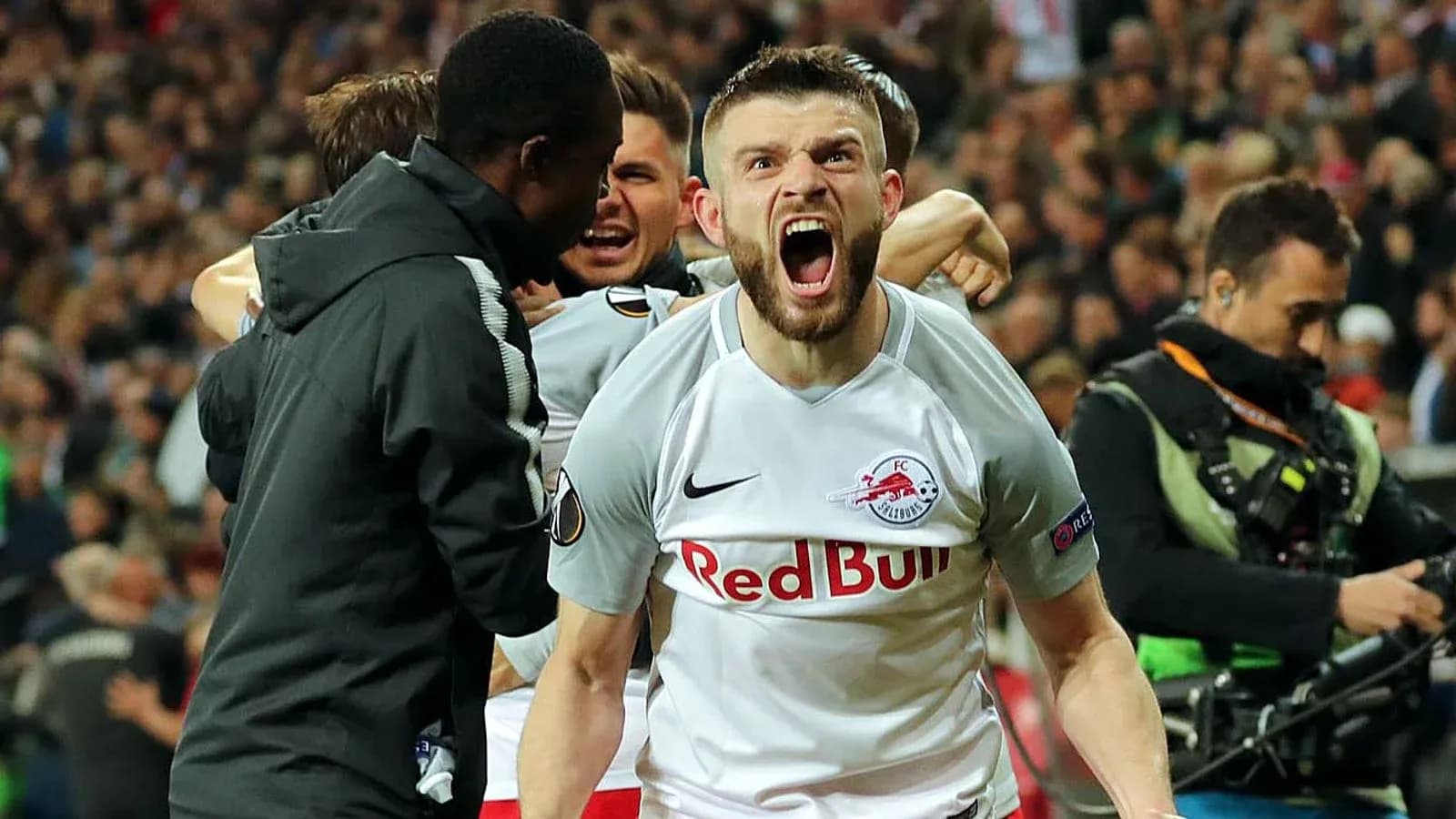
Under the lights of Vasil Levski National Stadium, Levski Sofia’s return to the UEFA Europa League stage ended with a narrow 0–1 defeat to Red Bull Salzburg, a result that neatly reflected the gap in European maturity between the two sides. Following this result, the league table shows the contrast starkly: Levski sit 27th with 0 points and a goal difference of -1 (0 scored, 1 conceded), while Salzburg are already up to 14th with 3 points and a goal difference of +1 (1 scored, 0 conceded), tagged in the “Play Offs” bracket.
I. The Big Picture: Two 4‑2‑3‑1s, Two Different Realities
Both coaches opened in a mirrored 4‑2‑3‑1, but the systems told very different stories.
Julio Velázquez anchored Levski with S. Vutsov in goal behind a back four of Maicon, C. Makoun, K. Dimitrov and Aldair. In front, the double pivot of Serginho and G. Trdin was tasked with both shielding and building, while the line of three – Álex Centelles tucking in from the left, A. Oko-Flex floating centrally, Everton Bala from the right – tried to feed lone striker Reinaldo.
D. Röhl’s Salzburg answered with the same shape but a far more seasoned European structure. Christian Zawieschitzky started in goal, protected by D. Schmid, T. Drexler, K. Boma and N. Veratschnig. The midfield axis of A. Barry and B. Mazurek underpinned an aggressive attacking band of Y. Vertessen, S. Kitano and E. Baidoo behind target man H. Tabaković.
Seasonal numbers underline the imbalance. Heading into this game, Levski had played just 1 Europa League match – this one – with 0 goals scored and 1 conceded overall, failing to score at home and keeping 0 clean sheets. Salzburg, by contrast, came in with 5 matches under their belt: unbeaten overall (4 wins, 1 draw), scoring 9 goals in total (4 at home, 5 on their travels) at averages of 2.0 at home, 1.7 away and 1.8 overall. Defensively, they had conceded only 3 in total (0 at home, 3 away), averaging 0.0 at home, 1.0 away and 0.6 overall, with 4 clean sheets and no game in which they failed to score.
The 0–1 in Sofia, then, was not an accident but an extension of those trends.
II. Tactical Voids: Absences and Discipline
Levski arrived into this league stage opener heavily patched up. A. Bouras (muscle injury), O. Kamdem and R. Kirilov (both knee injuries), M. Moubarik (injury), N. Serafimov (elbow injury) and M. Sangare (off the roster) all missed out. That cluster of absences stripped Velázquez of rotation options in defence and midfield, forcing a reliance on Makoun and Dimitrov as the central spine and giving Serginho and Trdin little margin for error.
Salzburg, too, had a notable absentee list, but from a stronger base. A. Chase, F. Matijasevic (both off the roster), S. Diabate (injury), G. Diakite (inactive), J. Moser (muscle injury) and J. Omoregie (Achilles tendon injury) were all unavailable. Crucially, however, the core of Röhl’s preferred 4‑2‑3‑1 – Zawieschitzky, Schmid, Drexler, Boma, Veratschnig, Barry, Mazurek, Vertessen, Kitano, Baidoo and Tabaković – was intact.
In disciplinary terms, Levski’s season snapshot is minimal but telling: across their single Europa League outing they have received 1 yellow card, and it arrived between minutes 46–60, meaning 100.00% of their bookings so far have come in that early second‑half window. It hints at a side that emerges from the break trying to raise intensity and sometimes mistiming the aggression.
Salzburg’s card map is richer and more nuanced. Across their 5 Europa League matches, they have accumulated yellows spread almost evenly through the central phases: 28.57% between 31–45 minutes, another 28.57% between 46–60, and 28.57% between 61–75, with a late‑game pocket of 14.29% between 91–105. It paints a picture of a team that competes hard in the middle third of the game, with concentration and duels peaking around half‑time and just after the restart, but without losing control.
III. Key Matchups: Hunter vs Shield, Engine Room vs Enforcer
Hunter vs Shield
In attack, Salzburg’s clear reference point is Haris Tabaković. In this Europa League campaign he has made 5 appearances (4 starts), scoring 1 goal from 2 shots, both on target. His rating of 7.46 reflects more than just finishing: he is a focal point who occupies centre‑backs and creates space for Vertessen and Baidoo to attack the half‑spaces.
Against Levski, that profile was a direct challenge to the improvised pairing of Makoun and Dimitrov. With Levski having conceded 1 goal at home and 1 overall so far, their goal difference of -1 is modest numerically but significant symbolically: they are yet to prove they can lock down a European‑level No. 9 for 90 minutes. Tabaković’s ability to pin the line and bring runners into play remains Salzburg’s primary “hunter” weapon.
Engine Room
The deeper duel, though, was in midfield. For Salzburg, A. Barry is both metronome and shield. Across his 5 Europa League matches he has completed 69 passes at an accuracy of 94%, with 1 key pass, 6 tackles and 6 duels won from 9 contested. He reads the game, breaks lines with simple but precise passing and, crucially, stays on the right side of the law: 2 yellow cards, no reds, and no dismissals despite being consistently in the thick of it.
On the other side, Serginho and G. Trdin had to carry Levski’s build‑up and protection duties under pressure. With Levski’s season data showing 0 goals scored overall and a failure to score in their only home game, the pivot’s inability to progress the ball consistently into Oko-Flex and Everton Bala’s feet is a structural concern. Barry’s presence effectively squeezed that central channel, forcing Levski to seek wide and more hopeful routes to Reinaldo.
IV. Statistical Prognosis: Margins, Patterns, and What Comes Next
From a statistical lens, Salzburg’s blueprint is clear: a compact, low‑concession side that scores just enough and rarely blinks. With 9 goals for and only 3 against overall, their goal difference of +6 (9 minus 3) and 4 clean sheets in 5 matches show a team that wins primarily through control and defensive reliability rather than chaotic shoot‑outs. Their penalty record reinforces that ruthlessness: 1 penalty awarded, 1 scored, 100.00% conversion, 0 missed.
Levski, by contrast, are at the very beginning of their European story this season. One match, 0 goals for, 1 against, 0 clean sheets, 1 failure to score overall. Their familiar 4‑2‑3‑1 structure is in place – it is the same formation they have used in their only recorded lineup – but the execution against high‑level pressing and compact mid‑blocks is not yet there.
Tactically, the intersection that will define their campaign is obvious: can Levski’s attacking line of Álex Centelles, Oko-Flex, Everton Bala and Reinaldo generate enough coordinated movement to disrupt disciplined midfields like Barry and Mazurek’s, or will they remain a side that arrives in the final third in too few numbers and too little structure?
For Salzburg, the path is clearer. Keep Barry healthy, maintain the 4‑2‑3‑1 spine, and continue to feed Tabaković with quality from Vertessen, Kitano and Baidoo. With their defensive averages – 0.0 goals conceded at home, 1.0 on their travels and 0.6 overall – and the habit of spreading their yellow cards across the game without tipping into chaos, they look built for the attritional rhythm of a league‑stage campaign.
In Sofia, the 0–1 felt like a narrow defeat. In the numbers, it looks like the opening chapter of a predictable story: Salzburg’s well‑oiled machine grinding out another controlled win, and Levski learning, painfully, what it takes to live at this level.