Brazil vs Morocco: A World Cup Opener with Knockout Stakes
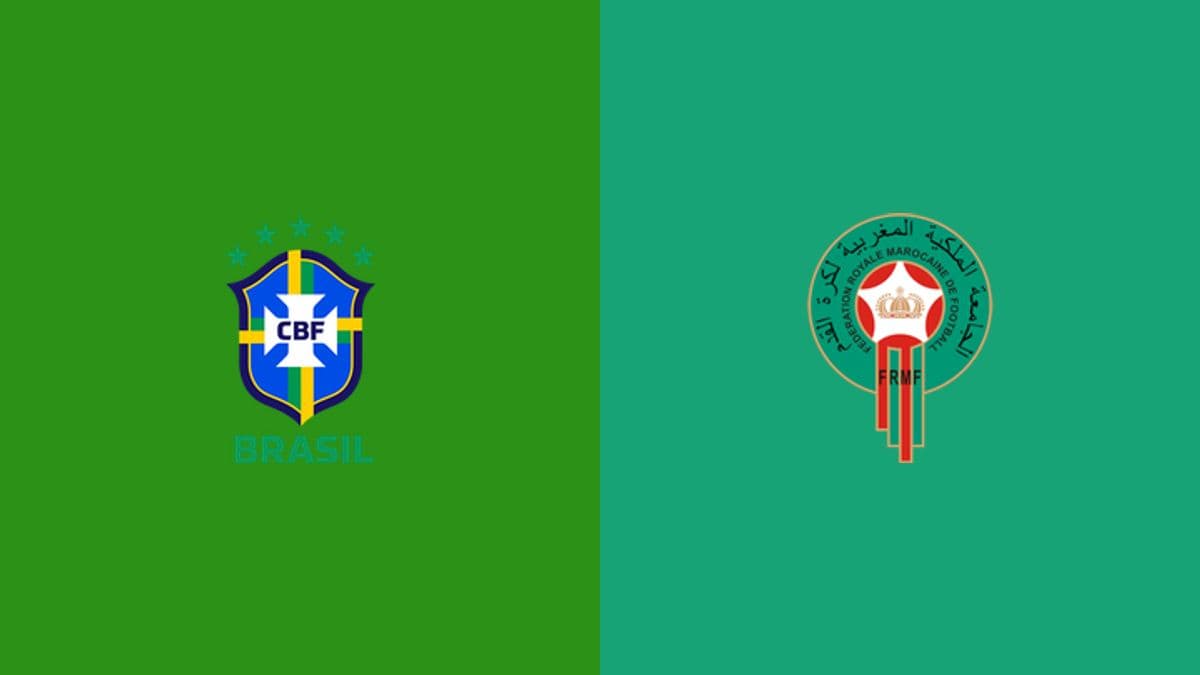
The lights go up in East Rutherford on 13 June 2026, and the stakes are brutal from the first whistle. Brazil against Morocco at the New York New Jersey Stadium is not just an opening group game; it is a stress test for two projects under very different kinds of pressure.
Kick-off is set for 22:00 GMT, 18:00 EST. By the time the night closes in over New Jersey, one of these sides may already be chasing the rest of Group C.
Brazil’s uneasy road to redemption
Brazil arrive in North America with their aura dented and their expectations unchanged. They are still the five-time world champions who have never missed a World Cup. They are also a team that staggered through CONMEBOL qualifying badly enough to force a revolution in the dugout.
The low point came with a 4-1 mauling by Argentina, a result that did more than bruise pride. It exposed a side drifting, reliant on flashes of individual brilliance and short on structure. By the time the federation moved, Brazil were stuck in fourth place with 21 points and sliding towards trouble.
Carlo Ancelotti changed the mood instantly. The appointment of one of the most decorated managers in the game signalled that Brazil were done gambling on potential and were now hiring proven certainty. His task was clear: take a squad overflowing with European champions and turn it into a disciplined, coherent machine.
He did not transform the campaign into a procession, but he did steady it. Brazil tightened up, found results when they had to, and closed out 2025 with enough control to secure fifth place and automatic passage. The unbeaten World Cup attendance record survived. Barely. But it survived.
Now comes the real examination: can Ancelotti’s direct, space-hunting Brazil impose themselves on the biggest stage under the weight of their own history?
Neymar managed, Vinicius unleashed
Ancelotti’s 26-man squad reads like a Champions League all-star roll call. Yet all eyes circle back to one name: Neymar Jr.
The talisman returns to the World Cup after a two-and-a-half-year absence from the national team, but his build-up has been complicated by a minor muscle edema picked up with Santos. Brazil’s medical staff are managing him individually, and Ancelotti has already hinted that long-term protection may trump short-term risk in the group stage. Neymar stays with the squad, but Brazil’s opening act may belong to a new leading man.
That man is Vinicius Junior. Fresh from conquering Europe with Real Madrid and walking into the tournament with Ballon d’Or-level momentum, he carries the attacking burden with the confidence of a player who now decides finals for a living. Alongside him, Barcelona’s in-form Raphinha becomes more than a winger; he is the tactical key.
Ancelotti has praised Raphinha as the best in the world at attacking deep space and plans to use him in an advanced, flexible midfield role. Expect him to drift into central pockets, hover on the shoulder of the defensive line and explode into gaps the moment Brazil win the ball.
Behind them, the spine is familiar and formidable. Marquinhos, a Champions League finalist, wears the armband and anchors the back line next to Arsenal’s Gabriel Magalhães. In front, a double pivot drawn from the Premier League and Europe’s elite—names like Casemiro, Bruno Guimarães, Fabinho—will be asked to protect the space left when Brazil’s full-backs surge forward.
This is not the slow, patient Brazil of old. Ancelotti’s 4-2-3-1 is built to snap into a vertical counter-attacking weapon: win it, look up, hit the space.
Morocco’s new era, same fearlessness
On the other side stands a team that no longer sneaks up on anyone. Morocco arrive as the standard-bearers of African football, still glowing from their historic fourth-place finish at Qatar 2022 and fresh off a qualifying campaign that bordered on ruthless.
CAF Group E became their playground. Under Walid Regragui, the Atlas Lions tore through the section with eight wins from eight, blending the defensive steel that stunned the world in 2022 with clinical wide play. They didn’t just qualify; they dominated.
Then came the twist. In March 2026, Regragui stepped down, choosing to step aside and let the group evolve. His departure could have triggered uncertainty. Instead, it opened the door for Mohamed Ouahbi, the coach who had just guided Morocco’s U-20s to a global title in 2025.
Fast-tracked into the senior role, Ouahbi inherits a squad with no fear and no major injuries. A 2-1 warm-up win over Kosovo kept confidence high and the squad healthy, allowing him to field an experienced, well-drilled XI that still carries the scars and swagger of Qatar.
His selection headline is the promotion of his teenage U-20 protégés, Othmane Maamma and Yassir Zabiri. Both are likely to start on the bench, but their presence gives Morocco a late-game injection of pace and daring if the contest opens up.
The constant is Achraf Hakimi. The Paris Saint-Germain right-back remains the structural pillar of the side, the player who locks the defensive block together and then tears forward to ignite attacks down the flank. In a match defined by wing battles, his influence will be enormous.
Ancelotti vs Ouahbi: two blueprints, one cauldron
In the dugouts, the contrast is as sharp as it is intriguing.
Ancelotti, the serial winner, steps into his first major international tournament as Brazil’s first high-profile foreign coach in decades. His reputation is built on calm authority, man-management, and systems that give his artists room to breathe while demanding total responsibility without the ball.
His Brazil will likely line up in that balanced 4-2-3-1, but the shape is only half the story. The principle is simple: as soon as the ball is recovered, the first thought is forward. No languid side-to-side recycling, no indulgent possession for its own sake. Instead, he wants his midfielders to punch passes through lines, to feed runners like Vinicius and Raphinha in the space behind a disorganised defence.
The risk is obvious. When Brazil’s full-backs push high, the double pivot must be perfect. Any hesitation in covering transitions and Morocco will find acres to exploit.
Ouahbi, Belgium-born and 49, brings a different energy. His name is not yet etched into the senior elite, but his reputation in youth football is sparkling. He favours an energetic, possession-based approach, with a clear emphasis on overloading the flanks and using a hard-running three-man midfield to hunt second balls.
He respects the compact, low-block identity that made Morocco famous in 2022, but he has already nudged the team towards a more vertical, expansive style. When they win it, the first look is often towards combinations between full-backs and inverted wingers, sharp one-twos that slice through pressure and carry the ball quickly into the final third.
This is not a Morocco content to sit back and suffer for 90 minutes. They intend to punch back.
The duels that could tilt Group C
Group C does not forgive slow starters. Scotland lurk with their tournament nous and physical edge, while Haiti bring raw energy and chaos. Drop points on matchday one, and the path narrows fast.
On the pitch, three battles stand out.
Down one flank, Vinicius Junior vs Achraf Hakimi is pure box office. Vinicius arrives as one of the most devastating 1v1 attackers on the planet, a forward who thrives on isolation, rhythm and daring. Hakimi is one of the few full-backs with the pace, strength and tactical intelligence to live with him step-for-step. If Hakimi can contain Brazil’s star, Morocco can squeeze the life out of Brazil’s left side. If Vinicius breaks free, Group C’s entire balance could shift in a single sprint.
Inside, Raphinha’s positioning drags the spotlight onto Morocco’s midfield block. Ancelotti wants him operating close to the defensive line, constantly threatening the space in behind. That puts huge responsibility on Sofyan Amrabat and his partners. Amrabat must track Raphinha’s ghosting movements, deny him clean touches on the half-turn, and cut off the passing lanes that feed Brazil’s overlapping runs. Lose that battle, and Morocco’s back four will be constantly exposed.
In the box, Gabriel Magalhães vs Youssef En-Nesyri promises a bruising contest. En-Nesyri is relentless in the air, a centre-forward who lives for crosses and relishes unsettling centre-backs with his work rate. Gabriel, powerful and positionally sharp, has to dominate his territory. If he fails to control set pieces and wide deliveries, Morocco’s route to goal becomes very clear.
A pressure cooker in New Jersey
This is the opening act, but it will not feel like one. Brazil chase validation under a new foreign mastermind, desperate to turn a turbulent qualifying campaign into the start of a redemption story. Morocco stride in as Africa’s most formidable outfit, determined to prove that Qatar 2022 was not a one-off miracle but the foundation of a new world power.
Under the New Jersey floodlights, with a global audience roaring and a group of heavyweights waiting in the shadows, this pitch becomes a pressure cooker.
One mistake, one duel lost, one moment of brilliance – and someone’s World Cup narrative changes before the tournament has even settled into its rhythm.