Brighton Dominates Wolves 3-0 in Premier League Showdown
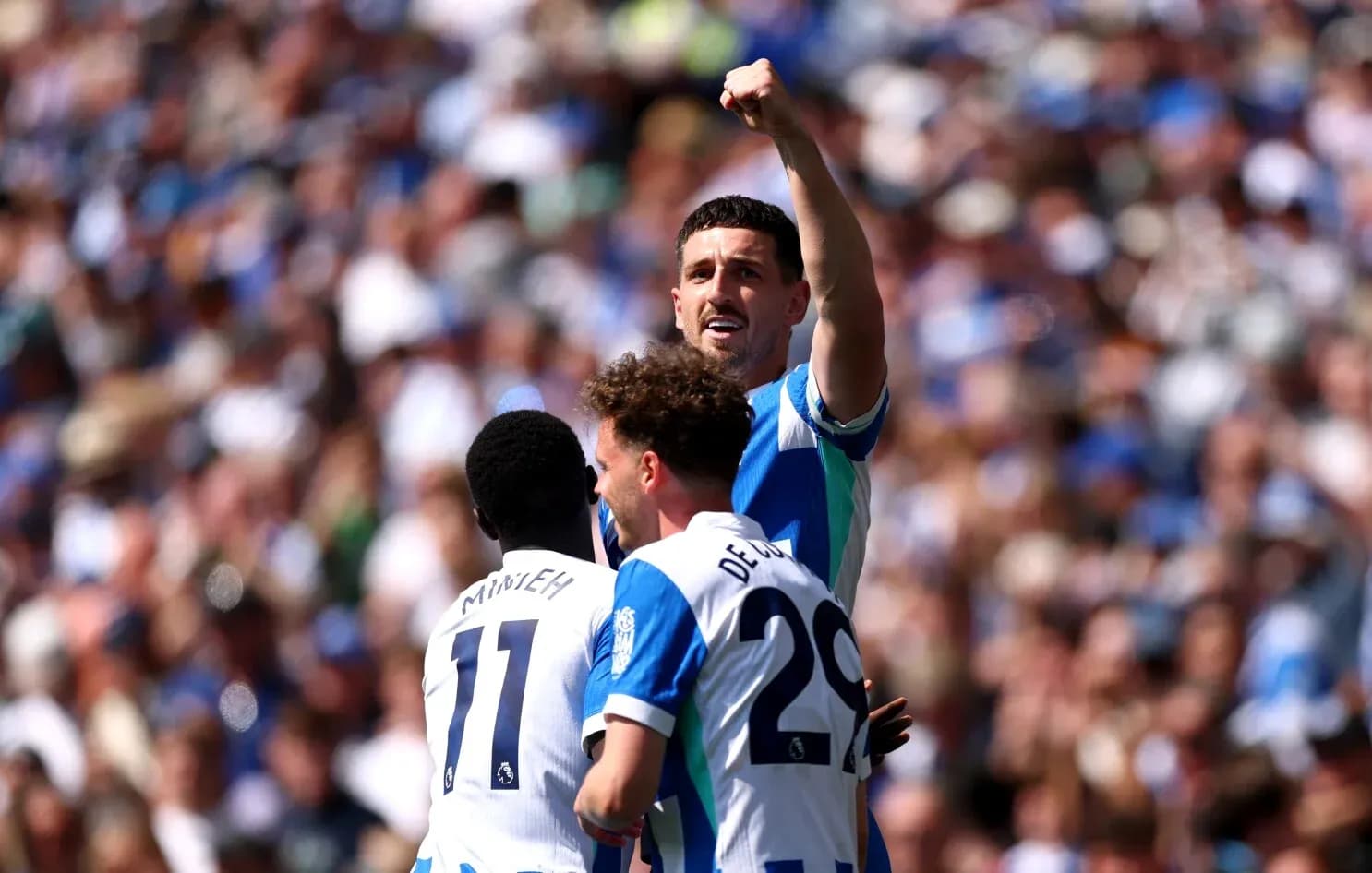
Amex Stadium under a sharp May sky, Premier League Round 36, and two stories moving in opposite directions met in the same 90-minute frame. Following this result, Brighton’s 3-0 win over Wolves not only underlined why they sit 7th on 53 points with a goal difference of 10 (52 scored, 42 conceded overall), but also why Wolves remain rooted to 20th on 18 points with a goal difference of -41 (25 for, 66 against overall). The scoreline felt less like a surprise and more like the logical conclusion of two seasons’ worth of trends colliding.
Brighton came into the afternoon with one of the league’s more balanced statistical profiles. At home they average 1.7 goals for and 0.9 against, a platform of control that has yielded 9 wins from 18 at the Amex. Wolves, by contrast, arrived as the league’s softest travellers: on their travels they average just 0.4 goals for and 1.8 against, with 0 away wins and 13 defeats from 18. The numbers painted a clear pre-match tilt; the match itself merely coloured it in.
Fabian Hurzeler’s starting XI told its own story of continuity and trust. Bart Verbruggen in goal behind a back four of Ferdi Kadioğlu, Jan Paul van Hecke, Lewis Dunk and Maxim De Cuyper set the tone: ball-playing defenders, comfortable stepping into midfield, tasked with pinning Wolves back. In front of them, Carlos Baleba and Pascal Groß formed the double pivot, with Yankuba Minteh, Jack Hinshelwood and Kaoru Mitoma supporting lone forward Danny Welbeck.
The tactical voids were real but well-managed. Brighton were without D. Gómez, S. Tzimas, A. Webster and M. Wieffer, all listed as missing this fixture – three of them with knee injuries, one with an unspecified injury. That stripped Hurzeler of a combative midfielder in D. Gómez and an experienced centre-back option in A. Webster, yet the structural spine held. Van Hecke and Dunk, both among the league’s most carded defenders this season (Dunk on 10 yellows, van Hecke on 9), channelled their aggression into control rather than chaos, never needing to flirt with the disciplinary line.
If Brighton’s absences were about depth, Wolves’ were about fragility. L. Chiwome and E. Gonzalez were sidelined with knee injuries, while S. Johnstone and J. Sa were both out, the latter with an ankle problem. That forced Daniel Bentley into goal and left Rob Edwards leaning on a patched-together defensive unit. With Wolves already conceding 33 goals away and 33 at home, their overall average of 1.8 goals against per match framed Bentley as an overworked last line rather than a calm presence behind a solid block.
In front of Bentley, Edwards opted for a back three of Yerson Mosquera, Santiago Bueno and Toti Gomes, with Pedro Lima and Hugo Bueno nominally as wide midfielders, and a central trio of João Gomes, André and Adam Armstrong supporting forwards Mateus Mané and Hwang Hee-chan. It was a shape that promised numbers in the middle, but the personnel hints at a deeper issue: this is a side whose identity is more about resistance than creation. Overall, Wolves have failed to score in 19 of 36 league games; that chronic bluntness hung over their front line from the first whistle.
The “Hunter vs Shield” duel was always going to revolve around Welbeck and a Wolves defence that has creaked all season. Overall, Brighton’s attack produces 1.4 goals per game, but Welbeck himself has been a ruthless finisher: 13 league goals from 45 shots, with 27 on target, and only 1 penalty scored from 3, with 2 missed. His profile is that of a high-volume runner who still carries penalty-box craft. Against a Wolves unit that has already suffered 4-0 away defeats and concedes 1.8 per match both at home and away, his movement between Mosquera and Bueno was a structural mismatch.
Mosquera, one of the league’s most carded defenders with 11 yellows, and André, who also sits on 11 yellows, embody Wolves’ defensive dilemma. They are combative, high-impact players – André has 76 tackles and 12 blocked shots, Mosquera 57 tackles and 14 blocks – but their aggression often tips into desperation. With Wolves’ yellow-card peak coming between 46-60 minutes at 28.57% of their bookings, the second half is when their defensive discipline tends to fray. Brighton, whose own yellow-card peak is also 46-60 minutes at 27.91%, are accustomed to that scrappy middle-third battle. Here, however, the Seagulls’ technical superiority meant they could draw fouls rather than commit them.
In the “Engine Room” matchup, Pascal Groß and Baleba faced André and João Gomes. João Gomes has been Wolves’ relentless metronome – 1417 passes at 85% accuracy, 108 tackles, 34 interceptions – but he and André are often outnumbered in transitions because Wolves’ wing-backs are pinned deep. Brighton exploited that. With Dunk and van Hecke stepping into midfield – the latter boasting 2351 passes at 87% accuracy and 28 successful blocks across the season – Brighton regularly created 4v3 overloads centrally, allowing Groß to dictate tempo and Hinshelwood to arrive between the lines.
Discipline and pressure patterns mattered. Wolves’ red-card profile, with dismissals spread across 31-45, 46-60 and 61-75, hints at a team that loses emotional control as matches tighten. Brighton, by contrast, have no red cards on their seasonal ledger. That calm under pressure allowed them to maintain a high line and keep Verbruggen largely untroubled, turning Wolves’ already meagre attacking output – just 7 away goals all season – into near-total impotence.
From a statistical prognosis standpoint, a Brighton win with a healthy xG margin was always the likeliest outcome. A side that has kept 5 clean sheets at home, scoring 30 times at the Amex, against an opponent with only 1 away clean sheet and 12 away blanks in front of goal, tilts any expected goals model heavily towards the hosts. The 3-0 scoreline fits neatly within Brighton’s biggest home wins profile (they have a 3-0 home win as their standout margin) and within Wolves’ pattern of heavy away defeats.
Following this result, the tactical narrative is clear. Brighton’s squad, even with key absences, has the structure and technical quality to impose their game, especially at home. Wolves, stripped of first-choice goalkeeping options and leaning on overtaxed enforcers like André and João Gomes, are locked in a cycle where defensive strain and attacking anemia feed each other. At the Amex, that cycle met a Brighton side whose season-long numbers promised dominance – and delivered it.