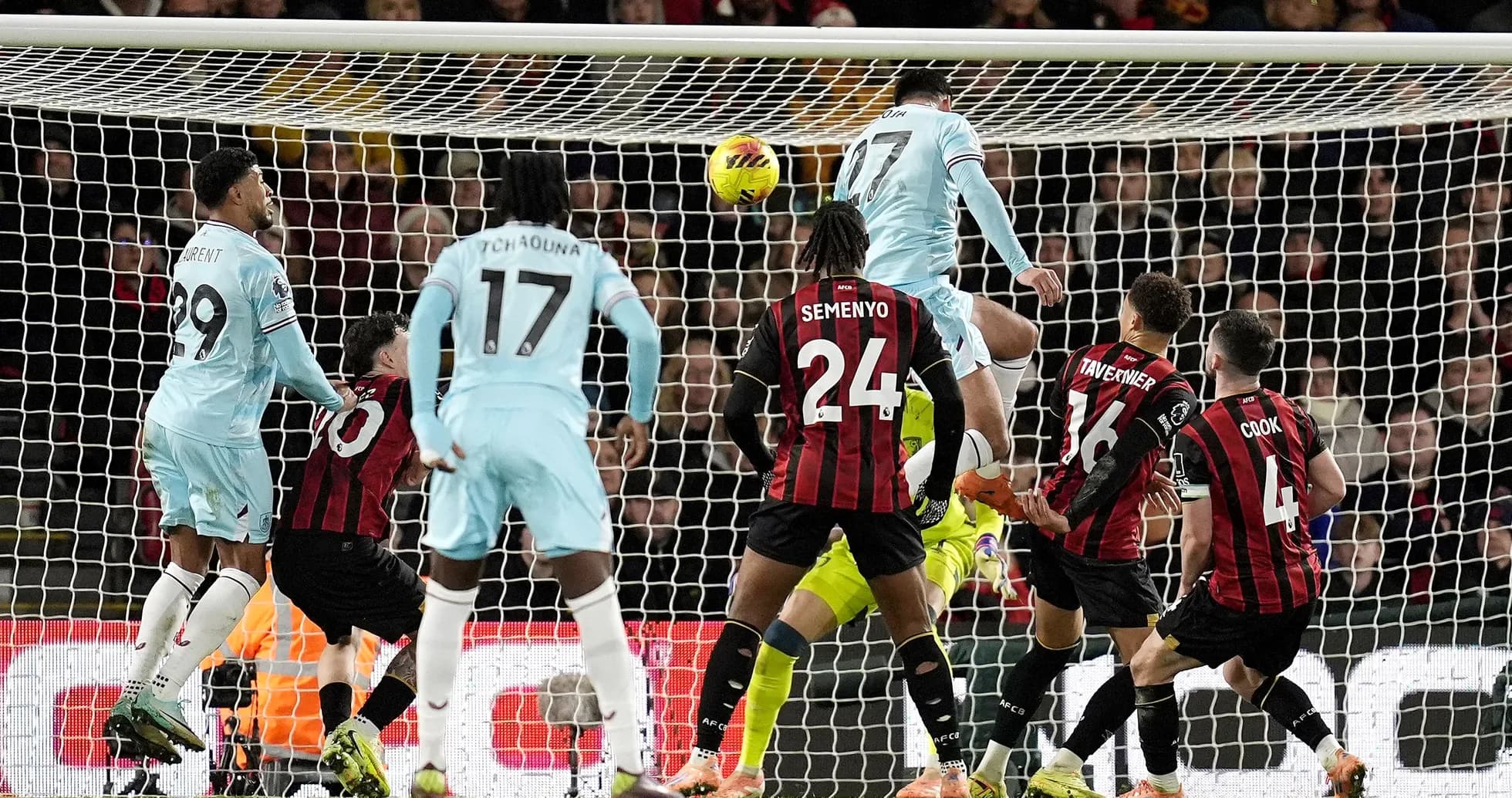
Burnley vs Bournemouth: Premier League Clash at Turf Moor
On 14 March 2026, Turf Moor stages a meeting that could reshape the bottom half of the Premier League table. Burnley, stranded in 19th with 19 points from 29 matches, welcome mid‑table Bournemouth, who sit 9th on 40 points. The gap between the sides is a stark 21 points, but the stakes are very different: for Burnley, this is about survival; for Bournemouth, it is about turning a solid campaign into something more ambitious.
With referee P. Bankes in charge and the Clarets desperate to claw back ground on those above them, this has all the ingredients of a tense, tactical battle rather than a free‑wheeling shoot‑out.
Form guide and statistical landscape
The league table and underlying numbers paint a clear contrast.
Burnley’s overall record of 4 wins, 7 draws and 18 defeats from 29 games is underpinned by a worrying goal difference of -26 (32 scored, 58 conceded). At Turf Moor they have struggled: 2 wins, 4 draws and 8 losses in 14 home outings, scoring 15 and conceding 23. That works out at 1.1 goals scored and 1.6 conceded per home match.
Their season statistics reinforce the picture of a side constantly on the edge. Burnley’s goals against minute distribution shows particular vulnerability either side of half-time: 17 goals conceded between 31-45 minutes (29.82% of their total) and another 13 between 76-90 minutes (22.81%). They are often chasing games late, and that opens them up. Offensively, they are actually more dangerous in the closing stages, with 10 of their 32 league goals coming between 76-90 minutes (30.30%). Turf Moor regularly becomes a late‑drama venue, but not always in Burnley’s favour.
Bournemouth, by contrast, have built a sturdy platform. They have 9 wins, 13 draws and only 7 defeats from their 29 matches, with a goal difference of -2 (44 for, 46 against). Away from home, they are competitive if inconsistent: 3 wins, 6 draws and 5 losses in 14 games, scoring 23 and conceding 31, an average of 1.6 scored and 2.2 conceded per away fixture.
Their form line of DDDWD suggests a team difficult to beat, though perhaps a little short of ruthlessness. Bournemouth’s goals for distribution shows a side that grows into matches: 12 of their 44 league goals arrive between 76-90 minutes (26.67%), while they also carry a consistent threat in the 31-45 and 61-75 windows (8 goals in each). Defensively, they can wobble late as well, with 13 of their 46 conceded in the final quarter-hour (28.89%). The final stages could be frantic at both ends.
Both sides have high “over 0.5 goals” rates (Burnley 26 of 29, Bournemouth 23 of 29), but neither is regularly involved in high‑scoring thrillers. Burnley have gone over 2.5 goals in only 9 of 29; Bournemouth in just 8 of 29. That hints at a tight contest, decided by small margins and individual quality rather than chaos.
Tactical trends and shapes
Burnley’s season lineups data shows a search for stability and identity. They have most frequently used a back three with a 3-4-2-1 (8 times), followed by a 5-4-1 (7 times) and 4-2-3-1 (6 times). That mix tells its own story: a manager oscillating between proactive possession and deep‑block pragmatism in response to mounting pressure.
Against a Bournemouth side comfortable in a 4-2-3-1 (27 appearances in that shape), Burnley’s choice of structure will be decisive. A 3-4-2-1 could give them an extra centre‑back to cope with Bournemouth’s wide rotations and late runners, while the wing‑backs would be crucial in pinning back the Cherries’ full‑backs. However, with so many defensive injuries, a five‑man back line may be more about necessity than design.
Bournemouth’s 4-2-3-1 has become a clear identity: a double pivot to control transitions, wide players cutting inside, and a central attacker linking play. Their away record suggests they are comfortable allowing the game to breathe, then striking in moments, especially late on. With Burnley conceding heavily just before the interval and in the final quarter-hour, Bournemouth will likely look to control tempo early, then turn the screw as fatigue and nerves creep in.
Discipline could also matter. Burnley’s yellow card profile spikes late in games, with 10 bookings between 76-90 minutes and another 10 between 91-105. Bournemouth also pick up a lot of cautions late, with 20 yellows from 76-90 minutes. A scrappy, stop‑start finale is very possible, particularly if the score is tight.
Head‑to‑head history: small margins, big swings
The last five meetings between these sides form a neat, self‑contained story.
On 20 December 2025 at Vitality Stadium, the sides shared a 1-1 draw in the Premier League. Earlier, on 3 March 2024 at Turf Moor, Bournemouth left with a 0-2 victory in league action, having also won 2-1 at home on 28 October 2023.
Cup meetings have been just as decisive. On 7 January 2023 in the FA Cup 3rd Round, Burnley produced a 2-4 away win at Vitality Stadium, a rare high point in this recent rivalry. But on 9 February 2021 at Turf Moor, Bournemouth returned the favour with a 0-2 success in the FA Cup 5th Round.
Taken together, Bournemouth have three wins, Burnley one, and one draw in this five‑match sequence. Crucially, the Cherries have twice won at Turf Moor (0-2 in March 2024 and 0-2 in February 2021), which will give them confidence that this is not a daunting away day.
Team news and key players
Burnley’s task is made significantly harder by a brutal injury list. Z. Amdouni (knee), J. Beyer (thigh), A. Broja (injury), J. Cullen (knee), C. Roberts (groin), M. Tresor Ndayishimiye (ankle) and A. Tuanzebe (Achilles tendon) are all listed as missing the fixture. M. Edwards is questionable with a knock.
That cluster of absentees strips depth from both defence and attack. Beyer and Tuanzebe weaken the centre‑back pool, Roberts and Tresor Ndayishimiye limit options out wide and in advanced roles, while Amdouni and Broja reduce Burnley’s capacity to change games from the bench or adjust their attacking profile. Cullen’s absence in midfield removes a stabilising presence and ball‑progressor.
Bournemouth are not unscathed, but their situation is less severe. L. Cook (hamstring), B. Doak (hamstring), J. Kluivert (knee) and J. Soler (injury) are all out. Cook’s absence dents their midfield rotation and control, while Kluivert’s injury takes away a creative, vertical option in the final third. Yet the spine of their regular 4-2-3-1 remains largely intact.
In terms of standout performers, Bournemouth’s attacking edge is clear in the numbers. Antoine Semenyo has emerged as a genuine difference‑maker: 10 league goals and 3 assists, with 27 shots on target from 42 attempts and a strong all‑round contribution (516 passes, 25 key passes, 28 tackles). His ability to drive at defenders, combine centrally and threaten from range makes him the most obvious game‑breaker on the pitch.
Alongside him, Eli Junior Kroupi has chipped in with 8 league goals. Used both as a starter and impact substitute (13 starts, 11 appearances from the bench), he offers a direct threat in behind and a cool presence in the box. Between them, Semenyo and Kroupi have 18 league goals, more than half of Burnley’s entire team total.
Bournemouth have also been perfect from the spot in league play, scoring all 3 penalties they have taken. Burnley, for their part, have converted 2 from 2. In a tight match with high tension, penalty efficiency could become a crucial subplot.
The verdict
All the indicators point to a match tilted in Bournemouth’s favour, but not a foregone conclusion. Burnley’s desperate league position, home disadvantage turned into necessity, and long injury list suggest they will lean towards a compact, safety‑first structure, likely with three centre‑backs and hard‑working wing‑backs. Expect them to prioritise defensive solidity early, try to avoid their habitual late‑first‑half collapses, and then throw more bodies forward in the final half‑hour.
Bournemouth, with their settled 4-2-3-1 and superior form, should enjoy more control of the ball and the more coherent attacking patterns. Semenyo’s movement between the lines and Kroupi’s penalty‑area instincts look particularly well‑suited to exploiting Burnley’s shaky defensive zones around the 30-45 and 75-90 minute marks.
However, the numbers also say this is unlikely to turn into a rout. Both teams’ under/over profiles lean towards matches decided by one goal or by draws, and both concede and score late. Bournemouth’s run of draws hints at a side that sometimes lacks the final push to kill games.
A cagey, attritional contest feels likely, with Bournemouth’s extra quality in the final third just enough to shade it. A narrow away win or a low‑scoring draw sits as the most plausible outcome, with the final quarter-hour at Turf Moor once again set to carry the weight of Burnley’s survival hopes.