Manchester City vs Brentford: Premier League Clash with European Stakes
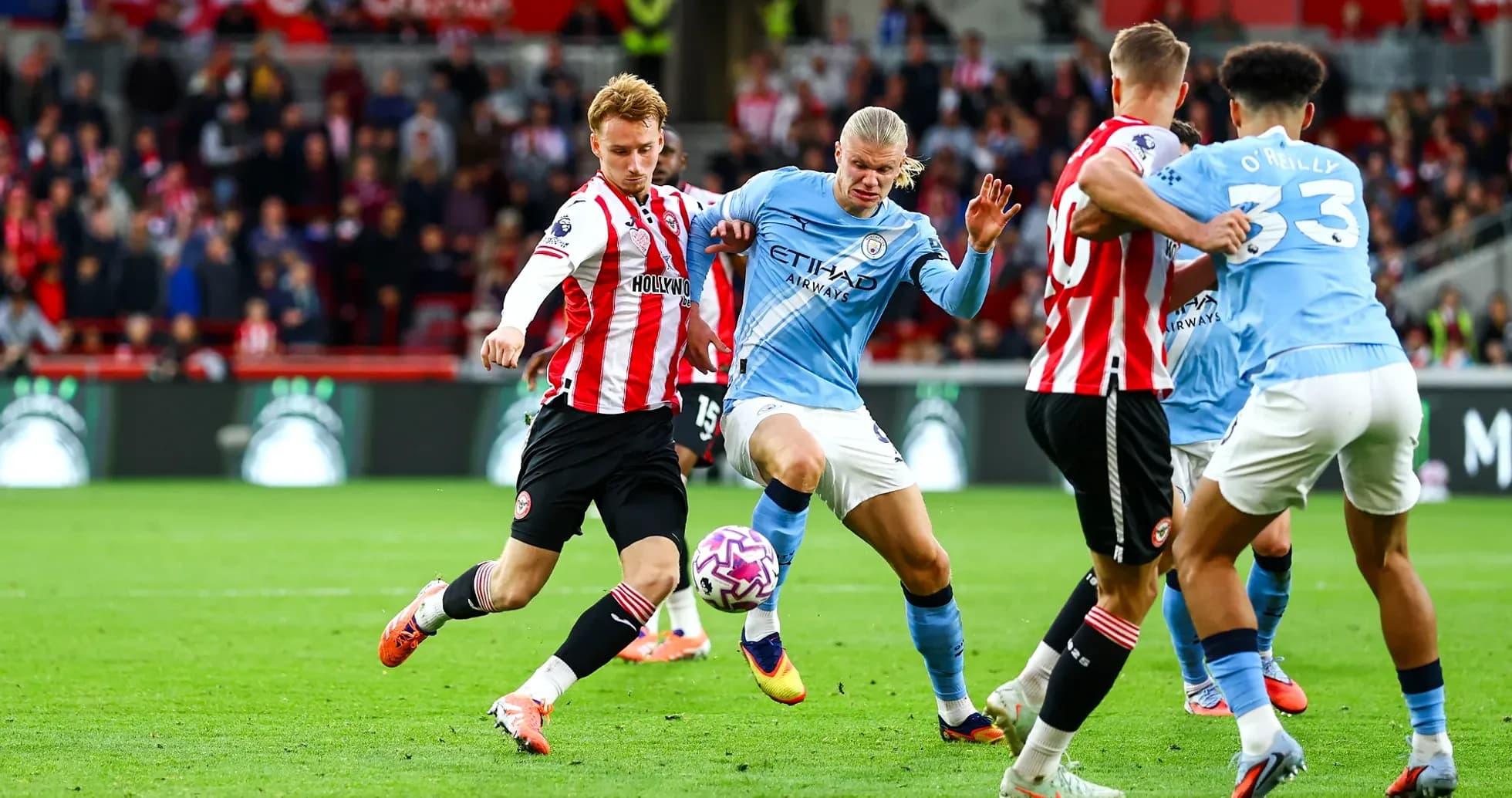
Manchester City host Brentford at the Etihad Stadium in a late-season Premier League fixture that is pivotal at both ends of the European picture. In the league phase, City come in as title chasers in 2nd place on 71 points with a +37 goal difference (69 goals for, 32 against in 34 matches), needing to keep maximum pressure at the top. Brentford arrive as European contenders in 7th on 51 points with a +6 goal difference (52 goals for, 46 against in 35 matches), trying to lock in a Conference League play-off spot. With only a handful of games left in 2026, the seasonal weight is clear: dropped points for City would seriously damage the title push, while a Brentford result could be decisive for their European qualification hopes.
Head-to-Head Tactical Summary
Recent meetings show Manchester City holding a clear edge, especially at the Etihad. The most recent clash was in the League Cup quarter-finals on 17 December 2025 at the Etihad Stadium, where City beat Brentford 2-0 (HT 1-0). Earlier in the 2025 Premier League, on 5 October 2025 at Brentford Community Stadium, City won 1-0 away (HT 0-1), demonstrating control in a tight league encounter. In the 2024 Premier League, they drew 2-2 on 14 January 2025 at Gtech Community Stadium (HT 0-0), in a more open contest where Brentford managed to trade goals with City. On 14 September 2024 at the Etihad Stadium, City defeated Brentford 2-1 (HT 2-1), edging a competitive home league match. Going further back, on 20 February 2024 at the Etihad, City won 1-0 in the Premier League (HT 0-0). Across these five matches, City have three wins at home (2-0, 2-1, 1-0), one away win (1-0), and one away draw (2-2), underlining a pattern of City generally controlling the scoreline while Brentford’s best success has come at home in the form of that single draw.
Global Season Picture
- League Phase Performance: In the league phase, Manchester City’s profile is that of a high-powered contender: 2nd place, 71 points from 34 games, with 69 goals for and 32 against. Their home record is particularly strong (12 wins, 3 draws, 1 loss; 38 scored, 12 conceded in 16 matches), pointing to a dominant home platform. Brentford, in 7th with 51 points from 35 games, have scored 52 and conceded 46. Their away numbers (6 wins, 2 draws, 9 losses; 21 scored, 27 conceded in 17 matches) show an ambitious but vulnerable travelling side that can create chances but leaves space.
- All-Competition Metrics: Across all phases of the competition, City’s attack is consistently productive, averaging 2.0 goals per match (69 in 34) with 2.4 at home and 1.7 away, while conceding just 0.9 per game (0.8 at home, 1.1 away). That combination indicates a controlled, possession-heavy, chance-creating side that limits opposition looks at goal. Brentford average 1.5 goals scored per game (1.7 at home, 1.2 away) and concede 1.3 (1.1 at home, 1.6 away), reflecting a balanced but more open game model, especially away from home where their defensive average is higher. In disciplinary terms across all phases, City accumulate their yellow cards steadily through the middle and late phases of games, suggesting controlled aggression and game management, while Brentford’s yellows cluster heavily from 61–90 minutes (almost half of their bookings), pointing to physical, high-intensity late-game phases. Both teams are perfect from the spot across all phases (City 3/3 penalties, Brentford 8/8), reinforcing their efficiency on set-piece chances.
- Form Trajectory: In the league phase, Manchester City’s recent form string of “DWWWD” shows an unbeaten run with three wins and two draws, indicating stability and momentum at a crucial time in the title race. Brentford’s “WLDDD” reflects a side that is hard to beat but struggling to turn tight games into wins: one win, one loss, then three consecutive draws. That plateau suggests their performance level is competitive but not decisive, which matters when chasing European positions.
Tactical Efficiency
Across all phases of the competition, Manchester City’s attacking efficiency is underlined by their 2.0 goals per match and the fact they have failed to score only four times in 34 fixtures, while keeping 14 clean sheets. That balance points to a highly efficient two-way structure: they convert possession and territory into goals, and they protect their own box effectively (0.9 goals against per game). Brentford’s 1.5 goals scored and 1.3 conceded across all phases depict a more volatile profile: enough attacking threat to trouble most opponents, but a defensive structure that can be stretched, particularly away where they concede 1.6 per match. Given City’s strong home scoring average (2.4) against Brentford’s away concession rate, the comparative “Attack/Defense Index” implied by these numbers leans heavily towards City: their attack projects to generate more and better chances than Brentford’s, while their defense is statistically tighter than the visitors’ offense.
The Verdict: Seasonal Impact
This fixture carries major seasonal consequences. For Manchester City, anything short of a win would be a significant setback in the title race: with 71 points and a strong goal difference in the league phase, they are positioned to strike if the leaders slip, but they have minimal margin for error this late in the calendar. A victory would keep them firmly in contention and could be decisive if the title is settled on goal difference, given their already superior +37. For Brentford, sitting 7th with 51 points and targeting Conference League play-offs, even a draw at the Etihad would be a high-value result that strengthens their European credentials and could create separation from mid-table chasers. A defeat, by contrast, would leave them vulnerable to being overtaken in the final rounds, especially given their mixed away profile. Strategically, the match sets up as a test of whether City’s elite home efficiency can translate into a must-win under pressure, and whether Brentford can convert their competitive but draw-heavy recent form into a statement result that shapes their European trajectory in 2026.