Cagliari vs Udinese: A Stark Serie A Contrast
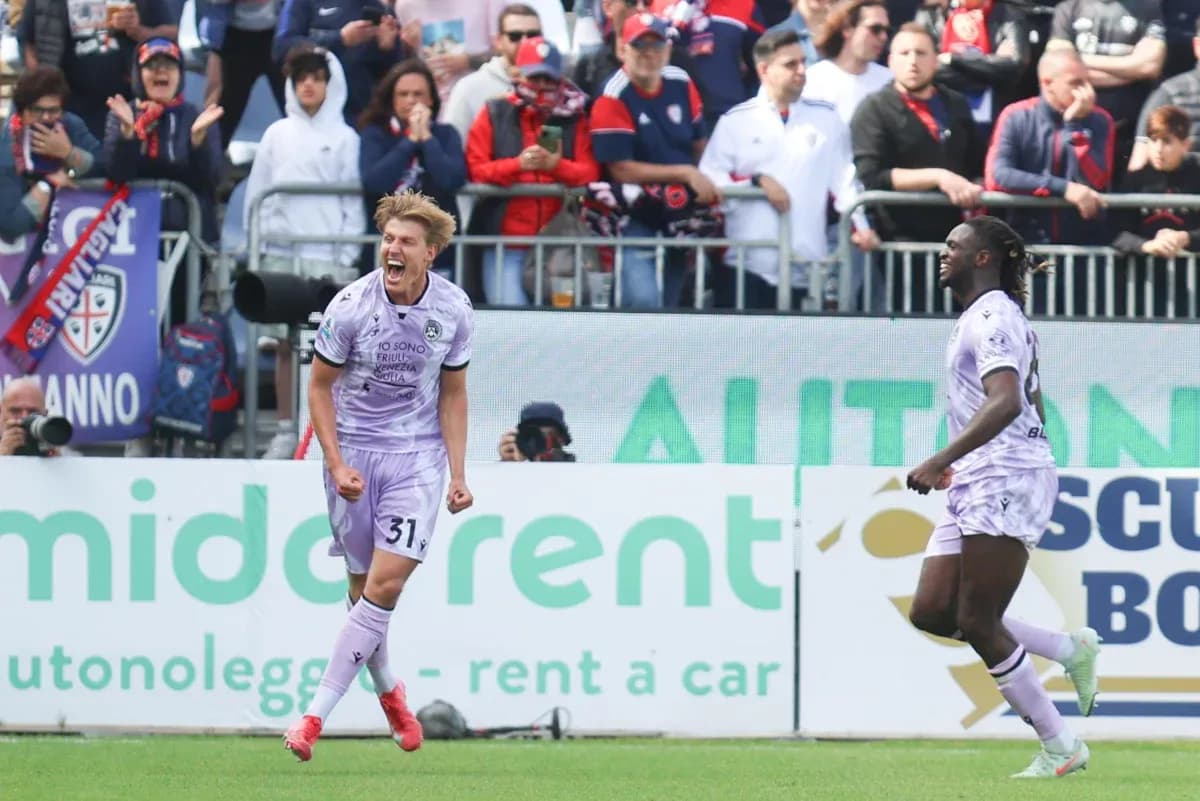
On a sun‑splashed afternoon at the Unipol Domus, a meeting between teams separated by seven places in the Serie A table ended with a scoreline that told a stark story. Cagliari, 16th heading into this game with 37 points and a goal difference of -15 (36 scored, 51 conceded), were beaten 2-0 at home by 9th‑placed Udinese, who arrived on 50 points and a goal difference of -1 (45 for, 46 against). Following this result, the contrast between their seasonal identities felt sharper than ever: Cagliari a survival‑minded side living on fine margins, Udinese a flawed but more assertive mid‑table predator.
I. The Big Picture – Shapes, context, and season DNA
Fabio Pisacane leaned into caution, rolling out a 5-3-2 that underlined Cagliari’s season-long pragmatism. At home they had averaged 1.1 goals for and 1.2 against, with 6 clean sheets but 7 matches where they failed to score. The back five of M. Palestra, J. Pedro, A. Dossena, J. Rodriguez and A. Obert sat in front of E. Caprile, with a compact midfield triangle of M. Folorunsho, G. Gaetano and M. Adopo trying to link to the front pair of S. Esposito and P. Mendy.
Across from them, Kosta Runjaic’s Udinese chose aggression. A 3-4-3 — T. Kristensen flanked by B. Mlacic and O. Solet at the back, a hard‑running four of K. Ehizibue, J. Piotrowski, J. Karlstrom and H. Kamara, and a front line of N. Zaniolo, A. Buksa and A. Atta — reflected a team that on their travels had averaged 1.5 goals scored and 1.4 conceded. They are not watertight, but they are bold: 8 away wins in 18, 5 away clean sheets, and only 3 away games without scoring.
The 0-0 at half‑time suggested Cagliari’s deep block had initially done its job. But the final 0-2 exposed the underlying numbers: overall this campaign Cagliari concede 1.4 goals per match, Udinese score 1.3, and in the end the away side’s attacking structure and superior individual quality told.
II. Tactical Voids – Absences and discipline
Both coaches had to navigate significant absences, especially in zones that define their teams’ personalities.
For Cagliari, the attacking unit was stripped of variety and experience. G. Borrelli (thigh injury), M. Felici (knee), R. Idrissi (knee), J. Liteta (thigh), L. Mazzitelli (injury) and L. Pavoletti (knee) all missed the fixture. That is a full spectrum of profiles gone: a penalty‑box presence in Pavoletti, secondary scorers and wide threats in Felici and Idrissi, and midfield depth in Mazzitelli. It forced Pisacane to lean heavily on Esposito’s creativity and Mendy’s running, with A. Belotti reduced to a bench option rather than the reference point he might otherwise have been.
Udinese’s voids were more structural than numerical. J. Ekkelenkamp (leg injury) removed a link between midfield and attack, while A. Zanoli (knee) and the suspended C. Kabasele (yellow cards) weakened their defensive rotation and leadership. Yet Runjaic compensated with the physical presence of Solet and the energy of Mlacic, allowing Udinese to maintain their usual back‑three identity.
Disciplinary tendencies also shaped the emotional temperature of the match. Cagliari’s yellow‑card profile is heavily back‑loaded: 26.92% of their bookings come between 76-90 minutes, with another 24.36% between 46-60. Udinese, by contrast, spike between 61-75 minutes (26.87%) and 76-90 (22.39%). This is a pair of teams that grow more frantic as the game stretches, and as Udinese pulled ahead, Cagliari’s late‑game anxiety — a hallmark of a side that has lost 17 of 36 overall — was only likely to increase.
III. Key Matchups – Hunter vs Shield, and the engine room
The “Hunter vs Shield” narrative was written around Udinese’s offensive potential and Cagliari’s fragile defensive baseline. On their travels Udinese had scored 27 and conceded 26, while Cagliari at home had allowed 22 in 18 matches. The 3-4-3 gave Runjaic three different threats on the last line: Buksa as the central target, Atta attacking space, and Zaniolo drifting into half‑spaces.
Zaniolo, Udinese’s leading creator with 6 assists and 5 goals heading into this game, was the obvious hunter. His 53 key passes and 94 dribble attempts this season speak to a player who insists on carrying the ball into dangerous zones. The primary shield was A. Obert, Cagliari’s defensive heartbeat: 63 tackles, 18 blocked shots and 40 interceptions, plus 9 yellow cards that underline how often he operates on the edge.
In theory, Obert’s aggression and aerial presence should have been ideal to disrupt Buksa and screen Zaniolo’s runs inside. In practice, Udinese’s wide structure stretched the back five horizontally, forcing Obert and Dossena to defend large channels, exactly where Zaniolo thrives. Once Udinese found rhythm, the duel tilted decisively in the away side’s favour, reflected in the two second‑half goals that cracked the Cagliari block.
In midfield, the “engine room” battle pitted Cagliari’s technical fulcrum against Udinese’s industrial core. S. Esposito, listed as a midfielder but operating almost as a second striker, arrived with 6 goals, 5 assists, 65 key passes and 916 total passes. He is both creator and outlet, and his 49 fouls drawn underline how much Cagliari rely on him to win territory and set‑pieces.
Opposite him, J. Karlstrom and J. Piotrowski were the enforcers. Their task was clear: suffocate Esposito between the lines, deny him time to turn, and prevent Cagliari from transitioning quickly out of their 5-3-2. With Udinese’s wing‑backs pinning Palestra and Obert deep, Esposito was repeatedly forced to drop into his own half to receive, blunting his influence near the box.
IV. Statistical Prognosis – What the numbers say about the 0-2
Even without explicit xG values, the season data sketches a plausible expected‑goals landscape. Udinese’s away average of 1.5 goals for against Cagliari’s home average of 1.2 conceded suggests the away side were more likely to create higher‑quality chances. Conversely, Cagliari’s home scoring average of 1.1 against Udinese’s away concession rate of 1.4 hinted they would probably find at least one goal — but their chronic issue of failing to score in 14 of 36 overall loomed large.
Following this result, the 0-2 feels like the upper edge of Udinese’s statistical range rather than an anomaly. Their season shows a team capable of both clean sheets (11 overall) and sudden collapses, but here their structure held, aided by Cagliari’s lack of depth in attack and over‑reliance on Esposito. Udinese’s penalty record — 5 scored from 5, 0 missed — also underlines their ruthlessness in big moments, even if spot‑kicks did not feature on this particular afternoon.
Narratively, this was a match in which a cautious, injury‑hit side tried to drag a more dynamic opponent into a stalemate and ultimately failed. The numbers had warned that Cagliari’s margin for error was thin; the 90 minutes at the Unipol Domus simply turned those warnings into a cold, two‑goal reality.