Fiorentina and Atalanta End Serie A Season in 1–1 Draw
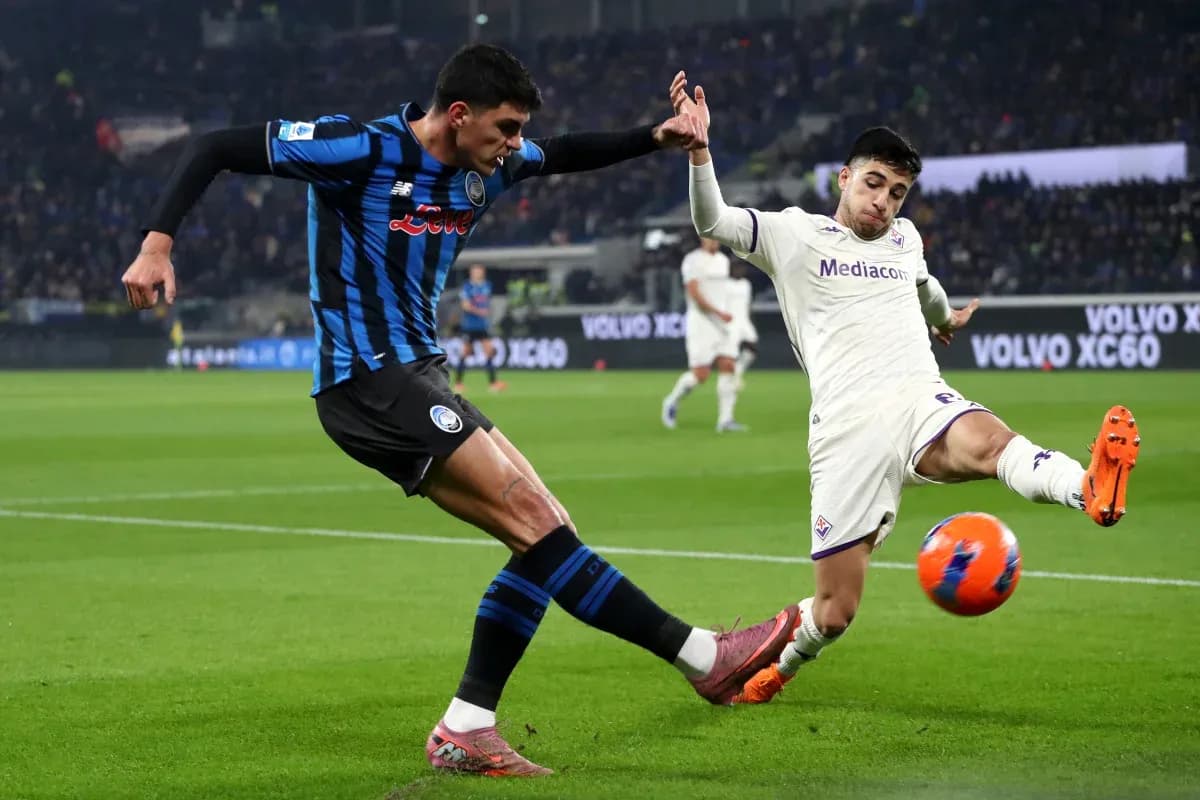
Under the Florence lights at Stadio Artemio Franchi, Fiorentina and Atalanta closed their Serie A campaigns with a 1–1 draw that felt like a snapshot of their entire seasons: Viola frustration and Bergamaschi control meeting somewhere in the middle.
I. The Big Picture – Two Seasons, One Shared Stalemate
Following this result, the table tells a clear story. Fiorentina finish 15th on 42 points, their goal difference locked at -9 after scoring 41 and conceding 50 overall. At home, they have been the embodiment of balance and limitation: 19 matches, 4 wins, 9 draws, 6 defeats, with 21 goals scored and 21 conceded. An average of 1.1 goals both for and against at home underlines why their campaign never really threatened either end of the table.
Atalanta, by contrast, close out in 7th with 59 points and a positive goal difference of 15, their 51 goals for and 36 against reflecting a side that has been consistently competitive. On their travels, they have been solid rather than spectacular: 6 wins, 8 draws, 5 defeats, 26 scored and 21 conceded, averaging 1.4 goals for and 1.1 against away from home.
The match itself followed a familiar pattern. Fiorentina, set up in a 4-3-3 by Paolo Vanoli, struck before the interval and took a 1–0 lead into half-time. Atalanta, in Raffaele Palladino’s now-standard 3-4-2-1, responded after the break to level at 1–1 by full time. The symmetry of the scoreline echoed the symmetry of their statistical profiles on the night: Fiorentina’s effort and structure against Atalanta’s layered possession and late pressure.
II. Tactical Voids – Absences and Discipline
Both coaches came into this fixture managing notable absences that shaped their tactical options.
Fiorentina were without M. Kean and F. Parisi, both sidelined with knee and calf issues, robbing Vanoli of a vertical runner in the front line and a natural left-back option. More significantly, L. Ranieri was suspended due to a red card, removing one of Fiorentina’s most combative and reliable defenders. Ranieri’s season numbers underline what was missing: 34 appearances, 29 starts, 2479 minutes, 34 tackles, 13 successful blocks and 24 interceptions. His blend of aggression and anticipation, along with 8 yellow cards and 1 red, usually sets the tone for Fiorentina’s back line. Without him, Vanoli turned to D. Rugani and P. Comuzzo as his central pairing, flanked by Dodo and R. Gosens.
Atalanta’s defensive depth was also compromised. L. Bernasconi (knee injury) and O. Kossounou (thigh injury) were both unavailable, trimming Palladino’s options in the back three and forcing him to lean on G. Scalvini, I. Hien and H. Ahanor as his starting trio.
Across the season, discipline has been a live wire for both sides. Fiorentina’s yellow card distribution shows a pronounced late-game spike: 25.30% of their yellows arrive between 76–90 minutes, and a further 15.66% between 91–105. Their red cards are even more concentrated, with 66.67% shown in the 76–90 range. Atalanta mirror this late volatility: 23.33% of their yellows come between 76–90 minutes, and their two reds are split between the opening 0–15 and the 76–90 window. This match, tight and tense into the closing stages, was always likely to flirt with disciplinary flashpoints, even if the final whistle arrived without a decisive card-driven twist.
III. Key Matchups – Hunter vs Shield, Engine Room vs Engine Room
The “Hunter vs Shield” narrative here belongs largely to Atalanta’s season rather than this single game. Heading into this fixture, the visitors had leaned heavily on their attacking cadre, with N. Krstović and G. Scamacca both reaching 10 goals in total for the campaign. Krstović’s 75 shots (34 on target) and 21 key passes, plus 5 assists, frame him as a volume shooter and secondary creator. Scamacca, with 49 shots (22 on target) and 17 key passes, offers a more classic penalty-box threat, supplemented by 2 successful penalties.
Yet Palladino chose to start with G. Raspadori as the central forward, supported by L. Samardzic and K. Sulemana, keeping both Krstović and Scamacca in reserve. That decision reinforced Atalanta’s preference for mobility and combination play between the lines rather than pure target-man football from the outset. It also set up an intriguing duel between Raspadori’s movement and the relatively improvised Fiorentina centre-back partnership.
On the other side, Fiorentina’s attacking reference point was A. Gudmundsson. Across the season he has produced 5 goals and 4 assists, with 28 shots (15 on target) and 32 key passes. His profile is that of a roaming creator-finisher, comfortable dropping off the front line to link with midfielders like R. Mandragora and M. Brescianini. In this match, deployed on the left of the front three, Gudmundsson’s threat came as much from his ability to drag Scalvini or Bellanova out of shape as from pure finishing.
The “Engine Room” confrontation was equally compelling. Fiorentina’s midfield three of G. Fabbian, Mandragora and Brescianini faced Atalanta’s central square of Y. Musah, M. Pasalic, M. De Roon and Bellanova. De Roon’s role as enforcer and organiser in front of the back three is central to Atalanta’s away solidity; his screening allowed Musah and Pasalic to step forward and contest second balls, especially after the break when Atalanta began to suffocate Fiorentina’s attempts to play out.
Without Ranieri stepping into midfield lanes, Fiorentina’s back four had to remain more conservative, which in turn limited the aggression of their press. The knock-on effect was clear: Atalanta grew into the game, their wing-backs pushing higher, forcing Dodo and Gosens deeper and isolating Gudmundsson and J. Harrison from R. Piccoli.
IV. Statistical Prognosis – xG, Control and the Draw That Fits
Even without explicit xG values in the data, the season-long patterns frame this 1–1 as an almost inevitable outcome. Fiorentina’s overall scoring average of 1.1 goals per game, combined with conceding 1.3, points to narrow margins and frequent stalemates. Their 15 draws in total underline a side that rarely has the attacking punch to kill games off.
Atalanta, meanwhile, carry more consistent attacking weight, with 1.3 goals per game overall and 1.4 on their travels, while conceding just 0.9 in total and 1.1 away. Their 13 clean sheets (7 at home, 6 away) and only 8 matches where they failed to score suggest a team that usually finds a way to impose themselves territorially and in chance creation, even if they do not always convert dominance into wins.
Overlaying those profiles onto this match, the narrative is clear. Fiorentina’s early goal and first-half lead fit their ability to strike in phases, especially at home. Atalanta’s second-half response and eventual equaliser align with a side that sustains pressure and finds openings as opponents tire. The disciplinary tendencies of both teams toward late cards added a layer of jeopardy but, in the end, not a decisive twist.
Following this result, the final verdict is that the draw is a fair reflection of both the 90 minutes and the campaigns behind them. Fiorentina’s 4-3-3, shorn of Ranieri’s edge and Kean’s depth running, could not maintain its early incision. Atalanta’s 3-4-2-1, even without Kossounou and Bernasconi, had enough structure and attacking variation to claw back parity.
From a tactical lens, the underlying “xG story” almost certainly favoured Atalanta on volume and territory, but Fiorentina’s resilience and Christensen’s presence in goal preserved a point. For Vanoli, it is a reminder that structural solidity is in place but attacking evolution is needed. For Palladino, it confirms that his side’s away platform is strong enough to underpin another European push, even on nights when the scoreboard only half-rewards their control.