Parma vs Sassuolo: Tactical Analysis of Serie A Finale
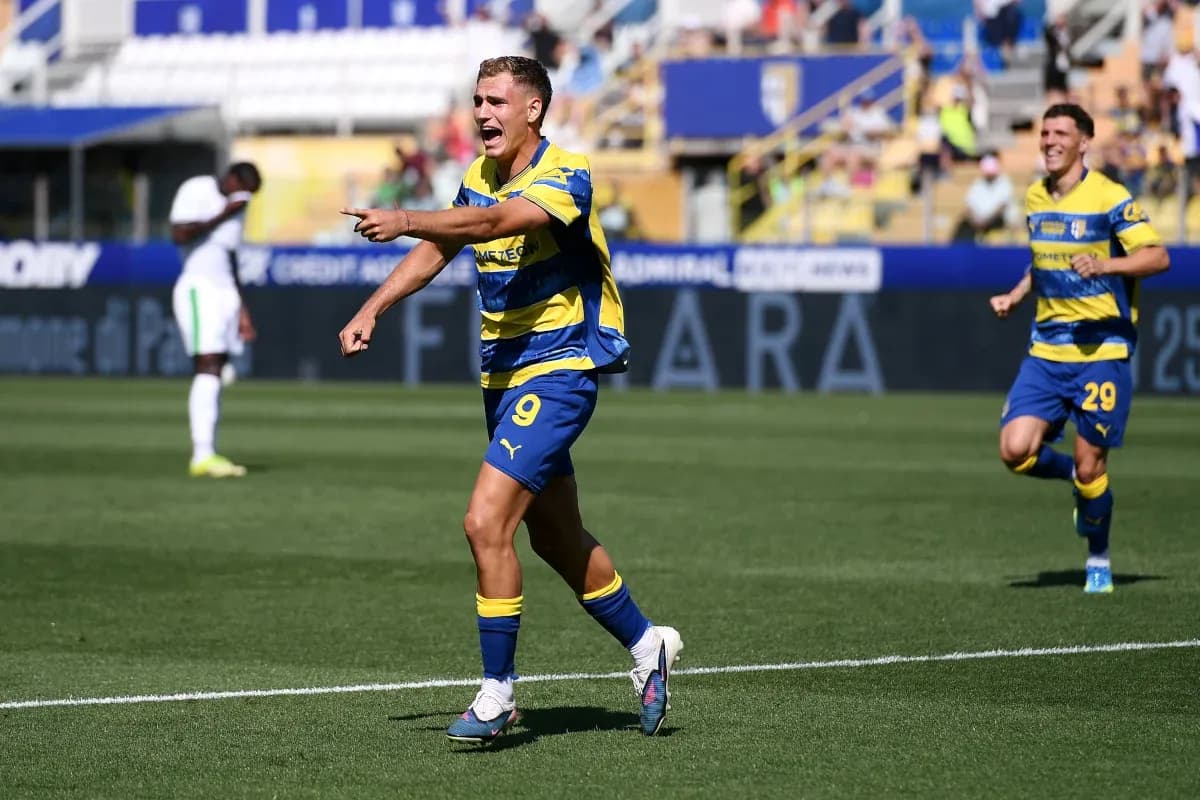
The late-May sun hung over Stadio Ennio Tardini as a long Serie A campaign finally exhaled. Following this result, Parma’s 1–0 win over Sassuolo was more than a narrow home victory; it was a snapshot of two mid-table sides whose identities over 38 rounds had been sharply defined by their structures, flaws and a handful of standout individuals.
I. The Big Picture – contrasting trajectories in mid-table
This was Round 38 of Serie A, a regular-season finale between a Parma side finishing 13th and a Sassuolo team closing in 11th. Overall, Parma’s season was built on survival and pragmatism: 11 wins, 12 draws, 15 defeats from 38 matches, with just 28 goals scored and 46 conceded for a goal difference of -18. Their attacking output was modest – only 0.8 goals per game at home and 0.6 on their travels – but they compensated with a disciplined defensive framework and 13 clean sheets in total.
Sassuolo, by contrast, leaned into volatility. They closed with 14 wins, 7 draws and 17 losses, scoring 46 and conceding 50 (goal difference -4). On their travels they found the net 21 times and conceded 24, averaging 1.1 goals for and 1.3 against away. The numbers underline a side that could hurt opponents but rarely controlled games defensively.
At the Tardini, those seasonal profiles played out in miniature: Parma in a 3-5-2 under Carlos Cuesta, Sassuolo in their familiar 4-3-3 under Fabio Grosso.
II. Tactical Voids – absences that shaped the chessboard
Both squads came into this fixture with significant absentees that subtly redrew the tactical map.
Parma were without a cluster of creative and attacking profiles: A. Bernabe (muscle injury), B. Cremaschi (knee), N. Elphege (thigh), M. Frigan (knee), J. Ondrejka (leg), G. Oristanio (knee) and G. Strefezza (ankle). For a side that had already failed to score in 16 league matches overall, losing that many potential line-breakers and final-third options forced Cuesta to lean even more heavily on structure and on the physical presence of Mateo Pellegrino.
Sassuolo’s list was equally consequential. D. Bakola, D. Boloca, F. Cande, E. Pieragnolo, S. Walukiewicz (all various injuries) plus F. Romagna and A. Vranckx (inactive) stripped Grosso of depth in both defensive and midfield rotations. Without Boloca’s control and Vranckx’s energy, the burden in central areas shifted towards L. Lipani and K. Thorstvedt, with Nemanja Matic only available from the bench.
Disciplinary trends over the season added another layer. Parma’s yellow cards clustered notably in the 46–60 and 76–90 minute windows, both at 21.21%, pointing to a side that often had to foul to break up transitions as legs tired. Their red cards peaked between 31–45 minutes (40.00%), a warning about emotional volatility around half-time.
Sassuolo, meanwhile, showed a pronounced late-game edge: 28.92% of their yellows arrived between 76–90 minutes, and they also produced reds between 16–30, 46–60 and 76–90. This was a team that often finished matches on the disciplinary edge – a risk against a direct, duel-heavy forward like Pellegrino.
III. Key Matchups – Hunter vs Shield, Engine Room battles
Hunter vs Shield
Up front, this contest was framed around two leading scorers. For Parma, Pellegrino had been the reference point all season: 9 goals overall, 1 assist, 53 shots (22 on target) and a relentless duelling profile – 546 total duels, winning 233. He is less a poacher than a constant physical problem, drawing 71 fouls and committing 87, pinning centre-backs and creating chaos in the box.
He was pitted against a Sassuolo defence that, on their travels, conceded 24 goals in 19 matches – 1.3 per game away. Their best version is anchored by J. Idzes and T. Macchioni in the centre, with W. Coulibaly and U. Garcia wide. But the away metrics and the memory of a 2-0 worst away defeat underline a back line that can be stretched when forced to defend deep for long spells.
On the other side, Sassuolo’s “hunter” was Andrea Pinamonti, also on 9 goals with 3 assists, supported by Domenico Berardi (8 goals, 4 assists) and Armand Laurienté (7 goals, 9 assists). This trio embodies Sassuolo’s attacking ceiling: Pinamonti with 57 shots (30 on target) and a penalty won but one missed; Berardi with 35 shots, 21 on target and 2 penalties scored but 1 missed; Laurienté with 54 key passes and 80 dribble attempts, 29 successful.
They ran into a Parma defence that, for all its struggles at the other end, conceded only 1.3 goals per game at home and kept 13 clean sheets overall. The back three of A. Circati, Mariano Troilo and L. Valenti is built for aerial duels and shot-blocking. Troilo, in particular, is a defensive axis: 27 tackles, 18 interceptions and 18 successful blocks across the season, plus an 89% passing accuracy from the back. His disciplinary record is sharp-edged – 7 yellows, 1 second yellow and 1 straight red – but that aggression is part of Parma’s defensive identity.
Engine Room – creators vs enforcers
In midfield, the battle was as much about rhythm as about destruction. For Sassuolo, Thorstvedt’s season numbers are quietly impressive: 4 goals, 4 assists, 1055 passes at 82% accuracy, 44 tackles and 13 blocked shots. He is both a late-arriving threat and a key connector between lines. Alongside him, Lipani and I. Kone offered legs and verticality, with Laurienté dropping inside from the left to overload half-spaces.
Parma’s response came through H. Nicolussi Caviglia and M. Keita in the central band, with C. Ordonez and S. Britschgi adding energy and coverage. With so many creative players injured, Cuesta’s 3-5-2 was less about intricate combinations and more about compressing space, winning second balls and then releasing wing-backs E. Valeri and Britschgi to push Sassuolo’s full-backs backwards.
The looming figure on the Sassuolo bench was Matic. Across the season he had 1721 passes at 86% accuracy, 43 tackles and 10 blocks, plus a red card that underlined how fine his disciplinary line can be. Introduced in the second half, he would typically try to slow the game, dictate tempo and shield the back four. But chasing a deficit at the Tardini, even his control could not fully unpick Parma’s compact block.
IV. Statistical Prognosis – why 1–0 made sense
Following this result, the 1–0 scoreline felt almost pre-written by the numbers. Parma are a low-scoring but structurally solid side at home, averaging 0.8 goals for and 1.3 against, with a high rate of clean sheets and a willingness to suffer without the ball. Sassuolo, meanwhile, average 1.1 goals for and 1.3 against away, and their defensive fragility, especially late in games, has been a recurring theme.
Pinamonti’s and Berardi’s penalty records – both having missed once this season – symbolise a Sassuolo attack that creates chances but is not ruthlessly efficient. Against a deep, disciplined Parma back three marshalled by Troilo, and with Corvi protected by a crowded central zone, their usual xG advantage was likely blunted into half-chances and blocked shots.
On the other end, Pellegrino’s profile – high duels, frequent fouls drawn, one penalty scored this season – matched perfectly with Sassuolo’s late-game disciplinary spikes. Even without explicit minute-by-minute shot data, the season-long card distributions suggested that as the match drifted into its final quarter, Parma’s direct balls into Pellegrino and Mikolajewski would increasingly stress a tired and card-prone back line.
In the end, Parma’s season-long story held: limited but efficient attacking, a reliance on set-pieces and physical duels, and a defence that, when locked in a back three, can grind out narrow wins. Sassuolo’s narrative also remained intact – bright in flashes, technically gifted in the final third, but too porous and too volatile to consistently turn their attacking talent into results.
At Ennio Tardini, the numbers and the structures converged. One goal was always likely to be enough – and Parma were the side better built to protect it.