Carrick Responds to 'On the Beach' Jibe After United's Draw at Sunderland
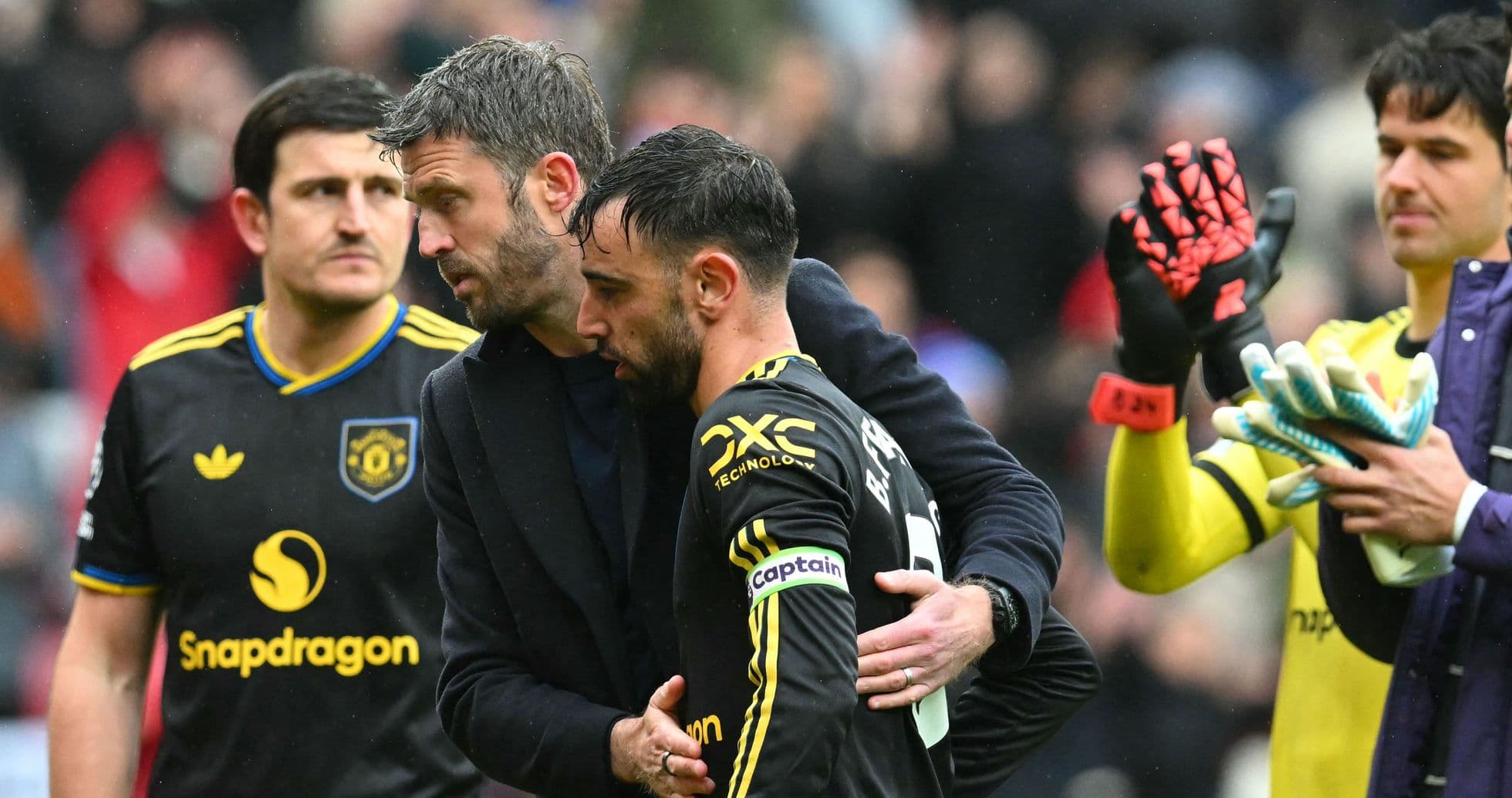
Michael Carrick did not so much bat away the accusation as bite back at it. Suggestions that his United side have “gone to the beach” since sealing Champions League football clearly struck a nerve – and after a laboured draw at the Stadium of Light, he was in no mood to indulge the narrative.
Seven days earlier, United had gone toe-to-toe with Liverpool in a high-wire contest and emerged with the win that locked in a top-four finish. The stakes, the noise, the adrenaline – everything was cranked to the maximum.
This was the opposite.
On a subdued afternoon against Sunderland, United looked a yard short in thought and in legs. The hosts dictated long spells, snapping into challenges and pinning Carrick’s team back. United’s play lacked tempo, their attacking patterns never really clicked, and they were indebted to goalkeeper Senne Lammens simply to escape with a point.
If this was a side easing off after a job well done, Carrick rejected the idea outright.
“I almost get offended by that,” he said, bristling at the insinuation that his players had mentally checked out.
He pointed to their work in the days before the game, the way they left the dressing room, the way they dug in when Sunderland turned the screw. For him, this was not about application. This was about a team grinding when the performance level dipped.
The evidence on the pitch backed up at least part of that claim. United were second-best for long periods, yet they did not fold. Lammens had to be sharp, the back line had to throw bodies in front of shots, and the midfield spent more time firefighting than dictating. It was a slog. But they survived it.
“I think if we weren’t in a good headspace and motivated, I think we lose the game today,” Carrick argued. Sunderland, he noted, “played really well at certain points of the game and made us work for it.”
The United manager leaned heavily on the weight of the badge as his counterpoint. In his view, the history and stature of the club act as a permanent jolt of electricity. Players, he insisted, simply do not get to cruise through games because the league position is secure. The responsibility of pulling on that shirt, of representing “this great club”, as he put it, remains a constant.
Pride. Duty. Standards. These were the pillars Carrick kept returning to.
“The fact that our pride in ourselves and each other and the responsibility playing for this great club and being part of it, certainly motivation and focus is not the reason” for any dip, he said.
Performances may fluctuate, he admitted. Some days would feel “a little bit more challenging” than others. But he refused to accept that a lack of edge or desire would ever be the cause.
The numbers in the final third hardly flattered his case. United’s attacking threat was almost non-existent, with Robin Roefs in the Sunderland goal barely troubled until the 93rd minute, when Matheus Cunha finally forced him into a save. That late effort underlined how little incision United had shown for the previous 92 minutes.
Carrick, though, chose to lean into the positives he could find. This was a heavily rotated side, a team still trying to rediscover rhythm after changes. In that context, he framed the clean sheet and the point as a different kind of progress – not glamorous, but useful.
“It was a tough game,” he admitted. “Credit to Sunderland, we knew it was going to be a tough game coming here anyway. We had to dig deep at times, it wasn’t our best but actually to take something from the game when you’re not at your best is a good trait that we’re trying to build as well.”
That word – trait – is important for Carrick. He wants resilience baked into this squad, a reflex that kicks in when the football isn’t flowing. At the Stadium of Light, the passing was off, the combinations clunky, the rotations uncertain. The manager acknowledged that “there’s obviously changes and sometimes you’re trying to find that rhythm a little bit which is understandable”.
He still “quite liked a lot of the things” he saw in terms of defensive resolve and structure, the “foundation” that, in his mind, will allow United to play better in the games to come. The spectacle was forgettable. The point, he argued, was not.
“To take the point in a clean sheet for what it is, I think is okay,” he concluded.
United have secured what they came for this season: Champions League football. The question now is whether Carrick’s players can match the manager’s words with performances that prove the beach can wait.