Chelsea vs Manchester United: High-Stakes Premier League Clash
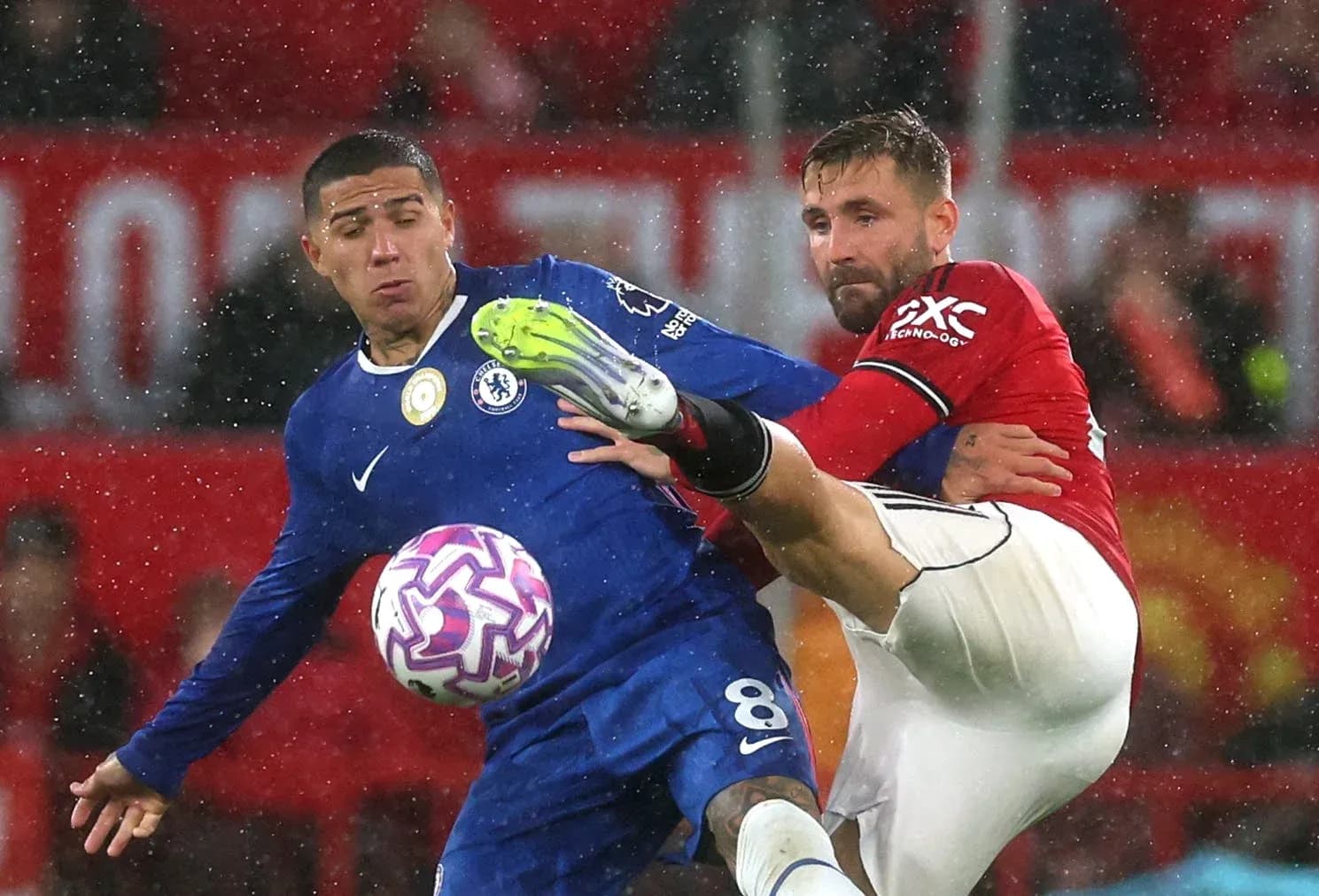
Stamford Bridge stages one of the standout fixtures of the Premier League weekend as Chelsea host Manchester United in a high-stakes clash in April 2026. With the league campaign entering its decisive stretch, the stakes are clear: United arrive in London third in the table on 55 points and pushing to lock in Champions League qualification, while sixth-placed Chelsea, on 48 points, are fighting to secure a Europa League place and keep faint top-four hopes alive.
Both sides have played 32 league games across all phases. Chelsea’s season has been uneven but improving in patches; Manchester United’s has been more consistent in results, if still defensively fragile. Under the lights, with M. Oliver in charge, this has all the ingredients of a tense, tactical contest between two teams whose margins for error are narrowing.
Form and statistical landscape
In the league, Chelsea sit 6th with a goal difference of +12 (53 scored, 41 conceded). Their recent league form reads “LLLWL”, a worrying run of four defeats in five that has checked their momentum. The broader season picture is more balanced: 13 wins, 9 draws and 10 defeats from 32 matches, with a healthy scoring rate of 1.7 goals per game.
At Stamford Bridge, however, Chelsea have been far from dominant. Their home record in the league stands at 6 wins, 5 draws and 5 losses from 16 games, with 23 goals scored and 20 conceded. They average 1.4 goals for and 1.3 against per home match, underlining how tight games at the Bridge tend to be.
Manchester United, by contrast, come in 3rd with 55 points and the same goal difference of +12 (57 for, 45 against). Their league form line “LDWLW” tells of inconsistency, but they have still found ways to win more often than not: 15 victories, 10 draws and 7 defeats across all phases. They score 1.8 goals per game on average and concede 1.4, making them slightly more expansive – and more open – than Chelsea.
Away from Old Trafford, United’s record is solid rather than spectacular: 5 wins, 7 draws and 4 defeats from 16 away matches, with 26 goals scored and 26 conceded. They average 1.6 goals for and 1.6 against on their travels, suggesting that away games are often high on jeopardy and relatively even.
Chelsea’s season-long statistical profile points to a side that tends to grow into games. Their goals-for minute distribution is weighted heavily towards the middle of each half: 21.15% of their league goals come between 31–45 minutes, and a further 25% between 46–60 minutes. That makes them particularly dangerous either side of half-time. Defensively, though, they are vulnerable late on, conceding 23.81% of their goals between 76–90 minutes – a red flag against a United side that often finishes strongly.
The under/over data for Chelsea is revealing. Across all phases, only 7 of their 32 league matches have gone over 2.5 goals, with 25 finishing under that threshold. That is a clear trend towards low-scoring encounters, despite their reputation for attacking football. Their defence has been reasonably resilient, with 9 clean sheets and just 5 games in which they failed to score.
United’s statistical breakdown is less detailed in the JSON for under/over, but the headline numbers show a team that scores more (57) and concedes more (45) than Chelsea. They have managed only 5 clean sheets all season, and have failed to score just 3 times, indicating that their matches more often feature goals at both ends.
Tactical battle: structures and key threats
Chelsea have been structurally consistent: they have lined up in a 4-2-3-1 in 28 of their league matches, with occasional switches to 4-3-3 and 4-1-4-1. That double-pivot base is likely to be crucial against a United side that alternates between a back three and a back four. The hosts will look to control central zones, protect transitions, and create pockets for their creative attackers between the lines.
João Pedro is the headline figure for Chelsea. The Brazilian forward has 14 league goals and 5 assists in 32 appearances, with a solid rating of 7.06. He is not just a finisher: 28 key passes, 61 dribble attempts (29 successful) and 351 duels contested underline his all-round involvement. His movement across the front line and ability to link with midfield makes him the focal point of Chelsea’s attacking structure.
Alongside him, Cole Palmer has become a key creative and scoring presence from midfield. With 9 goals and 1 assist in just 21 league appearances, and an impressive rating of 7.08, Palmer offers line-breaking passes (22 key passes) and ball-carrying threat (53 dribble attempts, 20 successful). Crucially, he has been flawless from the spot this season: 5 penalties scored, 0 missed. In a fixture where fine margins often decide the outcome, that reliability from 12 yards could be decisive.
Manchester United’s tactical identity has been more flexible. They have used a 3-4-2-1 in 18 league games and a 4-2-3-1 in 14, suggesting that the manager tailors the shape to the opponent and game state. Away at Stamford Bridge, a back three could be deployed to crowd out João Pedro and protect the half-spaces where Palmer thrives, with wing-backs tasked with pinning Chelsea’s full-backs deep.
In attack, Bryan Mbeumo and Benjamin Šeško are the standout names. Mbeumo has 9 goals and 3 assists from 27 appearances, with 41 key passes and 52 shots (30 on target). His profile is that of a creative wide forward who can both score and supply, dangerous when cutting inside and delivering from the channels.
Šeško offers a different threat: 9 goals in 27 games despite starting only 14, with 31 shots on target from 48 attempts. His aerial presence and penalty-box instincts make him a natural focal point, especially against a Chelsea defence that has occasionally struggled to deal with crosses and late runs into the area.
Both sides are perfect from the spot in league play this season: Chelsea have scored all 7 of their penalties, United all 4. There are no recorded individual misses in the JSON, so there is no contradiction to resolve here.
Head-to-head: recent history
The last five competitive meetings between these sides, all in the Premier League, have been tight and often dramatic:
- In September 2025 at Old Trafford, Manchester United beat Chelsea 2-1.
- In May 2025 at Stamford Bridge, Chelsea edged a 1-0 home win.
- In November 2024 at Old Trafford, the sides drew 1-1.
- In April 2024 at Stamford Bridge, Chelsea won a 4-3 thriller after a 2-2 first half.
- In December 2023 at Old Trafford, Manchester United won 2-1.
Across these five league encounters, the record stands at 2 wins for Chelsea, 2 for Manchester United, and 1 draw. Home advantage has mattered: Chelsea have won both of their home games in this run, while United have taken 2 of the 3 at Old Trafford. The pattern suggests a finely balanced rivalry where the venue often tips the scales.
Discipline, intensity and game flow
Both teams carry disciplinary risk. Chelsea’s yellow card distribution spikes in the final 30 minutes, with 21.25% of their bookings between 61–75 minutes and another 21.25% between 76–90. United show a similar late-game edge: 21.57% of their yellows come in the final quarter-hour of normal time. United’s red card profile is notable too, with three dismissals clustered between 46–90 minutes, indicating that their aggressive pressing and duels can boil over under pressure.
Chelsea’s late-game defensive numbers – 10 goals conceded between 76–90 minutes, the highest of any 15-minute segment – combine with United’s capacity to score away (26 goals on the road) to set up a scenario where the closing stages could be decisive.
The verdict
On paper, Manchester United arrive as the stronger, more consistent side: higher in the league, more goals scored, and a better overall record across all phases. Yet Chelsea’s home form against United in recent seasons – two wins from two at Stamford Bridge since 2024 – and their tendency to keep games tight suggest this is far from a straightforward away assignment.
Chelsea’s low rate of over 2.5-goal matches (just 7 from 32) contrasts with United’s more open profile, and the tactical battle between Chelsea’s 4-2-3-1 and United’s flexible back three/four will likely decide the rhythm. If Chelsea can feed João Pedro and Palmer between United’s lines and protect themselves in the final quarter-hour, they have enough to take something from the game.
United, for their part, will fancy their chances of exploiting Chelsea’s late-game frailties through Mbeumo’s creativity and Šeško’s penalty-box presence, especially if they can turn the match into a transition-heavy contest.
The data points towards a balanced, high-stakes encounter: marginal edge to United on season form, slight tilt to Chelsea due to home advantage and recent head-to-head at Stamford Bridge. A narrow scoreline, with both sides on the board and the result in doubt deep into the second half, looks the most logical expectation.