Colombia Dominates Ghana in World Cup Round of 32
Colombia’s 1-0 win over Ghana at Arrowhead Stadium in this World Cup Round of 32 tie was a textbook example of territorial and structural dominance translating into control, if not into a decisive scoreline. Nestor Lorenzo’s side imposed a clear 4-3-3 identity from the opening minutes, using a high technical base and wide rotations to pin Ghana back. Carlos Queiroz responded with a compact 4-1-4-1, but his team struggled to progress the ball and finished without a single shot on target. Colombia’s 61% possession, 20 total shots and 2.18 xG against Ghana’s 0.26 xG underline how one-sided the tactical battle was, even if the scoreboard remained narrow.
Decisive Phase
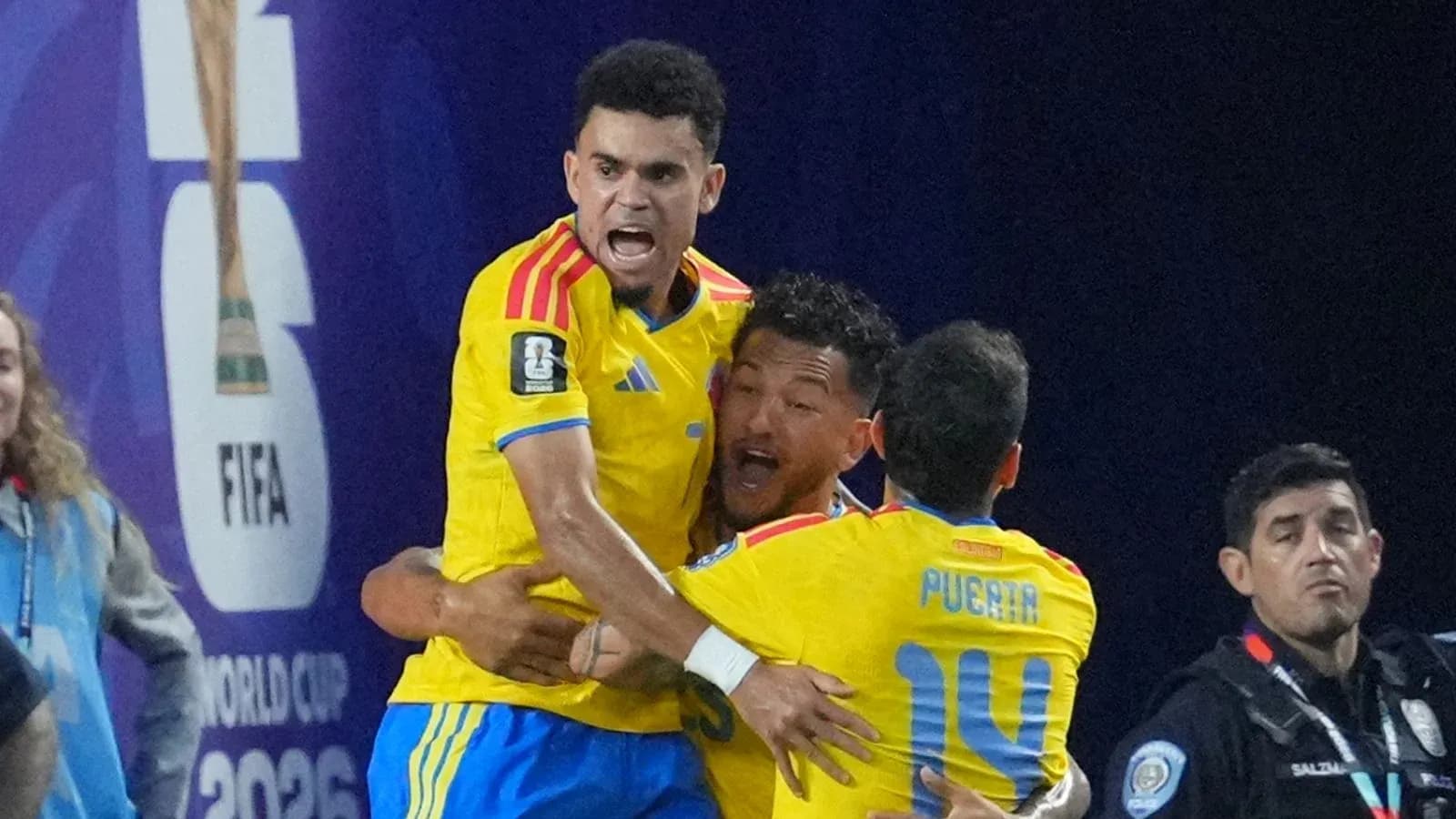
The decisive phase came early, shaped by an aggressive use of substitutions and positional tweaks. At just 8 minutes, Jhon Córdoba (OUT) was replaced by Luis Javier Suárez (IN), a remarkably early attacking change that sharpened Colombia’s vertical threat between the lines. Within six minutes the adjustment paid off: at 14', Jhon Arias arrived from midfield to score the only goal, assisted by Suárez. The pattern reflected Colombia’s plan: overloads in the right half-space, with Suárez drifting off the front line and Arias timing his run beyond Ghana’s midfield screen.
Colombia's Tactical Setup
Lorenzo’s 4-3-3 was ball-dominant and structured around a stable back four and a technically secure midfield trio. Gustavo Puerta and Jefferson Lerma operated as the double pivot in practice, even if on paper it was a three-man midfield with Arias higher. Puerta and Lerma recycled possession and controlled tempo, enabling Colombia to build patiently and keep Ghana pinned deep. With 586 total passes, 532 accurate at 91%, Colombia circulated the ball with very little risk, using the full width provided by Johan Mojica on the left and Daniel Muñoz on the right.
James Rodríguez started nominally as part of the front line but functioned as a roaming playmaker, dropping into the right half-space to connect with Arias and Muñoz. The second-half substitution at 46', with James Rodríguez (OUT) replaced by Richard Ríos (IN), subtly shifted the structure. Colombia moved towards a more balanced and physically robust midfield three, with Ríos adding defensive presence and pressing intensity. This change helped protect the lead while still allowing Colombia to maintain control in Ghana’s half.
Luis Díaz, operating from the left, was a constant outlet, driving at Gideon Mensah and Jerome Opoku. His disallowed goal at 56' after a VAR intervention for offside highlighted Colombia’s threat in transition and their ability to attack depth when Ghana’s line finally stepped up. Later, at 73', Lorenzo replaced the goalscorer Jhon Arias (OUT) with Juan Fernando Quintero (IN), reintroducing a creative profile between the lines to manage possession and exploit tired Ghanaian legs. Finally, at 90', Díaz (OUT) made way for Jaminton Campaz (IN), a late move to inject fresh energy on the flank and close out the match.
Defensive Performance
Defensively, Colombia’s structure was almost untroubled. Ghana managed only 8 total shots, 2 from inside the box, and crucially 0 shots on goal. The Colombian back line of Muñoz, Davinson Sánchez, Jhon Lucumí and Mojica held a relatively high line, with Lerma screening in front. Their rest-defense was well organized: full-backs did not overlap recklessly, and the two centre-backs were consistently positioned to deal with Jordan Ayew’s runs and Antoine Semenyo’s movements from the left. With Ghana forced into low-percentage efforts from distance (6 shots outside the box), Colombia could compress the pitch and immediately counter-press after turnovers.
In goal, Camilo Vargas (Colombia) did not register a single save, which is consistent with Ghana’s lack of shots on target. His influence was more about positioning and sweeping, supported by Colombia’s outfield control. On the other side, Lawrence Ati Zigi (Ghana) was heavily involved: he made 7 saves and, according to the data, prevented 1.92 goals. This aligns with Colombia’s 8 shots on goal and 2.18 xG, suggesting that Ati Zigi (Ghana) was a major reason the scoreline remained 1-0 rather than becoming a rout.
Ghana's Struggles
Ghana’s 4-1-4-1, with Thomas Partey as the lone pivot, was designed to provide central solidity and quick outlets to wide players like Semenyo and Iñaki Williams. However, the structure rarely translated into effective transitions. With only 376 total passes (312 accurate, 83%), Ghana struggled to build through Colombia’s press. Partey was frequently isolated, and the second line of Caleb Yirenkyi, Kwasi Sibo, Semenyo and Williams could not receive in advanced pockets often enough. When Queiroz tried to adjust, bringing on Alidu Seidu for Marvin Senaya at 13', Abdul Fatawu Issahaku for Iñaki Williams at 62', Elisha Owusu for Kwasi Sibo at 62', Ernest Nuamah for Jordan Ayew at 79' and Prince Kwabena Adu for Caleb Yirenkyi at 79', the basic problem remained: Ghana lacked central progression and final-third presence.
Statistical Overview
Colombia’s 3 corner kicks to Ghana’s 2 and the 4 blocked shots for Colombia (versus 5 for Ghana) show that both teams defended their box with numbers, but the territorial tilt was clear. Colombia generated 12 shots inside the box, repeatedly accessing dangerous zones; Ghana managed only 2 such efforts. The foul count (14 by Colombia, 10 by Ghana) reflects a game where Colombia were willing to break up the few Ghanaian counters early, with tactical fouls higher up the pitch. The disciplinary pattern also underlined the intensity of Ghana’s defensive effort: three yellow cards for Ghana against two for Colombia, many linked to direct duels as they tried to contain Colombia’s superior circulation.
From a statistical verdict, Colombia’s performance was that of a dominant favorite managing a knockout tie with maturity. The 61% possession and high passing accuracy show a team comfortable controlling tempo. Their 20 total shots and 2.18 xG indicate that the attacking process was productive, even if finishing and an inspired Ati Zigi (Ghana) kept the margin slim. Ghana’s 0.26 xG, 0 shots on goal and limited box presence illustrate how effectively Colombia’s structure suffocated them. In the context of a World Cup Round of 32 match, Colombia combined a clear positional identity with pragmatic in-game adjustments, while Ghana’s 4-1-4-1 never evolved into a consistent attacking platform, leaving them reliant on individual moments that never materialized.