Switzerland Advances with 2–0 Victory over Algeria in Round of 32
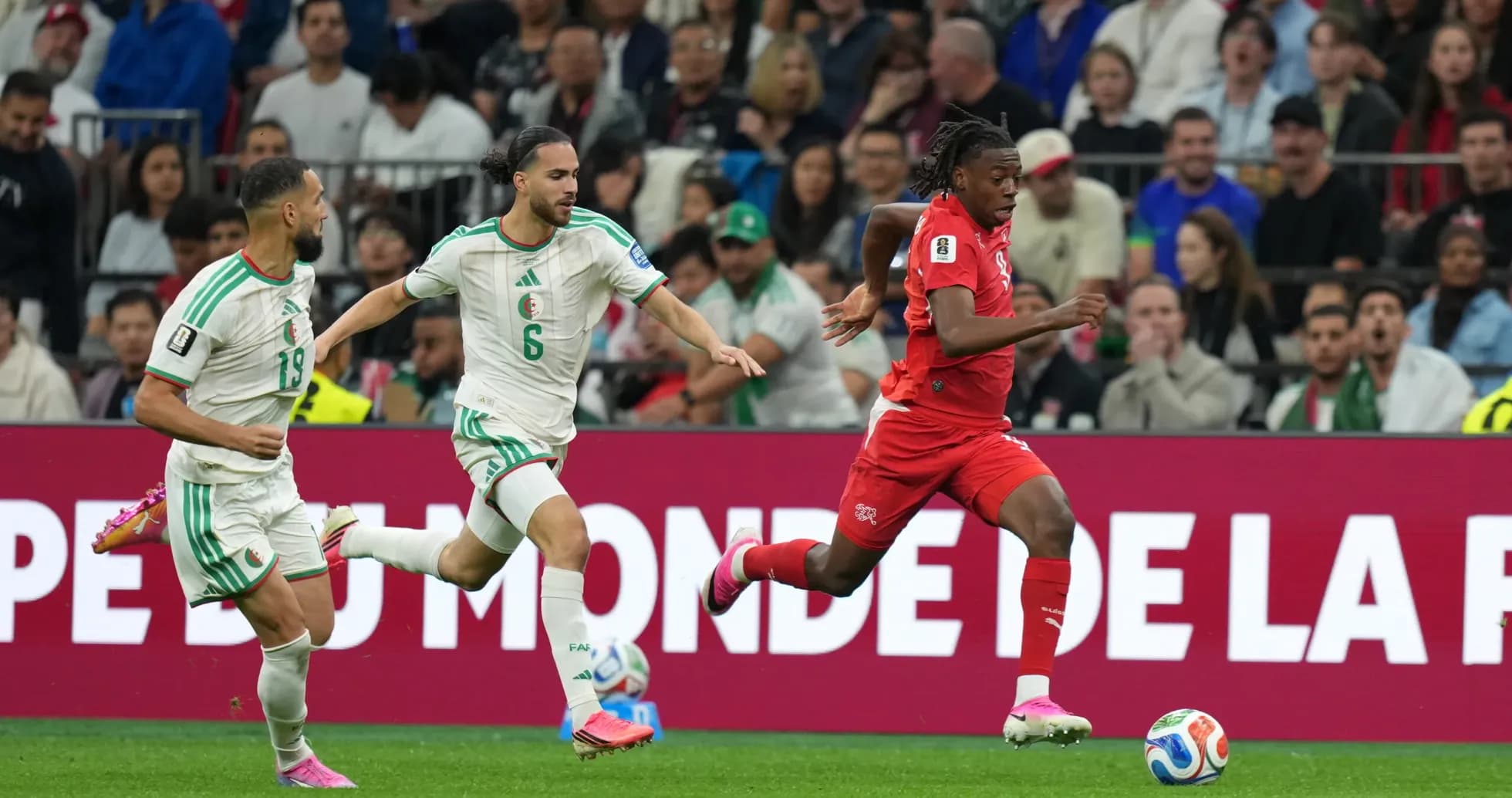
BC Place in Vancouver hosted a Round of 32 tie that felt, from the opening whistle, like a meeting of two very different footballing identities at very different stages of their World Cup journeys. Switzerland, group winners from Group B and already carrying the swagger of an unbeaten campaign, arrived with seven points and a group‑stage goal difference of 4, built on 7 goals for and 3 against in three matches. Algeria slipped into the knockouts from Group J with 4 points and a group‑stage goal difference of -2 (5 scored, 7 conceded), a side still searching for balance between their attacking talent and a porous rearguard.
The 2–0 full‑time scoreline in favor of Switzerland felt like the logical extension of the season’s numbers. Overall this campaign, Switzerland had played 4 matches, winning 3 and drawing 1, and crucially had not lost. At home in this World Cup framework they had played 3 fixtures, winning all 3. Their attacking return was emphatic: in total this campaign they had scored 9 goals and conceded just 3, with an overall average of 2.3 goals for and 0.8 against. Algeria, by contrast, came into Vancouver with 1 win, 1 draw, and 2 defeats in total, and a defensive record that had seen them concede 9 goals in 4 matches at an overall rate of 2.3 per game.
Tactics
Tactically, the lineups told the story even before a ball was kicked. Murat Yakin doubled down on Switzerland’s most-used shape, returning to a 4‑2‑3‑1 that had already featured twice this tournament. Gregor Kobel anchored the side in goal, shielded by a back four of Ricardo Rodriguez, Manuel Akanji, Nico Elvedi, and Denis Zakaria. In front of them, the double pivot of Granit Xhaka and Remo Freuler offered a clear statement of intent: control the middle, dictate tempo, and give the attacking quartet a secure platform.
Ahead of them, the creative band was built around Johan Manzambi, whose World Cup has quietly become one of the stories of the tournament. Heading into this game, Manzambi had 3 goals and 2 assists in total, with a strong rating across 200 minutes. Deployed centrally in the line of three, flanked by Ruben Vargas and Dan Ndoye, he provided the link into Breel Embolo, the lone forward whose own campaign had yielded 2 goals and 2 assists in total. It was a structure designed to create overloads between the lines and drag Algeria’s midfield trio into uncomfortable decisions.
On the other side, Vladimir Petkovic set Algeria in a 4‑3‑3, a formation they had used twice already. Lukman Zidane started in goal behind a back four of Rayan Ait‑Nouri, Ramy Bensebaini, Aissa Mandi, and Rayan Belghali. In midfield, Nabil Bentaleb and Ramiz Zerrouki sat either side of Farès Chaibi, tasked with both screening and progression. Up front, Riyad Mahrez and Houssem Aouar flanked Ishak Maza, a front line rich in technique but reliant on the platform behind it.
The absences subtly shifted the tactical landscape. Switzerland were without L. Jaquez, ruled out with a muscle bruise. While not a headline name, his unavailability narrowed Yakin’s defensive rotation options and reinforced the need for Rodriguez and Akanji to stay disciplined. Algeria missed A. Benbouali through a wound, trimming Petkovic’s choices in the final third and perhaps nudging him toward keeping Mahrez, Aouar, and Maza on the pitch longer than ideal in search of a spark.
Disciplinary Profiles
The disciplinary profiles of both sides hinted at how the midfield battle might unfold. In total this campaign, Switzerland’s yellow cards had clustered in the 31–45 minute window, where 66.67% of their cautions arrived, with another 33.33% between 61–75 minutes. Algeria mirrored that pattern almost exactly. It suggested that the edges of each half, especially just before the interval, were likely to become flashpoints as pressing intensity rose and tactical fouls crept in. With a referee like Yael Falcon Perez overseeing proceedings, the players’ ability to manage those emotional spikes was always going to matter.
Statistical Superiority
In the “Hunter vs Shield” matchup, Switzerland’s attacking unit entered with clear statistical superiority. At home this campaign they had averaged 2.7 goals per game, while on their travels Algeria had managed just 0.7 goals for and conceded 2.0 per match. Embolo, with 6 shots in total and 4 on target before this tie, represented a direct threat against an Algerian back line that had already suffered a 3‑0 away defeat. Manzambi’s numbers deepened that threat: 3 goals from 4 shots in total, 3 of those on target, and 3 key passes, making him both finisher and creator.
Defensively, Switzerland’s shield looked thicker. At home they had conceded just 2 goals in 3 matches, an average of 0.7 per game, and kept 1 clean sheet. Algeria, by contrast, had yet to record a clean sheet anywhere, and had failed to score twice on their travels. The overall goal difference picture was stark: Switzerland’s total goal difference of +6 (9 for, 3 against) contrasted with Algeria’s -4 (5 for, 9 against) across the tournament.
Engine Room Duel
The “Engine Room” duel pitted Xhaka and Freuler against Bentaleb and Zerrouki. Switzerland’s double pivot, supported by Zakaria stepping inside from right‑back when needed, provided stable distribution channels into Manzambi. Algeria’s trio had to cover more horizontal ground, shuttling to wide areas to support Ait‑Nouri and Belghali while still trying to close down central lanes. That workload imbalance gradually tilted the contest. As Switzerland recycled possession, their structure allowed them to compress the pitch, pinning Algeria’s front three deeper and blunting Mahrez’s ability to receive in advanced 1v1 situations.
Switzerland’s penalty record also underpinned their threat: in total this campaign they had won 2 penalties and converted both, with a 100.00% success rate and no misses. Embolo had already scored once from the spot. For a defence as stretched as Algeria’s, any clumsy challenge in the box risked adding another layer of difficulty.
Conclusion
Following this result, the statistical trajectory holds. Switzerland’s unbeaten run extends, their clean sheet tally rises from 1 to 2, and their identity as a structured, efficient knockout operator is reinforced. Algeria, eliminated, leave with the same questions that trailed them into Vancouver: how to align their individual attacking talent with a defensive unit that, across the tournament, conceded more than twice per game.
In pure numerical terms, the xG‑adjacent indicators all leaned Swiss even before kickoff: higher overall scoring rate, lower concession rate, a perfect penalty record, and a settled formation. The 2–0 scoreline simply crystallized what the data had been whispering all along: in this Round of 32, Switzerland’s organization and balance were always likely to outlast Algeria’s volatility.