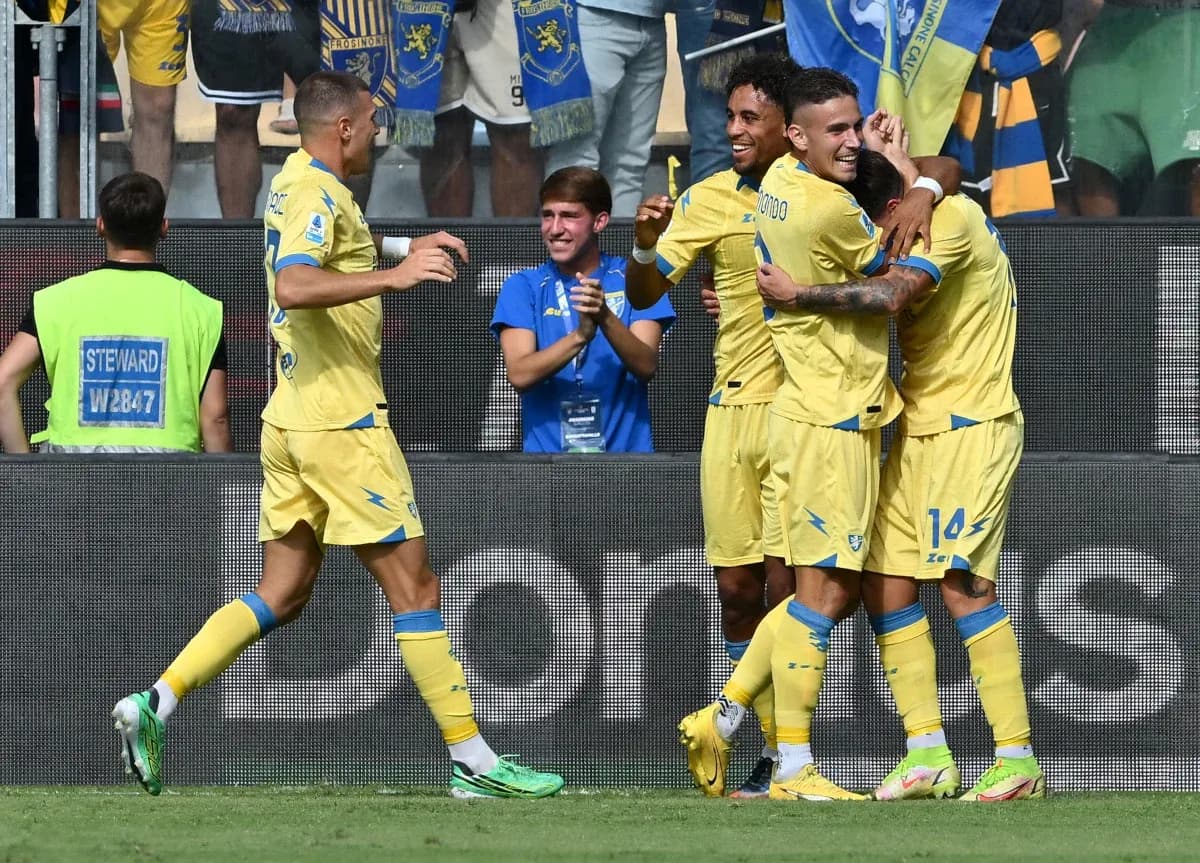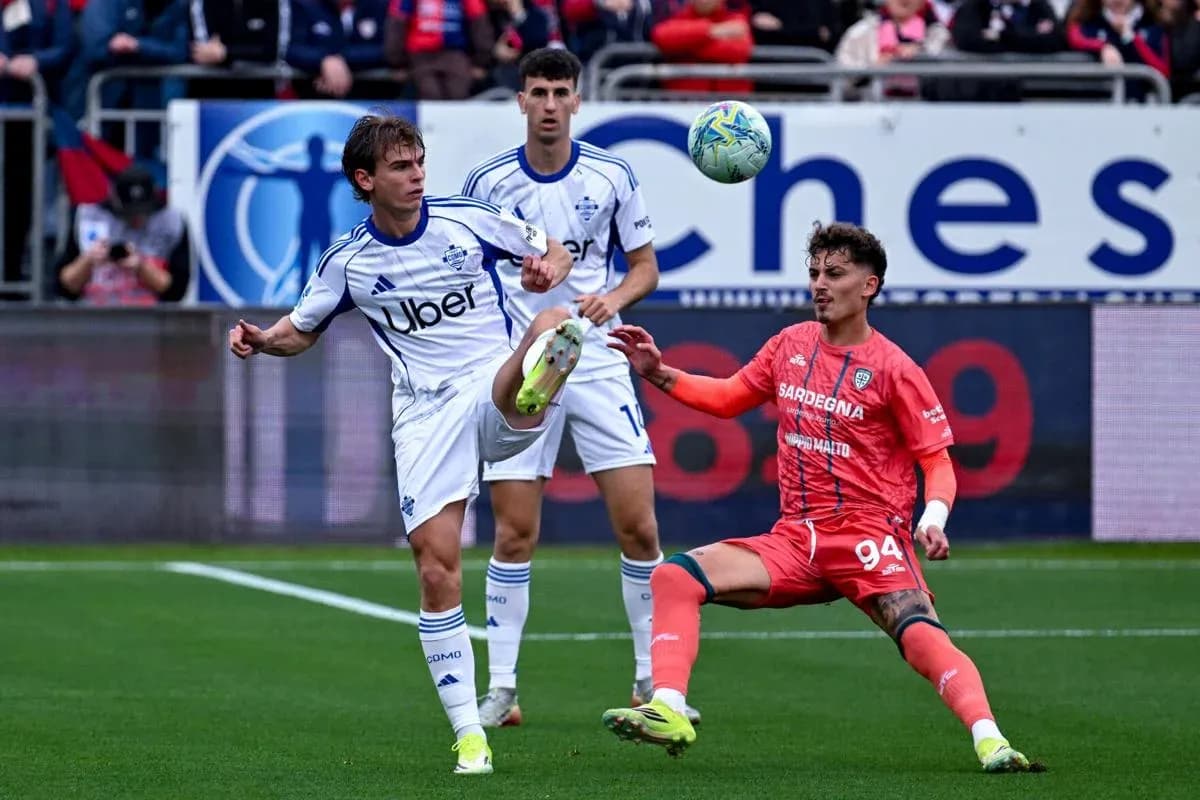
Como's Tactical Mastery Secures 2–1 Victory Over Cagliari
The battle: possession and territorial control
Como’s 2–1 away win was built on structural control rather than volume of chances. With 57 percent of the ball and 493 passes at 83 percent accuracy, Fabregas’ 4–2–3–1 dictated rhythm against Cagliari’s 4–3–3. The double pivot of M. Perrone and L. Da Cunha (before and after the 36 minute change) allowed Como to circulate under pressure and keep Cagliari defending in a mid block for long stretches.
Cagliari’s 43 percent possession and 364 passes at 78 percent accuracy reflect a more direct approach. Their front three were asked to attack early passes into the channels, but frequent offsides (seven, versus Como’s two) show how often the timing of those runs broke down against Como’s well-organised back four.
Offensive mechanics: similar threat, superior execution
The scoring threat numbers were almost identical: Cagliari at 0.46, Como at 0.55. Both sides produced eight shots, with Cagliari edging shots on target 3–2. Yet Como converted both efforts on goal into scores, while Cagliari found the net only once.
Cagliari had four shots blocked by Como, underlining how often the away side defended with numbers around the box and forced efforts through traffic. Como, in turn, had three shots blocked by Cagliari, suggesting a more open central channel for their key actions, especially on the 14 minute opener from M. Baturina and the 76 minute winner from Da Cunha.
Cagliari’s goal at 56 minutes, a combination between full back A. Obert and Sebastiano Esposito, showcased their best pattern: wide overload, low cross, central finisher. But with only two corners and limited sustained pressure, those sequences were too rare.
Defensive intensity: fouls, cards, and work under the bar
The foul count (18 by Como, 17 by Cagliari) points to a physically balanced game. The nature of the bookings is revealing: Cagliari’s first two yellow cards, to Marco Palestra on 65 minutes and Esposito on 71 minutes, were for simulation, reflecting attacking frustration rather than defensive aggression. Alberto Dossena’s 89 minute yellow was for a foul, a late attempt to stop transitions as Cagliari chased the game.
Como’s only booking came on 83 minutes, Jacobo Ramon cautioned for a foul as the away side protected their lead with more pragmatic defending.
Neither goalkeeper showed notable shot-stopping efficiency: Cagliari’s E. Caprile did not register a save despite conceding twice, while J. Butez made two saves from three shots on target. Como’s ability to limit Cagliari’s shot quality, rather than any heroics under the bar, was decisive.
Substitutions as tactical phases
At 36 minutes, Fabregas’ first change, introducing M. Vojvoda for Perrone, subtly rebalanced the right flank, improving defensive security without sacrificing build-up. The 62 minute swap of A. Morata for A. Douvikas refreshed the lone striker role, adding a target who could hold the ball and relieve pressure.
The 80 minute introduction of Diego Carlos for N. Paz, followed by the 81 minute double change (A. Valle for A. Moreno, S. Roberto for Baturina), marked a clear shift into game-management mode: fresh legs in the back line and an extra midfielder to secure central spaces and press selectively. Each of these windows tightened Como’s block and reduced Cagliari’s ability to combine between the lines.
Cagliari’s 73 minute change, G. Zappa for J. Pedro, aimed to add thrust from right back and support wide overloads. The triple substitution on 78 minutes (R. Idrissi for J. Rodriguez, S. Kilicsoy for J. Liteta, Y. Trepy for Esposito) was a high-risk attacking reset, pushing more energy and directness into the front line but further exposing the defensive structure. The late 88 minute introduction of L. Pavoletti added aerial presence but arrived too late to reshape the shot profile.
Conclusion
In a match of marginal scoring threat, Como’s superior possession structure, disciplined defensive density (four Cagliari shots blocked) and well-timed substitution phases turned control into a narrow but deserved 2–1 away win. Cagliari’s direct 4–3–3 created moments rather than sustained pressure, and their late, aggressive changes could not overcome Como’s compact, game-managed final quarter.