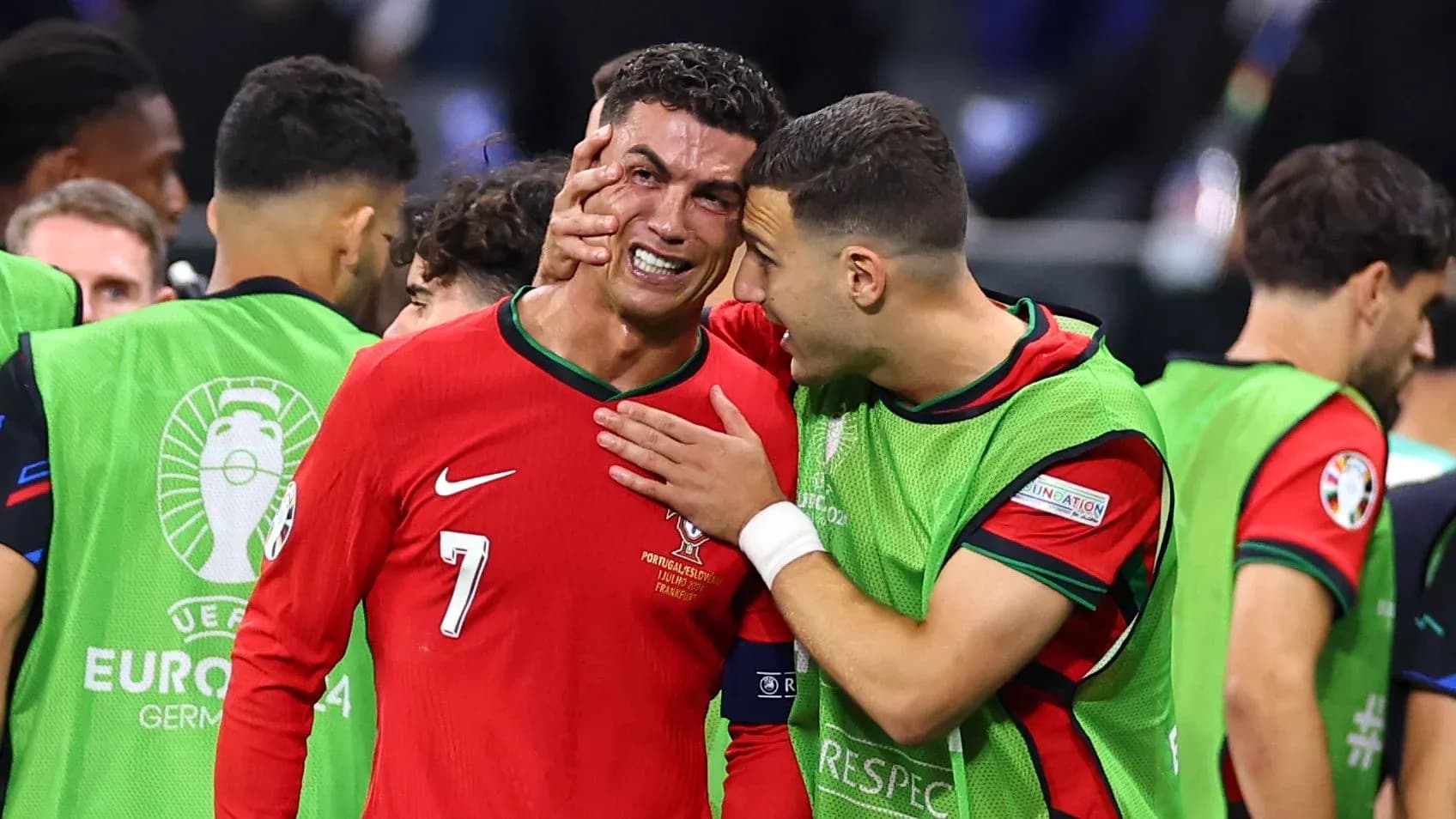
Cristiano Ronaldo's Last World Cup: A Nation's Hope
Cristiano Ronaldo is heading for a sixth World Cup, 41 years old and still carrying a nation on his shoulders. Around Portugal, the reality is sinking in: this is not just another tournament. This is likely the last dance.
Inside the Portuguese Football Federation, few have watched his journey as closely as Godinho, the former national team director who spent half a century in the FPF. He saw Ronaldo walk through the door as a skinny teenager. Now he watches a global icon inch toward the one trophy that has always stayed just out of reach.
He wants the ending to match the legend.
“Let's hope he's in a position to retire – I don't know when, but the body isn't eternal – with a title of this magnitude,” Godinho told Lusa. It is not just a wish for a player. It is a wish for an era to close with a World Cup in Portuguese hands.
The problem? The stage for this potential farewell is brutal.
A last shot on the hardest stage
The 2026 World Cup, spread across the United States, Canada and Mexico, is already being talked about as one of the most demanding tournaments ever for European sides. Distances are long. Time zones shift. Temperatures change from city to city. Every detail chips away at players arriving after exhausting club seasons.
“The World Cup will be difficult ... because of the fatigue they will bring,” Godinho warned. He knows how these cycles work. The best players go deep in the Champions League, fight for domestic titles, then are asked to peak again in June.
“The continental change is a disadvantage, as it will be for other countries on other continents,” he said. The strongest squads, stacked with stars from major club competitions, will land in North America already worn down. Then come “long journeys, schedule changes and climate, all of which influence performance.”
His conclusion is blunt: “Careful preparation is needed. It's much more difficult to play in the United States than in Germany.”
For Portugal, that means building a plan not only around tactics and talent, but around managing every ounce of energy in a squad that will include a 41-year-old captain chasing history.
From Figo’s kid to Portugal’s standard-bearer
Godinho’s perspective carries the weight of memory. He was there in 2003 when an 18-year-old from Madeira turned up to join a dressing room packed with giants of the Portuguese game: Luis Figo, Rui Costa, Fernando Couto.
“It wasn't difficult to work with Cristiano,” he recalled. Ronaldo’s debut came against Kazakhstan, but the real test was not on the pitch. It was how he would handle the environment.
He walked into a room of serial competitors and learned quickly. “He had a group of players who helped him a lot to understand the dimension of where he was,” Godinho said. The kid was “extraordinary” from the start, but he still had to listen, to absorb, to accept “tough talk” from senior voices who demanded standards.
That crucible forged the mentality that has driven Ronaldo through two decades at the top. The winning edge that turned raw talent into a relentless machine. The same mentality now fuels his determination to keep going until 2026, long after most of his generation have stepped aside.
A tricky group, a familiar warning
Portugal’s road in North America begins in Group K. First up, the Democratic Republic of Congo on June 17 in Houston. Heat, humidity, and the pressure of expectation. The sort of opener that can shape a campaign.
“The first game is always very important,” Godinho stressed. A good start builds belief. A bad one invites doubt, and with it, noise around a team already under the microscope.
Yet he also reached back to a moment that changed Portuguese football forever: Euro 2016. That summer in France, Portugal stumbled through the group stage with three draws and still ended up lifting the trophy in Paris. It is a reminder that tournaments twist and turn, and that early wobbles do not always kill a dream.
After Houston, Roberto Martínez’s side will face Uzbekistan and Colombia. On paper, Portugal’s depth and quality should carry them through. On the ground, the variables Godinho fears – fatigue, travel, climate – will lurk in the background of every match.
“Everything depends on the state of mind, fatigue, and mentality,” he said. He believes in the squad, in the organisation, in Portugal’s capacity to compete at the highest level. But he draws a line at bold proclamations. “I am convinced that with the players and organisational capacity we can get there, but saying we are going to win is premature.”
Chasing the ending that football rarely grants
The dream is clear: Ronaldo, in a Portugal shirt, lifting the World Cup before his body finally says enough. Football does not often script such perfect farewells. Icons usually bow out in quieter ways, on lesser stages, or after one tournament too many.
Portugal will try to bend that pattern.
They will go to the Americas with a generation of talent around a captain who has defined their modern history. They will fight the calendar, the flights, the heat and the fatigue. They will measure every training session, every minute, knowing that one man’s last shot is tied to a nation’s biggest ambition.
The question now is simple, and ruthless: can Portugal manage the grind of 2026 well enough to give Cristiano Ronaldo the one prize his career still lacks?