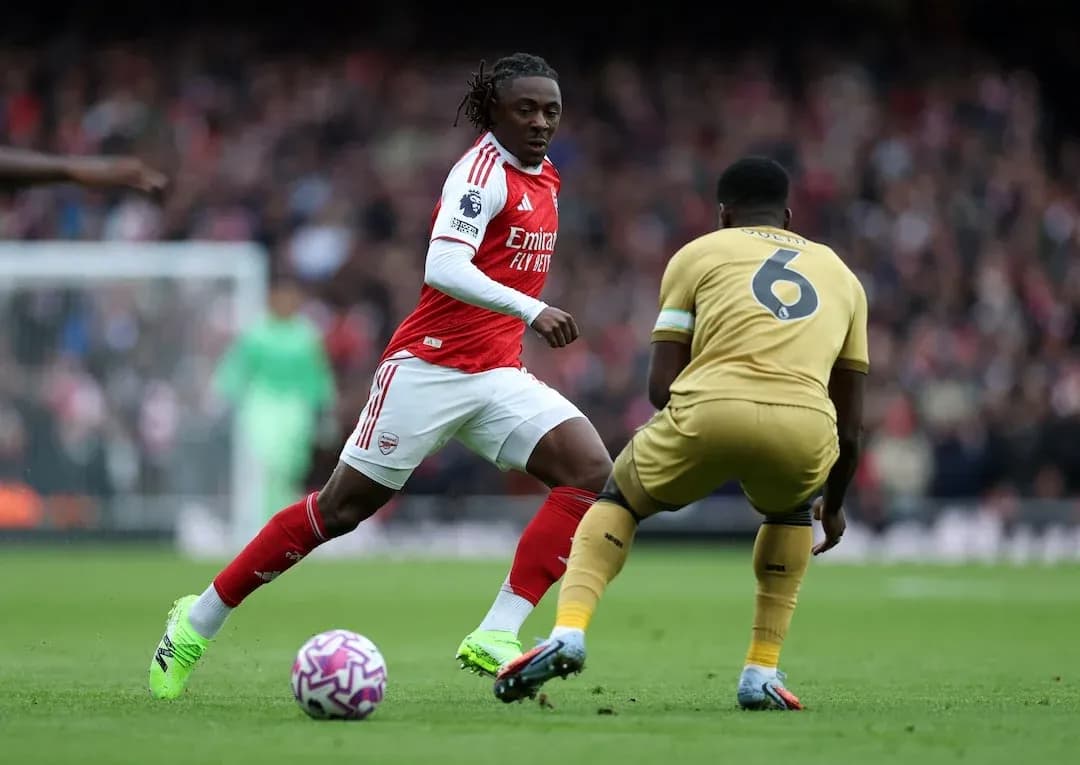
Crystal Palace vs Arsenal: A Snapshot of the Premier League Season
Selhurst Park closed its Premier League season with a game that felt like a snapshot of the table itself: Crystal Palace, 15th and streaky, pushing against the precision of champions Arsenal, who finished top with 85 points. Following this result, the 2-1 away win for Arsenal underlined the gap between a side still learning its new identity and one that has mastered the fine margins of a title race.
Palace’s seasonal DNA is written in the numbers. Overall they took 45 points from 38 matches, with a goal difference of -10, scoring 41 and conceding 51. At home they were stubborn rather than spectacular: 4 wins, 9 draws and 6 defeats, with 19 goals for and 23 against. The averages tell the story of tight margins at Selhurst Park – 1.0 goals scored at home per game, 1.2 conceded – a team that often needed perfection to win and usually had to settle for compromise.
Arsenal arrived as the antithesis of compromise. Overall they played 38, won 26, drew 7 and lost only 5, with 71 goals for and 27 against, a commanding goal difference of 44. At home they were devastating, but even on their travels they were ruthless: 11 away wins, 5 draws, 3 defeats, scoring 30 and conceding 16. An away average of 1.6 goals scored and 0.8 conceded framed this trip to south London as a test of control rather than survival.
I. The Big Picture – Shapes and Intent
Oliver Glasner doubled down on his seasonal template, sending Palace out in a 3-4-2-1. Dean Henderson anchored a back three of Nathaniel Clyne, Jefferson Lerma and Chadi Riad. The wing lanes were entrusted to Daniel Muñoz and the youthful R. Cardines, with Will Hughes and Daichi Kamada in the central hinge. Ahead of them, J. Devenny and Ismaïla Sarr floated behind J. S. Larsen as the nominal spearhead.
This structure mirrored Palace’s broader season: 3-4-2-1 had been used in 33 of their league fixtures, a system designed to compress central spaces and spring quickly into the channels. Yet the numbers betray the tension within it – 12 clean sheets overall but also 12 games where they failed to score. Palace have lived on a knife-edge between defensive solidity and attacking bluntness.
Arsenal, by contrast, arrived with a 4-2-3-1 that felt like a refined variant of their usual 4-3-3. Kepa Arrizabalaga started in goal behind a back four of Martin Zubimendi, Carlos Mosquera, Piero Hincapié and Riccardo Calafiori. In front of them, Christian Nørgaard and Myles Lewis-Skelly formed the double pivot, with Noni Madueke, M. Dowman and Gabriel Martinelli supporting Gabriel Jesus.
Where Palace’s shape sought protection, Arsenal’s spoke of control. Across the season, they had alternated between 4-3-3 (24 times) and 4-2-3-1 (14 times), but the statistical core remained the same: overall 1.9 goals scored per game, only 0.7 conceded. Their 19 clean sheets, including 8 away, framed this as a champions’ platform – keep it tight, then let the talent tilt the contest.
II. Tactical Voids – Who Was Missing, and What That Meant
Palace entered without a cluster of structural pieces. Cheick Doucouré’s knee injury stripped the midfield of its most natural ball-winner, increasing the burden on Hughes and Kamada to both screen and build. Chris Richards and Borna Sosa were also out, limiting Glasner’s flexibility in the back line and at wing-back. The absence of E. Nketiah – registered here under Palace – further narrowed striking options behind J. S. Larsen and bench option J. Mateta.
For Arsenal, the missing names were more about refinement than survival. Jurrien Timber’s ankle problem and Ben White’s knee injury removed two of Mikel Arteta’s most versatile defenders, nudging Zubimendi into the back line and placing more responsibility on Mosquera and Hincapié to handle aerial and transitional threats. Yet the depth remained imposing: from the bench, Arsenal could still call on Viktor Gyökeres, Martin Ødegaard, Kai Havertz, Bukayo Saka, Mikel Merino, Declan Rice, Gabriel and Eberechi Eze.
Disciplinary risk was another undercurrent. Across the season, Palace’s yellow cards were spread but spiked between 31-45 minutes, 46-60 minutes and 76-90 minutes, each band accounting for 18.42% of their bookings – a pattern of emotional surges around half-time and in the closing stretch. Arsenal’s own peak came even later: 25.49% of their yellows arrived between 76-90 minutes, with another 21.57% between 61-75 minutes. This was always a match where tension could rise as legs tired and stakes sharpened.
III. Key Matchups – Hunter vs Shield, Engine Room vs Enforcer
The most obvious “Hunter vs Shield” storyline was Arsenal’s attack against Palace’s home defence. On their travels Arsenal averaged 1.6 goals, while Palace at home conceded 1.2. The champions’ overall goal difference of 44 was built on that balance: relentless but rarely reckless. Palace, with an overall goals-against average of 1.3, needed their back three to play almost perfectly to keep the contest on their terms.
Within that, the shadow of Viktor Gyökeres loomed from the bench. With 14 league goals and 1 assist in 36 appearances, he had been Arsenal’s cutting edge across the season, scoring 3 penalties from 3 and taking 41 shots, 22 on target. His presence meant that even if Gabriel Jesus tired, Arsenal could introduce a different type of hunter – more direct, more physically dominant – against a Palace back line already stretched by injuries.
On the other side, Palace’s primary hunter was not in the XI but on the bench: Jean-Philippe Mateta. His 12 league goals from 32 appearances, with 56 shots and 32 on target, gave Glasner a late-game weapon. Mateta’s duels total of 292, with 110 won, and 6 blocked shots showed a forward who could both occupy centre-backs and contribute defensively. Against an Arsenal away defence conceding only 0.8 goals per match, his introduction was always going to be about chaos more than control.
In the “Engine Room” duel, Nørgaard and Lewis-Skelly faced Hughes and Kamada. Nørgaard’s role as the metronome and shield was crucial: Arsenal’s season-long ability to concede just 27 goals overall rested on pivots who could snuff transitions before they reached the back four. Palace, missing Doucouré, had to manufacture bite through Lerma stepping out from the back three and Hughes shuttling laterally, a demanding ask against Arsenal’s rotational midfield.
IV. Statistical Prognosis – Why 2-1 Felt Inevitable
Following this result, the scoreline mirrored the season-long probabilities. Arsenal’s overall attacking output of 71 goals against Palace’s 51 conceded suggested they would find a way through, while Palace’s home average of 1.0 goals scored aligned almost perfectly with the single strike they managed.
Palace’s penalty record – 8 taken, 8 scored overall, with no misses – hinted that their best route to parity might come from set-piece pressure rather than open play. Arsenal, similarly flawless from the spot with 4 from 4 overall, carried the same quiet threat. Yet in open play, the champions’ structural superiority told: their 19 clean sheets overall, and 8 away, meant that even when Palace broke lines, the visitors rarely lost composure.
In the end, the 2-1 away win felt less like a twist and more like confirmation. Palace’s 3-4-2-1 offered resistance, Selhurst Park provided its usual friction, and the home side even found a way to score. But across 90 minutes, the weight of Arsenal’s season – the controlled aggression, the depth of options, the defensive parsimony – pressed the contest into a familiar shape. The champions bent without breaking; Palace fought without quite escaping their statistical gravity.