Dembélé Dominates as France Defeats Norway 4-1
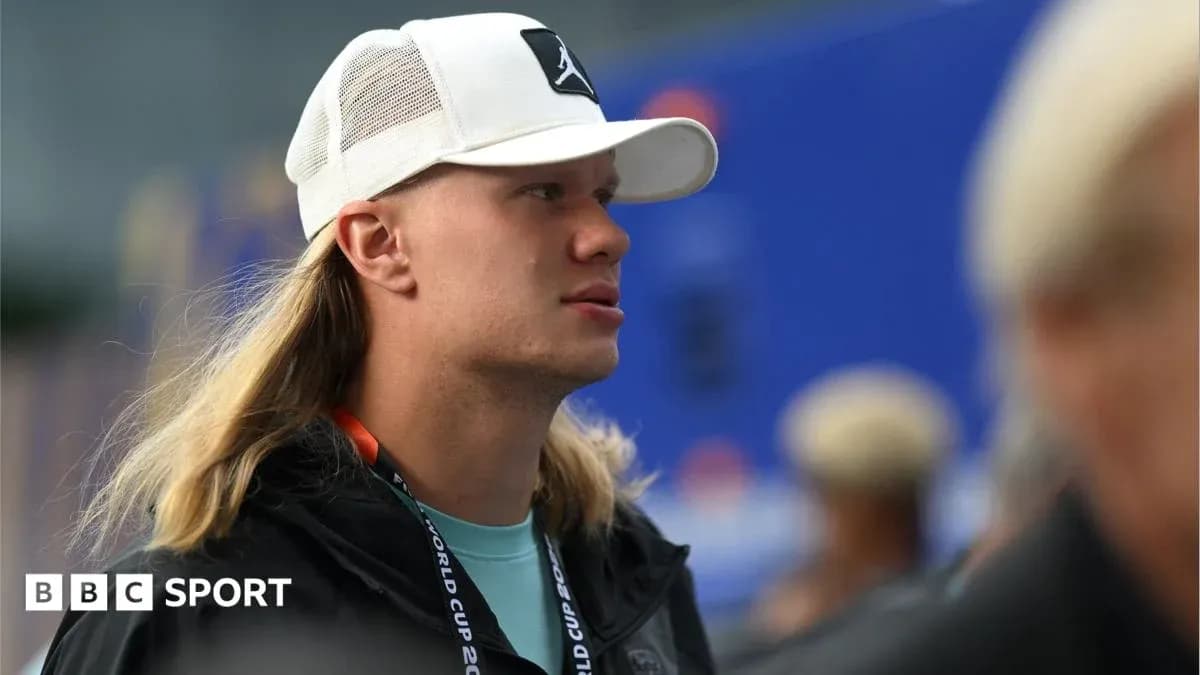
The posters sold a duel. Kylian Mbappé against Erling Haaland. Golden Boot heavyweights, centre stage in Boston.
The reality? Haaland sat in a tracksuit, Mbappé rattled the bar in the first minute, and Ousmane Dembélé tore the whole script to shreds.
By half-time, the Ballon d'Or winner had a 25‑minute hat-trick to his name and France were strolling to a 4-1 win, top of Group I and purring towards the knockout rounds. The marquee billing had become the Dembélé show.
Solbakken’s gamble
Norway had already booked their place in the last 32. Stale Solbakken decided this was the moment to roll the dice.
Out went Haaland. Out went Martin Ødegaard. Out went almost everyone. Ten changes to the starting XI, the first time Haaland had been left out of a Norway line-up since 2024.
“A no-brainer,” Solbakken called it. The medical and fitness staff agreed, and some players, he said, had asked for it. The only hesitation came with the thought of those thousands of Norwegian fans who had crossed the Atlantic to see their heroes.
The data from the Senegal win had spooked Norway’s staff. Five or six players, including the entire back line and a couple of midfielders, had been “very affected” after 80 minutes. A physically demanding style, a long tournament, and a coach who clearly feared the cost of one game too many.
So Haaland, four goals in his first two matches, watched from the bench. His stand-in, Jørgen Strand Larsen, carried the burden and, after the break, the ball to the penalty spot with the score at 3-1. A chance to drag Norway back into the contest, to turn a rotation strategy into a masterstroke.
He missed. The ball went begging, the moment too.
Dembélé takes centre stage
By then, Dembélé had already done the damage.
France, loaded with attacking talent and intent on building rhythm for a July 19 final in New Jersey, came flying out. Mbappé smashed the underside of the bar inside the first minute, a warning shot that shook the frame and Norway’s makeshift defence.
The reshuffled Norwegians never truly recovered from that early surge. Space opened up where Solbakken’s usual giants – “six players over 6ft 4in, 6ft 5in,” as Pat Nevin pointed out – would normally close it down. Dembélé glided into those gaps, punishing every hesitation, every mistimed step.
The hat-trick came in a blur, the kind of ruthless spell that turns a group decider into a training exercise. France coasted, rotated within the game, and still found another goal to finish 4-1. Three wins from three, job done, statement made.
From the stands, the reaction from the Norwegian end was mixed. Bewilderment when the team news dropped. Then defiance. The Viking-style rowing celebration rolled around Boston Stadium before kick-off and resurfaced during the game, a travelling support determined to enjoy their World Cup, even without Haaland on the pitch.
Rest now, pay later?
The decision to rest so many will follow Solbakken and his players into the knockouts.
France, as group winners, stay in the northeast. They head to New York New Jersey Stadium on 30 June to face the runners-up from Group F or G. Minimal disruption, familiar conditions, momentum intact.
Norway’s path looks very different. Based in Greensboro, North Carolina, they now face a 1,100-mile journey to Arlington, Texas, to meet Ivory Coast on the same day. Had they topped the group, that trek would have been roughly half the distance.
Will the fresher legs justify the extra miles?
“If Erling Haaland needs a rest for the latter stages of the tournament he will take that,” Ian Wright said before kick-off on ITV Sport, still clearly surprised by the scale of Solbakken’s rotation. He wasn’t alone. Norway had named the same XI for wins over Iraq and Senegal. To rip it up now felt bold, bordering on brutal.
Nevin, speaking on BBC Radio 5 Live, saw the logic. Norway’s game is heavy on contact, high on physical output. Lose two key players to fatigue or injury in a full-blooded contest with France and the entire campaign could crumble. From that angle, the decision becomes a cold calculation: sacrifice a shot at top spot to protect the bigger picture.
Norway are not the first to try it. Spain made 11 changes against Saudi Arabia in 2006, still won, then ran into France in the last 16 and went out 3-1. Belgium, in 2018, flipped their side with 10 changes, beat Japan 3-2 in the last 16, then stunned Brazil 2-1 in the quarter-finals before falling to France.
Sometimes the gamble pays off. Sometimes it doesn’t.
Haaland’s warning
Haaland himself had sounded almost fatalistic after his two goals helped beat Senegal 3-2 and secure qualification.
“I couldn’t care too much about that game now,” he said of facing France. “They’re probably going to win against us. They’re probably going to win the whole tournament.”
He was half right on the night. France did win, and comfortably. Whether they carry that form all the way to the trophy is a question for later.
For Norway, the equation is simpler. Beat Ivory Coast in Texas and the reward is a return to New Jersey on 5 July for a last-16 tie against the winners of Brazil-Japan. Lose, and the long journey, the rested legs, the benching of Haaland and Ødegaard, all become part of a story of what might have been.
The fans have paid to be here. The coach has staked his reputation on freshness over fireworks. Now Norway have to prove that one bruising night in Boston was the price of going deeper, not the moment their World Cup peaked from the sidelines.