England's Challenge Against Panama: Navigating Pressure and Rotation
In another universe, England would be strolling into New Jersey with their feet up and the calculators out, debating whether to unleash Harry Kane on Panama or wrap him in cotton wool before the knockouts. Kane would be chasing numbers, not minutes, eyeing Lionel Messi, Erling Haaland and Kylian Mbappé on the Golden Boot chart, not another slog against a low block.
That world disappeared with the 0-0 against Ghana.
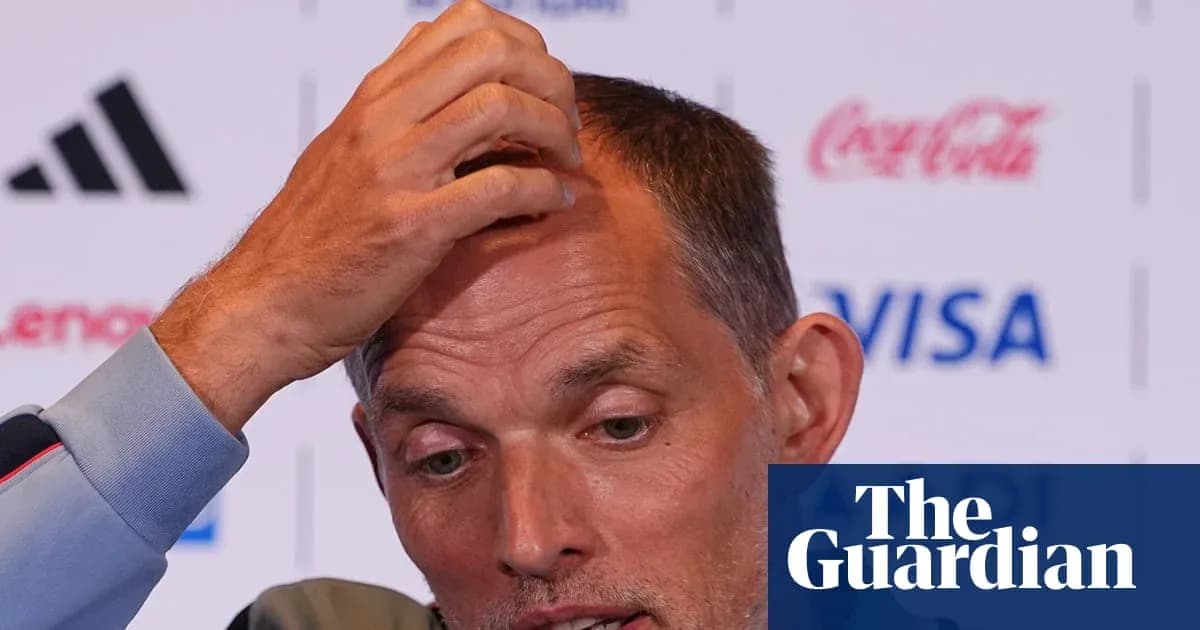
Thomas Tuchel’s team failed to wrap up top spot with a game to spare and turned what should have been a gentle group finale into a tightrope. Four games in 13 days loom if England go deep, and the one fixture Kane’s understudies had circled as a guaranteed start has suddenly become a problem Tuchel cannot ignore.
Rest the captain, or risk the group?
Rotation under strain
There will be changes against Panama, but not the carefree kind of a side already qualified. Some are enforced, some are tactical, none are ideal.
Declan Rice is a yellow card away from suspension and finished the Ghana game with strapping on his left calf. Reece James is out for at least two matches with another hamstring issue, a predictable setback that still hits like a hammer. His absence at right-back strips England of one of their few natural attacking outlets from deep and leaves Tuchel wrestling with the same old riddle: how to prise open a packed defence without leaving the back door wide open.
This is the price of his defensive gambles. England arrived with only three attacking full-backs. Tino Livramento, another with a fragile record, has already left the camp and been replaced not by a runner on the outside but by centre-back Trevoh Chalobah. Suddenly the job of stretching the pitch falls on Nico O’Reilly’s young shoulders.
The options behind James are functional, not flamboyant. Ezri Konsa, Jarell Quansah, Djed Spence: all capable defenders, none natural raiders. Every minute James spends in the treatment room will drag the decision to discard Trent Alexander-Arnold back into the spotlight.
What should have been a straightforward examination against Group L’s fourth seeds now carries a different edge. England cannot ease off. They cannot afford to cruise.
Kane, Bellingham and a risk England did not want
So do Kane and Jude Bellingham go again? Tuchel knows some of his stars will have to. A second-placed finish would twist their route through the last 32 and beyond, and this team still needs to rediscover rhythm after the familiar pattern of a bright opening win over Croatia followed by a flat second outing.
There is no sense of panic from the manager, but there is realism. England must improve against low blocks. Ghana’s compact 4-5-1 turned the game into a chore, and Panama promise more of the same. Thomas Christiansen’s side are already out after 1-0 defeats to Ghana and Croatia, yet they were stubborn in both matches and are a very different proposition to the team England dismantled 6-1 at the 2018 World Cup.
Tuchel expects a difficult evening against a side whose back five can quickly become a back six or even seven. He knows the pattern. England have often looked their least convincing when the space disappears. They were exhilarating when Croatia, Serbia and Wales left gaps to attack, but the memory of laboured wins over Andorra, Albania and Latvia in qualifying still hangs around this squad.
Ghana were another reminder. Thomas Partey tracked Kane relentlessly, smothering his habit of dropping into midfield. The numbers told the story: Kane had just 19 touches and combined with Bellingham only three times. England hogged 78.8% of the ball yet failed to register a shot on target until after the interval.
Searching for a key to the lock
Tuchel has not cracked the code. He admitted as much. There is no neat sequence of “they do this, we do that” when the opposition sit in and wait. His blueprint is clear – control, structure, carefully built overloads and then a sudden burst of speed – but against Ghana those overloads never materialised. He does not expect Panama to be any more generous.
So the dial has to move. More risk in possession. More willingness to drive into tight spaces, to shoot from range, to force deflections and rebounds instead of endlessly recycling the ball in front of two rigid banks of defenders. More conviction in the final third, less fear of the counter.
Bellingham’s frustration in New Jersey was visible. He came short again and again but too often went unfound. One rash foul before half-time summed up his irritation. England need his energy and imagination, but they also need the structure around him to function.
The centre-backs must step in with greater authority when the game stalls. Kobbie Mainoo’s nimbleness in tight midfield pockets could be crucial if he replaces Rice, allowing England to play through the pressure rather than around it. Out wide, the message is blunt: run at your full-back, commit him, break the line.
Tuchel hopes Bukayo Saka is ready to start on the right after Noni Madueke’s subdued display. On the left, Anthony Gordon has not reproduced his sharp link-up with O’Reilly from the friendly win over Costa Rica. What once looked solved now feels like a problem again. The same lack of penetration, the same absence of vertical runs, has appeared in both group games.
Marcus Rashford is an obvious alternative, even if he has yet to convince Tuchel that he can dominate from the first whistle. Used only from the 83rd minute against Ghana, he remains a candidate rather than a certainty. Eberechi Eze or Morgan Rogers offer a different angle, drifting inside to connect with Bellingham and Kane, leaving the flank to the full-back.
Wherever Tuchel looks, the verdict is the same: the left side must hurt teams more.
A collective test of nerve
Tuchel keeps bringing the conversation back to the collective. Individuals will decide the moments, but the structure has to give them the stage. He wants his players to relish the one-against-one duels, to back themselves when the game tightens, while accepting that Panama will do everything to smother any hint of an overload.
Against these deep defences, the match rarely explodes. It has to be accelerated, forced into life by one clean cross, one perfectly timed run, one shot from distance that ricochets kindly. England did not find that moment against Ghana. They cannot afford a repeat.
Tuchel’s perspective remains grounded. He insists no one will relish facing Carlos Queiroz’s Ghana in this tournament, and he has seen this type of contest before in the Champions League group stages: the underdog celebrating every tackle, every clearance, every counterattack as if it were a goal. Ghana did exactly that. They embraced 0-0 like a famous win.
England live with different expectations. They are not judged on surviving such nights but on how they respond to them. Against Panama, they will be asked not just to win but to excite, to shake off the weight that has crept into their play and stride into the knockouts with something closer to swagger than relief.
Somewhere between control and chaos, Tuchel must find the courage to release the handbrake.