Egypt Secures Historic Knockout Victory Against Australia
ARLINGTON, Texas — Mohamed Salah limped into this World Cup with a damaged hamstring and a cloud over his international future. He walked out of AT&T Stadium on Friday night as the captain who finally dragged Egypt into the knockout-round win column.
Not with a wonder goal. Not with a trademark curled finish. With something far more enduring: a shootout victory, a landmark for a football nation that has waited generations for this night.
Egypt 1, Australia 1. Egypt 4-2 on penalties. History made in Texas.
Salah’s night, Egypt’s moment
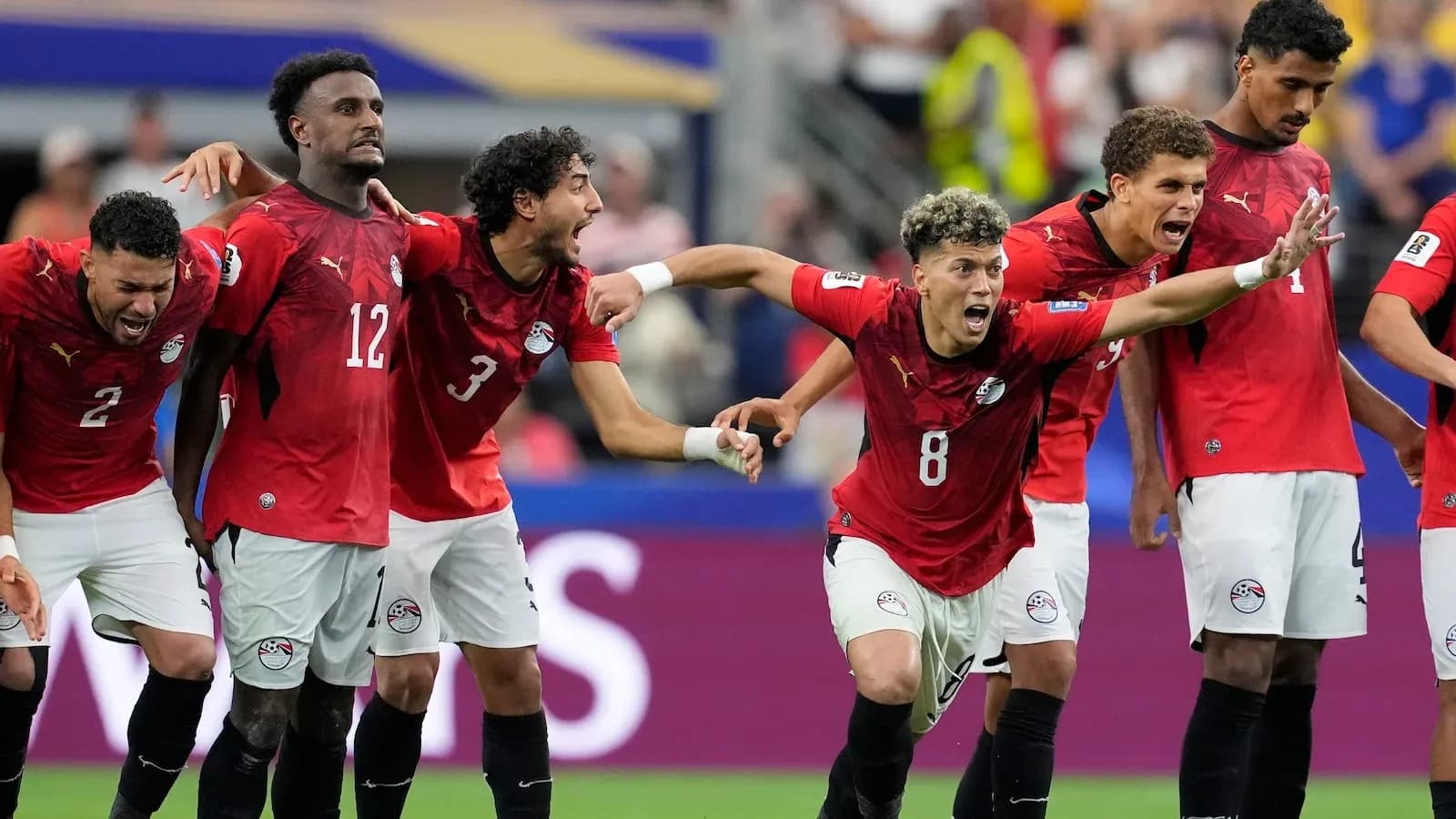
At 34, Salah has seen almost everything the game can offer. Champions League titles, Premier League medals, individual awards. Yet he called this “one of the best days of my life,” and you understood why as 70,244 fans, a sea of Egyptian red scattered among Australian gold, exploded when Hossam Abdelmaguid rolled in the decisive kick.
Salah played every second of regulation and extra time despite that hamstring strain from the group finale. He still stepped up in the shootout and buried his penalty, one of four Egyptians to convert. The armband sat heavy on his arm all evening; in the end, it looked like it belonged there.
For a country that arrived at its fourth World Cup without a single tournament win until beating New Zealand 3-1 less than two weeks ago, this was a leap, not a step.
Abdelmaguid, from nearly man to match winner
The story, though, belonged to a defender who had never scored for his country.
Abdelmaguid, 25, entered the night with 15 caps and zero international goals. He left it as the man who settled Egypt’s first-ever World Cup knockout victory. After Australia’s 18-year-old Lucas Herrington smacked the crossbar with the visitors’ fourth attempt, the moment fell to him.
He didn’t flinch.
A short run-up, a glance, then a low strike to his left as Mathew Ryan went the other way. The ball hit the net and the place erupted — players sprinting in every direction, substitutes streaming onto the pitch, Egyptian fans roaring under the giant video boards of the Dallas Cowboys’ home.
Hossam Hassan, the national team coach and still one goal ahead of Salah’s 68 on Egypt’s all-time scoring list, had one thought as the shootout unfolded.
“I was only thinking about the Egyptian fans,” he said through a translator. “During the entire time and during the penalty shootout, I was just praying, ‘God, please make the Egyptian people happy.’”
They were.
Mahmoud Saber, Ramy Rabia and Salah all converted before Abdelmaguid’s clincher. On the other side, Jackson Irvine and Awer Mabil found the net for Australia, but the damage had already been done.
Harry Souttar blasted the opening kick of the shootout over the bar, handing Egypt early control. Herrington’s miss finished the job.
Hany’s torment and Australia’s cruel pattern
Australia’s World Cup knockout history is starting to feel like a recurring nightmare. Three appearances. Three exits. Only two goals scored in those games — and both of them own-goals.
In 2006, Italy advanced 1-0 courtesy of a late penalty. In Qatar four years ago, Argentina won 2-1, helped by an own-goal. Here, the Socceroos again left empty-handed, their only breakthrough coming off an Egyptian head.
Mohamed Hany will not forget this tournament in a hurry, for all the wrong reasons.
Already the first player to score two own-goals in the same World Cup after his misfortune in a 1-1 draw with Belgium in the group stage, the right-back stumbled into another unwanted record. In the 55th minute, Aiden O’Neill whipped in a free kick from the left side of the area. Hany rose to meet it and instead steered a perfect header past his own goalkeeper, Mostafa Shoubir.
Minutes earlier, he had been flat on the turf near the same spot after a collision with Connor Metcalfe, medical staff rushing on with a stretcher at the ready. He passed what appeared to be a concussion check and stayed on. Soon after, he was staring at the ball in his own net.
Australia coach Tony Popovic could only reflect on how narrow the margins had been.
“It hurts when you get that close,” he said. “Unfortunately, we bow out in a penalty shootout, so it’s difficult to take right now.”
Egypt strike first, then suffer
The night had started so well for Egypt.
On 13 minutes, Emam Ashour ghosted into the box and met a cross with a firm header that beat Patrick Beach at the near post. One-nil, early control, and the Egyptians were flying, snapping into duels and breaking with purpose.
Right after the interval, the chance came to put the game to bed. Seconds into the second half, Omar Marmoush found himself free and in stride, only to drag his shot wide of the far post. It felt wasteful at the time. It looked pivotal once Hany’s own-goal dragged Australia level.
The contest tightened. Tackles bit a little harder. The tension in the stands began to match the humidity on the pitch.
Egypt still carved out opportunities. In the dying moments of regulation, Rabia powered a header toward the bottom corner, only for Beach to fling himself across goal and claw it away. Moments later, Salah tested him as well, but this time the save was routine.
Australia had their moments too, yet never truly overwhelmed Shoubir. Their threat came more in waves of pressure than in clear, clinical chances.
The goalkeeper gamble
Popovic made his boldest move late in extra time. Beach, just 22 and making only his sixth appearance for the Socceroos, had produced several strong saves and looked composed. With penalties looming, the coach still turned to experience.
On came Ryan, 34 years old and earning his 105th cap, to take over for the shootout.
It was a decision straight from the modern coaching playbook, where data and penalty records often drive late goalkeeper switches. This time, it backfired. Ryan did not get close to any of Egypt’s four kicks.
Hassan, by contrast, chose to work on the minds of his takers rather than meddle with his goalkeeper.
“When I went to the players and talked to them, I wanted to take some pressure off,” he said. “Do not look at the pressure. Just let everything out, don’t think about anything. Think about your penalty kick. Don’t even think about the goalkeeper. Just think about your kick.”
They listened. Every Egyptian penalty was struck with conviction.
Atlanta awaits — and perhaps Argentina
The reward for this breakthrough is a round-of-16 tie in Atlanta on Tuesday against either defending champions Argentina or tournament surprise Cape Verde.
For Egypt, it is uncharted territory. For Salah, it is another stage, another chance to stretch a legacy that already towers over his country’s footballing history, even as the question of how much longer he will carry this team lingers in the background.
He is still one goal shy of Hassan’s national record of 69. He is still playing through pain. He is still, unmistakably, the heartbeat of a side that has finally learned how to win on this stage.
Whatever comes next — Lionel Messi and Argentina, or a very different kind of test in Cape Verde — Egypt will walk into Atlanta with something they have never had before at a World Cup: knockout-round belief.