Elche Secures 1-0 Victory Over Getafe with Tactical Mastery
Elche’s 1-0 win over Getafe at Estadio Manuel Martínez Valero was built on structural control rather than attacking volume. In a match where the home side posted 59% possession, 399 passes and a 3-0 advantage in shots on target, Eder Sarabia’s 3-5-2 systematically dismantled Jose Bordalas Jimenez’s 5-3-2, especially once Getafe were reduced to ten men on 39 minutes. The lone goal from Víctor Chust on 19 minutes, combined with a red card for Djené, framed a contest in which Elche’s midfield box dominated territory and tempo, while Getafe never registered a shot on goal and finished with just 0.08 xG to Elche’s 0.46.
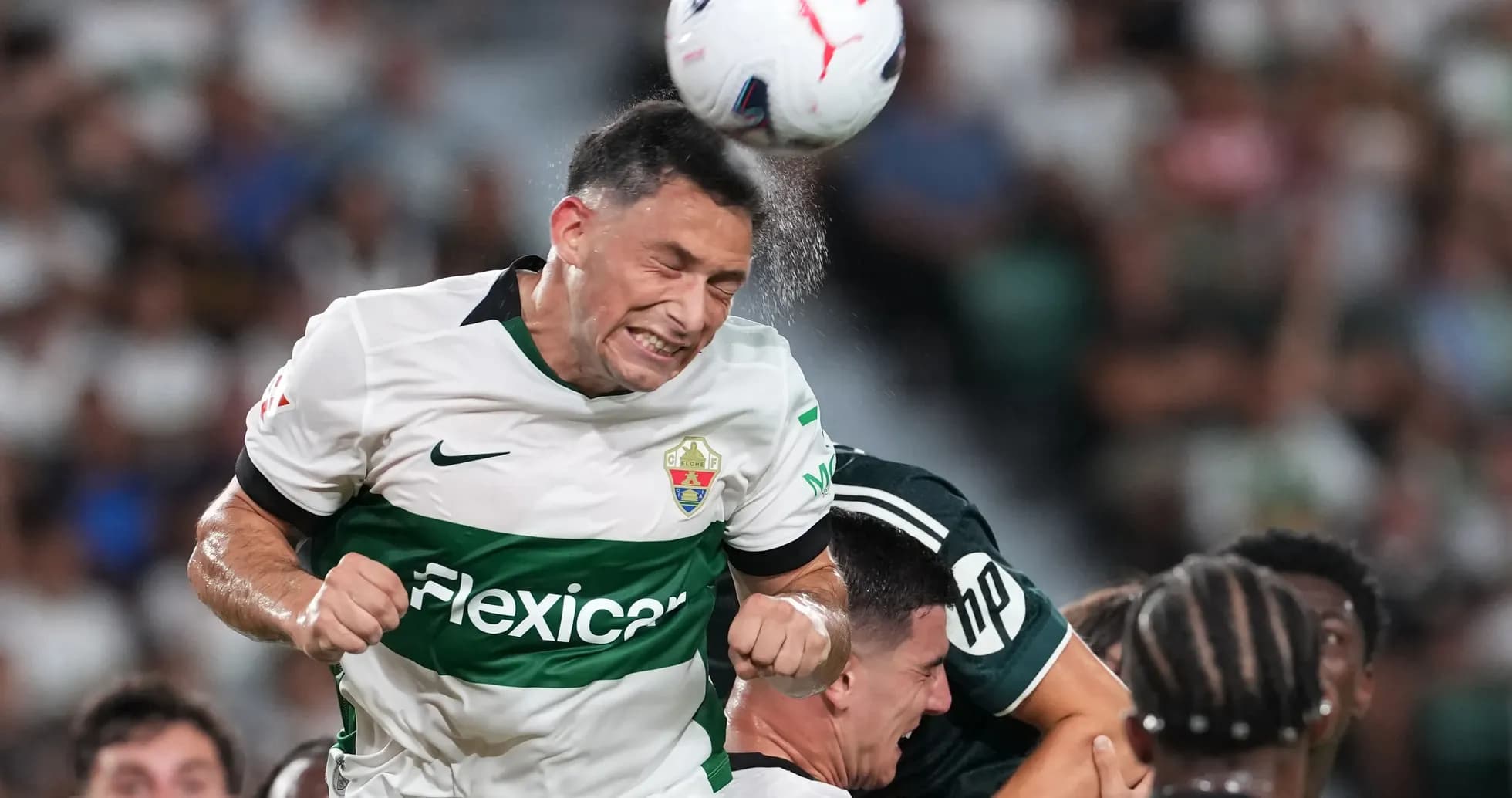
The scoring pattern was simple but decisive. On 19 minutes, Víctor Chust stepped up from the back line to score for Elche, a “Normal Goal” with no registered assist, giving the hosts a 1-0 lead that would hold to half-time and full-time. That early breakthrough allowed Elche to lean into their possession structure and force Getafe deeper.
Discipline played a major tactical role. There were four cards in total: three for Elche and one for Getafe, with Getafe’s single card being a red. The chronological disciplinary log is as follows:
- -5' Martim Neto (Elche) — Argument
- 39' Djené (Getafe) — Foul
- 66' André Silva (Elche) — Leaving field
- 69' Álvaro Rodriguez (Elche) — Foul
The pre-kickoff yellow for Martim Neto for “Argument” is notable context: it underlined an emotionally charged touchline and set a tone of early tension. The 39th-minute red card to Djené for “Foul” transformed the tactical landscape, forcing Getafe to reconfigure their 5-3-2 into a deeper, emergency low block. Later, André Silva’s booking for “Leaving field” at 66 minutes, followed quickly by his substitution, and Álvaro Rodriguez’s yellow for “Foul” at 69 minutes reflected Elche’s increasing game management and physical duels as they tried to lock down the result.
Sarabia’s 3-5-2 for Elche was built on a back three of Víctor Chust, David Affengruber and Pedro Bigas, with Tete Morente and Gerard Valera as wide midfielders and a central trio of Grady Diangana, Mikel Aguado and Gonzalo Villar behind the front two of Andre Silva and Álvaro Rodriguez. The structure gave Elche natural superiority in the central lane against Getafe’s 5-3-2, where Luis Milla, D. Caceres and Mauro Arambarri had to cover large horizontal distances.
In possession, Elche’s 59% share and 399 passes (332 accurate, 83%) show a clear emphasis on circulation and positional play rather than direct risk. The split of 4 shots inside the box and 6 from outside, plus a modest 0.46 xG, indicates that while they controlled territory, they struggled to consistently break Getafe’s compact five-man last line, particularly before the red card. The three shots on goal were enough to force David Soria into two saves, with the decisive Chust strike the outlier that punished a lapse in Getafe’s box organisation.
Defensively, Elche’s line was rarely stretched. Getafe managed only 3 total shots (1 inside the box, 2 from range), with none on target and no corners. The absence of any “Goalkeeper Saves” for Matías Dituro underlines how effectively the home block protected its penalty area. Elche’s 18 fouls and 3 yellow cards are the cost of an aggressive counterpress and willingness to break up transitions early, but they never translated into sustained danger.
Bordalas Jimenez’s Getafe began in a 5-3-2 with Allan Nyom and Juan Iglesias as wing-backs outside a central trio of Djené, Domingos Duarte and Z. Romero. Up front, M. Martin and Martín Satriano were tasked with stretching Elche’s back three, but with only 41% possession and 282 passes (194 accurate, 69%), Getafe’s attacks were sporadic and imprecise. Their 0.08 xG reflects almost total offensive sterility.
The turning point was Djené’s red card for “Foul” at 39 minutes. Down to ten men, Getafe’s 5-3-2 effectively flattened into a 5-3-1 or even 5-4-0 in longer defensive phases, with one forward dropping to screen passes and the wing-backs pinned deeper. After the interval, substitutions were clearly reactive and survival-oriented. At 53 minutes, Davinchi (IN) came on for D. Caceres (OUT), likely to freshen the defensive line and maintain the integrity of the back five. Later changes — L. Vazquez (IN) for Allan Nyom (OUT) at 71 minutes, A. Abqar (IN) for Domingos Duarte (OUT) at 72 minutes, and V. Birmancevic (IN) for M. Martin (OUT) at 85 minutes — all point to a coach rotating tired legs in the back and wide areas, while sacrificing attacking reference points.
Elche’s substitutions, by contrast, were about control and load management with a lead and a man advantage. At 66 minutes, A. Pedrosa (IN) came on for Andre Silva (OUT) immediately after Silva’s yellow for “Leaving field”, shifting the balance towards an extra defensive-minded wide player and signalling a tilt from chasing a second goal to securing the first. On 84 minutes, J. Donald (IN) replaced M. Aguado (OUT) and L. Cepeda (IN) replaced Grady Diangana (OUT), refreshing central and advanced midfield roles to maintain pressing intensity. At 85 minutes, Buba Sangare (IN) came on for Víctor Chust (OUT), removing the goalscoring defender to preserve him and add fresh legs in the back line. Finally, at 86 minutes, Josan (IN) replaced Álvaro Rodriguez (OUT), giving Elche a wide runner for transitions as Getafe pushed what little they could forward.
Statistically, the match underlines a clear strategic pattern. Elche’s higher pass completion (83% vs Getafe’s 69%) and dominance in possession translated into territorial control and suppression of Getafe’s attack rather than a flurry of chances. The xG gap (0.46 vs 0.08) is modest in absolute terms but massive in relative terms, reflecting a game where neither side created much, yet one side completely neutralised the other.
From a defensive index perspective, Elche’s zero shots on target conceded and zero saves required from Matías Dituro speak to the effectiveness of their 3-5-2 rest defence and midfield screen. Getafe’s David Soria, with 2 saves and a goals prevented figure of -0.58, statistically underperformed slightly relative to the quality of shots faced, which aligns with conceding from a low-volume chance.
Overall, Elche leveraged their season’s possession-oriented profile to suffocate a Getafe side that relies heavily on physical duels and compactness. Once reduced to ten men, Getafe’s 5-3-2 could no longer contest midfield zones, and the match became a controlled exercise in game management for Elche, who combined structural superiority with disciplined, if occasionally overzealous, defensive work to close out a 1-0 result that the underlying numbers fully support.