Real Sociedad vs Valencia: A Season's Reckoning in La Liga
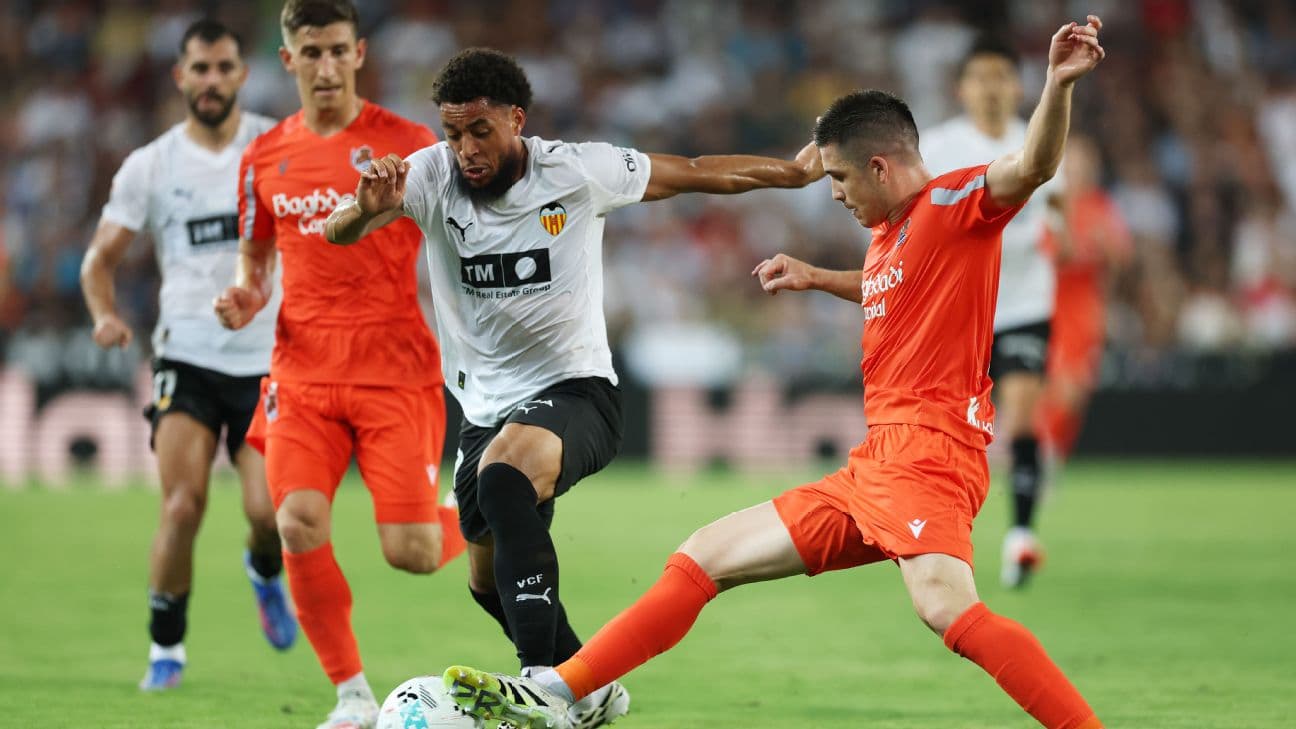
The Reale Arena had the feel of a season’s reckoning. Matchday 37 in La Liga, Real Sociedad against Valencia, tenth hosting ninth, two sides separated by a single point and by contrasting emotional trajectories. Following this result – a 4-3 away win for Valencia after leading 2-1 at half-time – the table snapshot underlines how fine the margins have been. Real Sociedad’s overall record of 11 wins, 12 draws and 14 defeats, with 58 goals scored and 60 conceded, paints a picture of a side that has attacked with ambition but lived on the edge. Valencia, now on 46 points with 12 wins, 10 draws and 15 losses, have been more rugged than refined, scoring 43 and conceding 54 overall.
I. The Big Picture – Structures and Seasonal DNA
Pellegrino Matarazzo doubled down on Real Sociedad’s most-used identity: the 4-2-3-1. At home this season they have been more expansive, with 37 goals scored at Reale Arena from 19 matches, an average of 1.9 per game, but they have also leaked 31 at home, 1.6 per match. That duality was written all over this seven-goal thriller.
A. Remiro anchored a back four of A. Munoz, I. Zubeldia, J. Martin and A. Elustondo. In front, the double pivot of B. Turrientes and C. Soler was tasked with both launching attacks and screening transitions. The trio of P. Marin, B. Mendez and A. Zakharyan floated behind lone forward O. Oskarsson, a structure designed to overload pockets between Valencia’s lines.
Carlos Corberan answered with a classic 4-4-2, a shape that has underpinned Valencia’s season – they have lined up that way in 23 league matches. S. Dimitrievski started in goal, shielded by a back four of J. Vazquez, E. Comert, C. Tarrega and U. Nunez. The midfield band of four – D. Lopez, G. Rodriguez, F. Ugrinic and Luis Rioja – was built to compress space horizontally, while J. Guerra and H. Duro formed a front pair that could both press and run in behind.
On their travels this campaign, Valencia have been volatile: 5 away wins, 4 draws and 10 defeats, scoring 19 and conceding 32. Their away goals for average of 1.0 against 1.7 conceded hints at a side that often needs to suffer without the ball, then strike quickly. That script held: they accepted long spells without possession but punished Sociedad in key moments.
II. Tactical Voids – Absences and Discipline
Both squads arrived with notable absentees that bent the tactical plan. Real Sociedad were without A. Barrenetxea and D. Caleta-Car through yellow-card suspensions, plus J. Gorrotxategi, J. Karrikaburu and A. Odriozola through injury or coach’s decision. The loss of Caleta-Car, a defender with 26 blocked shots this season and a red card to his name, removed a dominant aerial and blocking presence from the heart of the defence. That forced J. Martin into a high-responsibility role alongside Zubeldia, and it showed in the looseness of Sociedad’s box defending.
Valencia’s list was just as significant: L. Beltran, J. Copete, M. Diakhaby, D. Foulquier, J. Gaya and Renzo Saravia all missed out. The absence of Gaya – a full-back with 69 tackles, 7 blocked shots and 23 interceptions this season – weakened Valencia’s left flank both defensively and in build-up. Corberan compensated by trusting J. Vazquez and tightening the midfield band, accepting that he would lose some of Gaya’s progressive thrust in exchange for structural discipline.
From a disciplinary perspective, both teams carried risk into a high-stakes fixture. Real Sociedad’s season-long yellow-card profile shows a late-game spike: 22.35% of their cautions have come between 76-90 minutes, and another 21.18% between 46-60. Valencia mirror that trend, with 22.86% of their yellows also in the 76-90 window and 20.00% from 46-60. That shared tendency to fray after the break foreshadowed a second half at Reale Arena that was always likely to tilt towards chaos – and a 3-4 final scoreline fits that narrative.
III. Key Matchups – Hunter vs Shield, Engine Room Battles
The “Hunter vs Shield” duel centred on H. Duro and a Real Sociedad defence missing its most imposing stopper. Duro’s season numbers – 10 league goals from 35 appearances, with 29 total shots and 14 on target – speak to an efficient, opportunistic striker. He has also won 1 penalty but crucially missed 1, underlining that he is not flawless from the spot. Against a Sociedad back line that has conceded 31 goals at home and 60 overall, Duro’s movement between Zubeldia and J. Martin was always likely to be decisive. Without Caleta-Car’s 26 blocks and 27 interceptions, Sociedad lacked a natural deterrent to the type of near-post and channel runs Duro thrives on.
Behind him, J. Guerra embodied Valencia’s “Engine Room”. With 6 assists and 3 goals, plus 971 passes at 81% accuracy and 30 key passes, he is the conduit between deep build-up and the final third. His 28 tackles, 6 blocks and 23 interceptions show that he is as much an enforcer as a creator. In San Sebastian, his remit was twofold: disrupt the Turrientes–Soler axis and spring quick, vertical attacks once possession was won. Whenever Guerra stepped past the first line of pressure, Sociedad’s 4-2-3-1 could be ripped into a vulnerable 4-4-2 in transition, with B. Mendez and A. Zakharyan caught high.
For Real Sociedad, the primary offensive weapon was always likely to be Mikel Oyarzabal from the bench. With 15 league goals and 4 assists, 62 shots (36 on target) and 42 key passes, he remains their most reliable end-product machine. His 7 penalties scored from 8 taken overall (with 0 missed this season) underline a ruthlessness from the spot that contrasts with Duro’s blemish. Even starting among the substitutes, his mere presence in the squad sheet shaped Valencia’s defensive line, wary of a late introduction that would change the dynamic on the left half-space.
On the defensive side for Sociedad, J. Aramburu’s season is a cautionary tale of aggression. With 11 yellow cards, 102 tackles, 9 blocked shots and 45 interceptions, he is an elite ball-winner but also a walking disciplinary tightrope. His role from the bench in this matchday context was clear: add bite and vertical thrust down the right if Sociedad were chasing the game, but at the cost of heightened card risk in a fixture already predisposed to late bookings.
Luis Rioja provided Valencia’s wide cutting edge. With 6 assists, 2 goals, 37 key passes and 62 dribble attempts (36 successful), his duel with A. Elustondo and the covering pivot was a recurring pressure point. His ability to carry the ball out of pressure and attack isolated full-backs gave Corberan an outlet whenever Sociedad’s press hemmed Valencia in.
IV. Statistical Prognosis – xG Shape and Defensive Solidity
The raw scoreline of 4-3 suggests an xG map heavily skewed towards high-value central chances rather than speculative efforts. Heading into this game, the structural indicators pointed towards volatility: Real Sociedad’s home goals for average of 1.9 against 1.6 conceded, and Valencia’s away pattern of 1.0 scored versus 1.7 conceded, both hinted at a match where defences would be strained more than they could comfortably absorb.
Real Sociedad’s overall goal difference of -2 (58 for, 60 against) encapsulates a season where their attacking volume has not been matched by defensive solidity. Valencia’s overall goal difference of -11 (43 for, 54 against) shows a side more comfortable in low-margin, grind-heavy encounters. Yet in San Sebastian, Corberan’s men leaned into the chaos, trusting that their 9 clean sheets overall and 5 away shutouts this season were less relevant than their capacity to hurt Sociedad in transition.
Following this result, the tactical lesson is stark. Real Sociedad’s 4-2-3-1 can generate enough xG to trouble anyone, especially with Oyarzabal, B. Mendez and A. Zakharyan combining between the lines, but without a full-strength defensive unit – and with a disciplinary curve that spikes late – they remain vulnerable to precisely the type of ruthless, vertical side that Valencia have become under Corberan. For Valencia, the night at Reale Arena validates their 4-4-2 as a big-game platform: compact, hard-running, and built around the punch of H. Duro, the craft of J. Guerra and the wide menace of Luis Rioja.