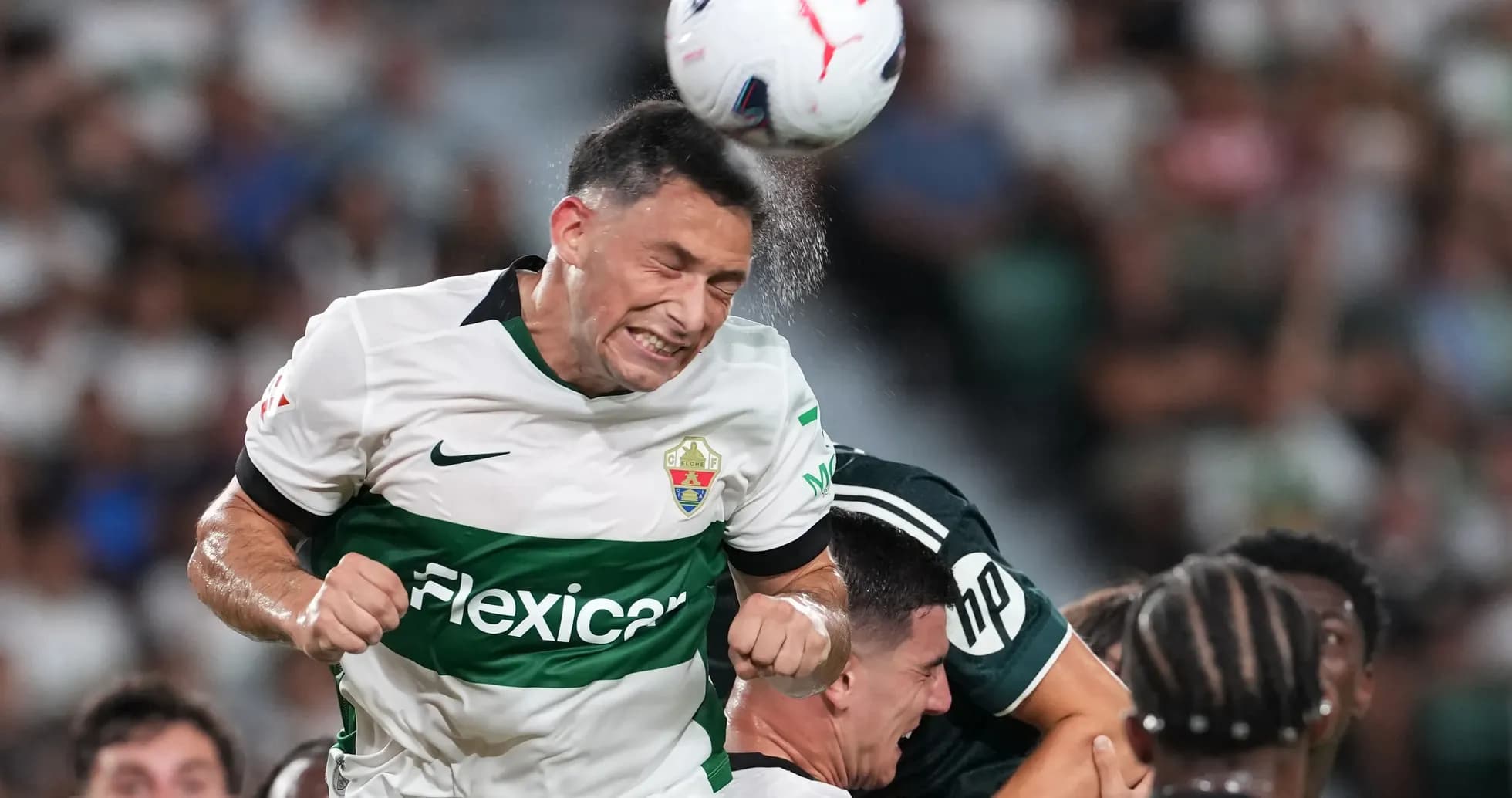
Elche's Narrow Victory Over Getafe: A Tactical Analysis
The evening at Estadio Manuel Martínez Valero felt less like a dead-rubber and more like a verdict. Following this result, Elche’s 1–0 win over Getafe in La Liga’s Round 37 crystallised the identities both sides have been carving out all season: Elche as a fragile but fiercely competitive home specialist; Getafe as a hardened, low-scoring European chaser who finally ran into a wall they could not breach.
I. The Big Picture – Survival Instinct vs European Ambition
The league table frames the story. Following this result, Elche sit 17th with 42 points and a goal difference of -8, built on 48 goals scored and 56 conceded overall across 37 matches. They have survived, not by balance, but by extremes: at home they have been formidable, winning 9 of 19, drawing 8 and losing only 2, with 30 goals for and 19 against. On their travels they have been almost the opposite – 1 win in 18 away games, 18 goals for and 37 conceded.
Getafe, by contrast, are 7th with 48 points and a goal difference of -7 (31 scored, 38 conceded overall). Their season has been defined by defensive control and attacking scarcity. At home they have 17 goals for and 16 against in 18 matches; away from home, 14 goals scored and 22 conceded in 19 games. This is a side that rarely opens up, but also rarely overwhelms.
The 1–0 scoreline in Elche’s favour fits the statistical logic: a low-scoring contest between one of the league’s best home specialists and one of its most conservative attacks.
II. Tactical Voids – Who Was Missing, and What That Meant
Both coaches entered the game with key absences that shaped the patterns we saw.
For Elche, Eder Sarabia was without A. Boayar (muscle injury), Y. Santiago (knee injury), and two important midfield presences in A. Febas (suspended due to yellow cards) and L. Petrot (suspended after a red card). Febas in particular is a huge loss: across the season he has combined high-volume passing with aggression, earning 10 yellow cards. His absence stripped Elche of their usual ball-progressor and most combative midfielder.
Sarabia responded by leaning into structure. The 3-5-2 – Elche’s most-used system this season (13 league appearances) – returned, with M. Dituro behind a back three of V. Chust, D. Affengruber and P. Bigas. The midfield band of five, led by G. Villar and M. Aguado in central lanes and flanked by Tete Morente and G. Valera, was built to compensate for Febas’ missing energy through numbers and width rather than pure individual dynamism.
Getafe’s absences were more targeted but still significant. Juanmi and Kiko Femenia both missed out through injury. While not every absence is about raw minutes, their injuries trimmed Jose Bordalas Jimenez’s options in wide and attacking rotations, especially important in a 5-3-2 that depends on wing-backs and secondary forwards to add unpredictability.
Bordalas stayed true to type: a 5-3-2, his default this season (21 league uses), with a back five of J. Iglesias, Z. Romero, D. Duarte, Djene and A. Nyom in front of D. Soria. L. Milla anchored midfield with D. Caceres and M. Arambarri, while M. Martin and M. Satriano formed a workmanlike, pressing-oriented front two.
Disciplinary trends also hung over the fixture. Elche’s season card profile shows a clear spike in yellow cards between 61–75 minutes (24.68%) and 76–90 (20.78%), with red cards scattered across 31–45, 46–60, 76–90 and especially 91–105 (40.00%). Getafe are no less combustible: 22.22% of their yellows come between 76–90 minutes, and their reds are concentrated in the 46–60 and 76–90 windows (25.00% each), plus a further 25.00% between 91–105. This is a match-up of teams who tend to fray late.
III. Key Matchups – Hunter vs Shield, and the Engine Room
Hunter vs Shield
Elche’s “hunter” is not an individual but a collective pattern. At home they average 1.6 goals for and only 1.0 against, a profile of a side that believes it can outscore you in its own stadium. The front two of Andre Silva and A. Rodriguez, supported by the inside movements of G. Diangana and the wide surges of Tete Morente and G. Valera, formed a rotating front five in possession.
Their task was to crack a Getafe defence that, overall, concedes just 1.0 goals per match and keeps clean sheets in 11 league games, including 6 away. The back three of Djene, D. Duarte and Z. Romero is built to absorb crosses and win duels, while J. Iglesias and A. Nyom drop to make a back five that is notoriously hard to stretch.
The decisive moment – Elche’s first-half goal – was the embodiment of that clash: Elche overloading central channels from their 3-5-2, Getafe’s back five forced to adjust laterally, and the visitors punished in the one moment their structure slipped. With Getafe averaging only 0.7 away goals per game, conceding first away to a side as home-strong as Elche is often terminal.
The Engine Room
The game’s central duel was in midfield. Without Febas, Elche leaned heavily on G. Villar and M. Aguado to circulate and control. Behind them, D. Affengruber stepped out aggressively from the back three – and his season profile underlines why Sarabia trusts him in that role. He has made 25 successful blocked shots, 72 tackles and 50 interceptions in the league, an outstanding defensive output that allows Elche to hold a higher line and compress the middle third.
Opposite them, L. Milla was the conductor and shield for Getafe. Across the season he has delivered 10 assists, 79 key passes and 56 tackles, while blocking 7 shots and making 42 interceptions. He is the league’s second-ranked player for assists, and his passing volume (1352 total passes, 77% accuracy) is the spine of Getafe’s build-up. In Elche, however, he found himself squeezed between Elche’s compact midfield five and the aggressive stepping-out of Affengruber and Bigas. With M. Martin and M. Satriano more runners than pure link players, Getafe often lacked a reliable third man to help Milla break the press.
IV. Statistical Prognosis – Why 1–0 Felt Inevitable
Following this result, the numbers still tell a coherent story. Elche’s overall goal difference of -8 (48 for, 56 against) is dragged down by their away form; at home, their 30–19 record across 19 games suggests a side that typically wins by narrow margins. Getafe’s overall -7 (31 for, 38 against) reflects a team that keeps things tight but struggles to score, especially away, where they average only 0.7 goals for and concede 1.2.
From an xG-style lens, even without explicit Expected Goals data, the profiles are clear:
- Elche at home: more shots, more territory, and a structure designed to funnel chances to a front two. Their 8 home clean sheets underline how often a single or double goal return is enough.
- Getafe away: conservative, low-volume attack, built on set pieces and transitions, but with 9 away games without scoring this season. When they go behind, the data suggests they rarely have the tools to chase.
Defensively, Getafe’s season has been shaped by rugged enforcers. Djene has accumulated 10 yellow cards and 2 reds, blocking 10 shots and making 37 interceptions; D. Duarte has 16 blocks and 33 interceptions with 12 yellows. They are elite shot-suppressors, but their disciplinary record hints at what happens when they are dragged into wide spaces or forced to defend repeated waves: fouls, cards, and eventually cracks.
Elche’s discipline is hardly pristine either – Affengruber himself has 6 yellows and 1 red – but the structure around him at home is more stable. With 8 home clean sheets and only 2 home defeats, they have built a fortress by compressing the middle and trusting their back three to win first contact.
In that context, a 1–0 home win feels less like an upset and more like the logical meeting point of two statistical arcs: Elche’s home aggression and defensive resilience against Getafe’s chronic attacking limitations away. The narrative at Manuel Martínez Valero was not of chaos, but of inevitability – a season’s worth of tendencies distilled into ninety measured minutes.