England's Right-Back Dilemma: Waddle Advocates for Henderson
England have reached the World Cup knockout rounds with momentum on the scoreboard and chaos on the teamsheet.
Thomas Tuchel’s side will walk into the noise and altitude of Mexico City in the early hours of Monday morning, a last‑16 tie against one of the co-hosts looming large. They arrive with a captain in Harry Kane dragging them through late, fraught moments. They also arrive with no clear right‑back.
That, for a tournament side, is a problem.
A bruised back line before the real tests begin
The 2-1 win over DR Congo in the round of 32 should have settled nerves. Kane’s two late goals did the job, but the performance opened up a fresh line of questioning around Tuchel’s defensive options.
Right-back has been stripped bare.
Tino Livramento never made it to kick-off in North America. Reece James followed him onto the treatment table once the tournament started. Jarell Quansah then joined the queue. Now Djed Spence, the man who started against Congo, is a doubt as well.
Every option Tuchel had ring‑fenced for that flank has either broken down or is close to it.
Which is why attention has swung back to the decision he made before a ball was kicked: leaving Trent Alexander-Arnold at home.
The Real Madrid defender’s omission felt bold, some would say reckless, for a manager who now finds himself shuffling pieces in a position that has become a glaring weak spot. Yet one of England’s most experienced former internationals believes Tuchel got that call right – and has instead urged him to look to another Liverpool figure to plug the gap.
Waddle backs Trent call – and makes a surprise pitch
Chris Waddle, part of the England side that reached the 1990 World Cup semi-finals, does not see Alexander-Arnold’s absence as a mistake.
“Alexander-Arnold played 30 games last season and didn’t complete enough games – so no, I wouldn't say that it was a mistake to leave him behind,” Waddle said, speaking to 10bet. “If you are going to pick him, you pick him for his quality and what he gives you, then that's fine – I understand that.”
For Waddle, the red flag lay elsewhere: in the injury records of the right-backs Tuchel did trust.
“We knew Reece James is – unfortunately, he's a top player – but he's always injured, as is Tino Livramento,” he said. “So looking at the squad straight away, you had to put a question mark over their injuries. They are injured a lot, unfortunately, and the one thing you want when you go to a tournament is a healthy squad. You've got to have players who are fit.
“When you look at the injury records of Livramento and James, they do miss a lot of football matches. So maybe taking two right-backs who are constantly injured was a risk, and the manager should have probably looked at that. As players, their quality is undeniable – they're very good players and I like them, but their track record of being injured was a red alert for me.”
So where does that leave England now? In Waddle’s eyes, with a tactical opportunity rather than a crisis.
“Play a passer back there”
Waddle’s argument is rooted in how England are playing this tournament.
“But listen, with the way we play, we dominate football matches,” he said. “It’s not until we play France, Spain, or Argentina – someone of that quality – where you're going to be under real pressure. Against the teams we are playing now, he could play Jordan Henderson at right-back.
“Tell me who has got a great winger or who plays on the front foot against England? It’s all counter-attacking, so you may as well have a passer of the ball back there. There's no reason Jordan Henderson can't play at right-back.”
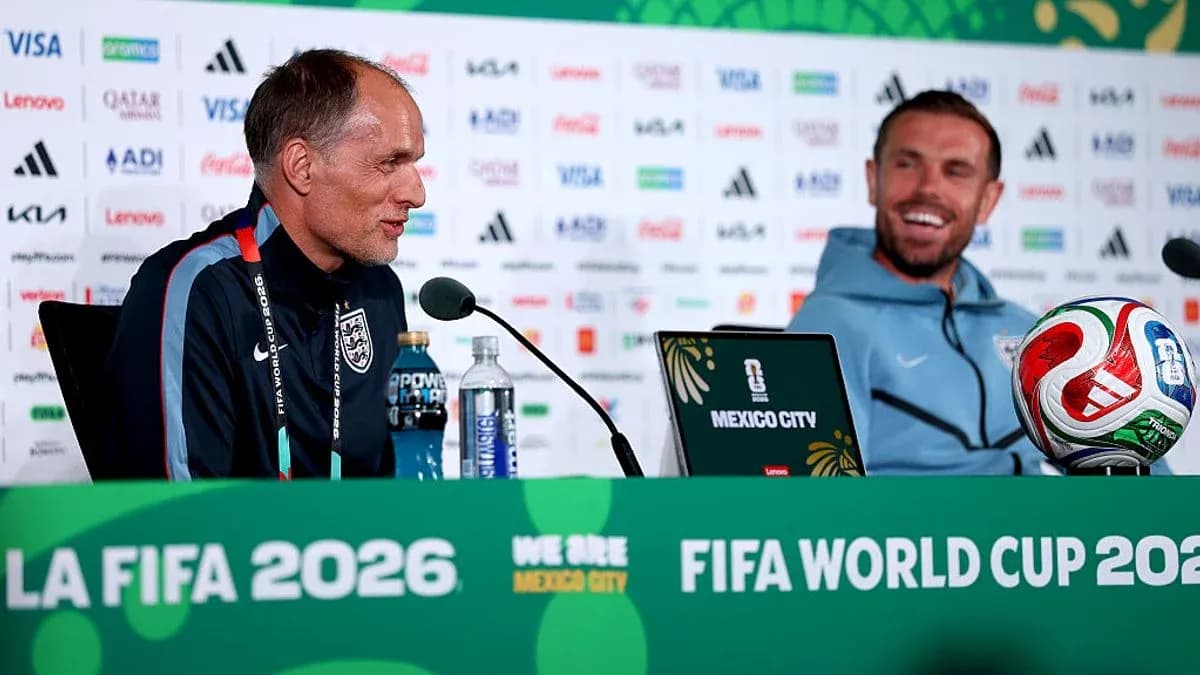
It is a striking suggestion. Henderson, 34, a veteran of major tournaments and a former Liverpool captain, has barely featured in this World Cup – just six minutes so far. Throwing him in from the start, out of position, against a Mexico side with a 100% record and yet to concede a goal would be a bold move from Tuchel.
But the logic is clear: England, so far, have not been stretched wide or pinned back. They have had the ball. They have controlled territory. Their issues have come in how quickly and creatively they move that possession.
Waddle wants a technician stationed at right-back, not a sprinter. A player who recycles and progresses the ball, who picks passes rather than races beyond wingers. Henderson, in his view, fits that brief.
Rice, Eze, Anderson – a different way to unlock England
Tuchel has already shown a willingness to improvise. Declan Rice, England’s midfield anchor, finished the Congo match at right-back, a move that hinted at how the coach might juggle his resources against Mexico.
For Waddle, that idea should go further.
“If you look at the rest of the squad, I know he has played Jarrel Quansah there, but why not play a midfield player there?” he said. “Play Declan Rice there and put a creative midfield player in the centre instead. Put Eberechi Eze alongside Elliot Anderson, and say to them, 'look, I want you to pass. If you see a 30-, 40-, or 50-yard pass, I want you to hit it'. That is how we're going to score more goals and get the wingers into the game.
“Because at the minute, you've got two midfield players who are exactly the same, and it’s all 10-yard passes. By the time the ball shuffles out to the wing, it’s too late. You want somebody in the middle of the park who's brave, who wants to get on the ball and distribute it long-range.”
It is a sharp critique of England’s current rhythm. Safe, short, predictable. By the time the ball reaches the flanks, the opposition are set. The wingers, starved of early service, rarely find defenders exposed.
A more daring midfield – Eze and Anderson trusted to see and hit the longer passes – would change that picture. And it all loops back to that right side of the defence: move Rice back there, or drop Henderson in, and suddenly there is room for more imagination in the middle.
A veteran’s solution to a modern headache
Waddle does not want his makeshift right-back charging like a traditional full-back. He wants control.
“Personally, I'd put Jordan Henderson at right-back,” he said. “He's good on the ball and he's economical. He doesn't have to fly on the overlap or bomb forward. We just want somebody who can play as a right-back, get the ball, control it, and pass it, because I've not seen any team go full throttle at England yet.”
That last line is the crux. Up to now, England have not faced the kind of sustained, high-quality pressure that exposes a stand-in defender. Mexico will test them more than DR Congo did, but they will still respect England’s firepower. They will still look for counters, transitions, moments.
Tuchel must decide whether this is the night to gamble on a veteran out of position, or to stick with a more orthodox option if Spence recovers in time. The injuries have boxed him into a corner. The shape of his midfield, and the tempo of his attack, might depend on how he fights his way out of it.
In a World Cup where small decisions tilt entire campaigns, England’s route to the quarter-finals might just run through the most unlikely figure on the pitch – a 34-year-old former Liverpool captain, quietly patrolling the right flank in Mexico City.