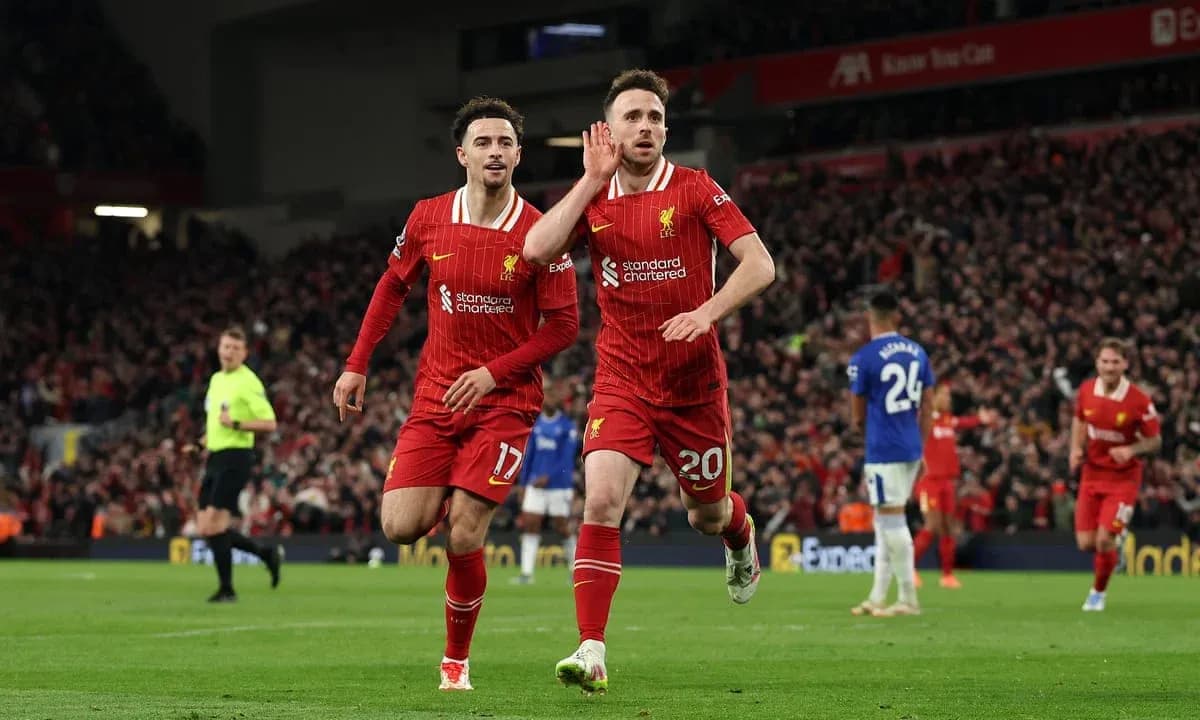
Everton vs Liverpool Derby: A Pivotal Clash in 2026
Hill Dickinson Stadium hosts a derby that will heavily shape both clubs’ trajectories in 2026, with Everton and Liverpool entering Round 33 in the Premier League separated by just five places and five points. In the league phase, Everton sit 8th on 47 points, while Liverpool are 5th with 52 and currently in the band marked for Champions League qualification. With only six matches left, the swing from this single fixture is potentially a six‑point emotional and strategic pivot in the race for Europe.
Head-to-Head Trends
Head‑to‑head trends underline why the stakes feel asymmetric. From the last five Premier League meetings listed, Liverpool have three wins, Everton one, and there has been one draw. Liverpool’s victories have all come at Anfield (2-1 and 1-0 in 2025, 2-0 in 2023), while at Goodison Park the balance is even more delicate: Everton won 2-0 in 2024 and drew 2-2 in 2025. That “Atomic Five” shows a clear pattern: Liverpool dominate at home, but they have not beaten Everton away in the most recent two league trips.
Tactical Analysis
Tactically, the scorelines suggest contrasting game scripts by venue. At Anfield, Liverpool have kept Everton to one goal or fewer in all three matches, with two clean sheets and controlled second halves after tight first periods (0-0 at HT twice, then pulling away). At Goodison Park, Everton’s 2-0 win in 2024 came from leading 1-0 at the break and consolidating, while the 2-2 draw in 2025 reflected a more open, trading‑punches scenario with the sides level 1-1 at HT. For this derby at Hill Dickinson Stadium, Everton will aim to recreate the intensity and compactness of that 2-0 win, while Liverpool’s objective will be to transport their Anfield control across Stanley Park.
Everton's Profile
In the league phase, Everton’s profile is that of a mid‑table side flirting with European contention. Their 13 wins, 8 draws, and 11 defeats (goal difference +2) show balance but not dominance. At home they are inconsistent: 6 wins, 4 draws, 6 losses, with 21 scored and 19 conceded. That 1.3 goals scored and 1.2 conceded per home match indicates tight margins; Goodison‑based games often hinge on small moments rather than overwhelming superiority.
Across all phases of the competition, the same equilibrium appears. Everton’s 39 goals for and 37 against in 32 matches, with 11 clean sheets and 9 matches failing to score, underline a side whose ceiling and floor are close together. Their biggest home win (3-0) and heaviest home defeat (1-4) show that when matches break open, they can be on either side of a swing. The frequent use of a 4-2-3-1 shape (21 appearances) suggests a structure built to be stable first, then opportunistic.
Liverpool's Profile
Liverpool, in contrast, carry the statistical profile of a flawed but clearly top‑end attack. In the league phase, they have 15 wins, 7 draws, and 10 losses, with a +10 goal difference (52 for, 42 against). Their away record is solid but not elite: 6 wins, 3 draws, 7 losses, scoring 23 and conceding 25. The 1.4 goals scored and 1.6 conceded per away match show that their attacking edge travels, but defensive vulnerability increases outside Anfield.
Across all phases of the competition, Liverpool’s 52 goals in 32 matches (1.6 per game) and only 4 total failures to score confirm a consistently dangerous front line. However, 42 goals conceded and only 10 clean sheets hint at a side that leaves space and can be countered, especially away, where their biggest defeats have been by 3-0. Structurally, a 4-2-3-1 used 29 times underlines an attacking posture that can stretch games, which in a derby environment may either overwhelm Everton or give the hosts transition opportunities.
Pivotal Fixture
In the league phase, the table context makes this fixture pivotal for both. For Liverpool, sitting 5th with Champions League ambitions, defeat would leave them vulnerable to being dragged into a congested pack chasing European spots. A win, by contrast, would likely consolidate their top‑five standing and maintain pressure on the sides above, especially given their recent league form line of WLDLW that already shows inconsistency. Turning that into WWDLW with a derby victory would be a strong psychological and mathematical boost.
For Everton, 8th place with 47 points is close enough to dream of European qualification but fragile enough that a poor run could see them slide into mid‑table anonymity. A derby win would cut Liverpool’s cushion to just two points, transforming the narrative from “outside contender” to “live challenger” for European places in the league phase. Even a draw would keep them within touching distance and preserve home momentum, while a defeat could stretch the gap to eight points, effectively turning the final five matches into a battle for position rather than for Europe.
Conclusion
The verdict is that this derby is more than local bragging rights: it is a fork in the road. Liverpool need the result to keep their Champions League trajectory intact and to show they can translate Anfield dominance into away control. Everton need it to keep European hopes alive and to reinforce the idea that Goodison‑area derbies are no longer predictable away wins for their rivals. The outcome will heavily shape whether 2026 is remembered as a year of genuine progression or missed opportunity for both clubs.