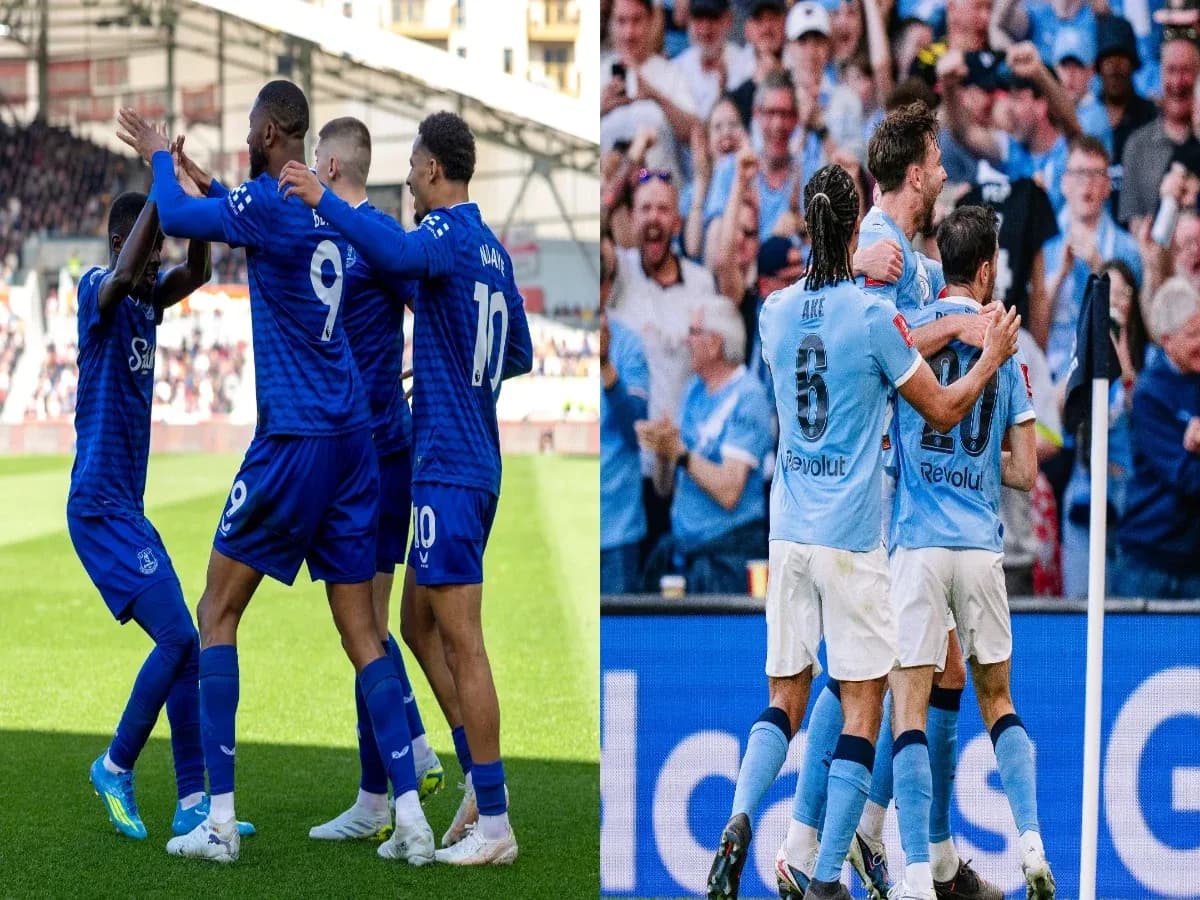
Everton vs Manchester City: A Chaotic 3–3 Draw in Premier League
Everton and Manchester City produced a chaotic 3–3 draw at Hill Dickinson Stadium in Premier League Round 35, a match where structure and control were repeatedly overturned by momentum swings. City dominated the ball, led 1–0 at half-time and later 3–2 deep into stoppage time, yet Everton’s direct, transitional blueprint generated the higher xG and three goals from just 25% possession. Leighton Baines’ 4-2-3-1 absorbed pressure, then attacked City’s full-backs and centre-backs with vertical runs and second-ball aggression. Pep Guardiola mirrored the 4-2-3-1 on paper, but his side’s territorial dominance did not translate into defensive stability against Everton’s waves after the hour.
Everton’s scoring and disciplinary story unfolded against that backdrop of City control. The visitors struck first on 43', when J. Doku attacked from the left and finished a move created by R. Cherki’s supply, giving City a 1–0 lead that reflected their possession but not yet their modest xG. At 45', Michael Keane collected a yellow card for a foul, an early sign of how much strain Everton’s back line was under before the interval. The half-time score was 0–1 to Manchester City.
Second Half
The second half turned into a sequence of Everton aggression and tactical gambles. Beto was booked for a foul on 48', then James Tarkowski followed with another foul-induced yellow on 53', underlining how Everton’s centre-backs were forced into repeated last-ditch interventions against E. Haaland and the City runners. The pivotal tactical moment came at 64', when T. Barry (IN) came on for Beto (OUT), shifting Everton’s attacking reference from a pure target man to a more mobile, channel-running forward.
Barry equalised on 68', exploiting the spaces City left when defending transitions. On 73', J. O'Brien surged from right-back and finished a move assisted by J. Garner, flipping the scoreline to 2–1 and rewarding Everton’s willingness to commit full-backs forward once City’s counter-press was broken. City’s frustration surfaced on 74', as Gianluigi Donnarumma received a yellow card for argument, immediately followed by a tactical refresh: P. Foden (IN) came on for A. Semenyo (OUT) at 74', and M. Kovacic (IN) replaced Nico (OUT) on 75', adding creativity and control in the half-spaces.
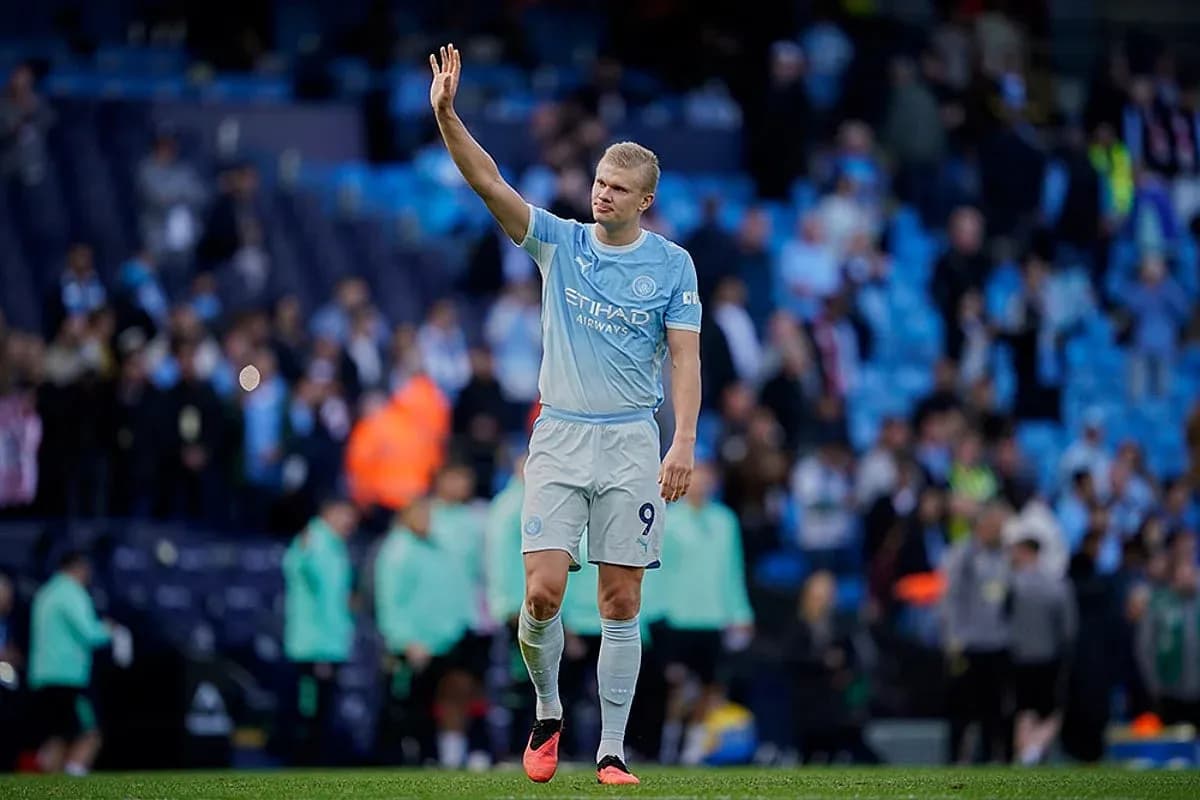
Everton, however, struck again before City’s adjustments fully settled. Barry scored his second on 81', again from open play, to make it 3–1 and complete a devastating 17-minute spell. City answered almost immediately: on 83', Haaland converted from close range after a Kovacic assist, cutting the deficit to 3–2 and re-energising City’s attack. Everton’s defensive intensity remained high but ragged, and on 86' J. O'Brien (listed here as Jake O'Brien) was booked for a foul, the fourth Everton yellow of the night.
City’s final attacking reshuffle came on 87', when O. Marmoush (IN) replaced B. Silva (OUT), adding a more direct forward threat around Haaland. Deep into added time Everton rotated legs rather than structure: at 90+2', N. Patterson (IN) came on for M. Rohl (OUT) and C. Alcaraz (IN) replaced K. Dewsbury-Hall (OUT), with H. Armstrong (IN) taking over from T. Iroegbunam (OUT) at 90+6'. The final twist arrived at 90', when Doku, again from the left, finished after M. Guehi’s assist to make it 3–3, completing his brace and salvaging a point for City.
Tactical Overview
Tactically, the match was defined by asymmetry between control and threat. City’s 75% possession and 610 passes (551 accurate, 90%) reflect a textbook Guardiola side: Nico and B. Silva formed the double pivot in the 4-2-3-1, with Cherki as the central creator and Doku and A. Semenyo providing width behind Haaland. Yet their xG of 1.37 and only four shots on target from 20 total attempts highlight a recurring issue: heavy ball circulation without sufficient incision through a compact block.
Everton’s 4-2-3-1, with J. Garner and T. Iroegbunam as the double pivot, was built to suffer without the ball and spring forward quickly. With just 200 passes (138 accurate, 69%) and 25% possession, they leaned into direct entries into Beto and later Barry, then aggressive runs from I. Ndiaye, K. Dewsbury-Hall and M. Rohl. The defensive pair of Tarkowski and Keane, shielded by the double pivot, focused on protecting the central corridor and forcing City wide, accepting fouls and cards as the cost of disrupting rhythm.
The full-backs were crucial to the swing in momentum. V. Mykolenko and J. O'Brien initially held conservative positions, but as Everton chased the game, O'Brien in particular stepped high to attack the space behind Doku. His goal on 73' epitomised this shift: a defender arriving late into the box against a City back line preoccupied with Barry’s movement. Once Barry entered, Everton’s front line became more dynamic, making it harder for A. Khusanov and Guehi to hold a steady line, especially with City’s full-backs, M. Nunes and N. O'Reilly, often high in build-up.
Goalkeeping Performance
In goal, J. Pickford had a paradoxical evening. Officially, he made just one save, yet the data credits him with 0.74 goals prevented, implying the single stop was of high xG value and that City’s other goals were either close-range or structurally unprotected. Donnarumma, by contrast, made three saves but faced the higher overall xG: Everton generated 2.77 expected goals from 14 shots (six on target), repeatedly creating clear chances from counters and second phases rather than volume shooting.
Defensive Analysis
Defensively, Everton’s index on the night was defined by volume of interventions and fouls rather than pure control: 15 fouls and four yellow cards (Keane 45', Beto 48', Tarkowski 53', J. O'Brien 86') reflect a high-risk, high-commitment approach. City, with only five fouls and one yellow (Donnarumma 74' for argument), maintained discipline but lacked the defensive bite to kill transitions, especially after losing structure in the second half.
From a statistical verdict, the draw feels like a fair reflection of the balance between City’s territorial dominance and Everton’s chance quality. City’s 20 shots to Everton’s 14 and nine corners to five underline their sustained pressure, but the lower xG (1.37 vs 2.77) shows Everton’s attacks were far more dangerous when they did break out. Both goalkeepers are credited with the same goals prevented value (0.74), suggesting that, despite the six goals, individual errors in goal were less decisive than systemic defensive issues on both sides.
Overall form-wise, Everton showed resilience and attacking efficiency against a top-possession side, while City’s overall form with the ball remained strong but their defensive index against direct, transitional play was exposed. The 3–3 scoreline, with Doku and Barry both scoring braces and Haaland and O'Brien adding one each, encapsulates a match where control did not guarantee security, and where tactical bravery from Everton nearly delivered a signature comeback win.