Everton vs Sunderland: Premier League Clash on May 17, 2026
On 17 May 2026, with the spring light spilling over the stands at Hill Dickinson Stadium in Liverpool, Everton and Sunderland walk out knowing this is about more than just another game. It is Round 37 of the Premier League, the penultimate weekend, and a mid-table pack is jostling for position. For Everton, a top-half finish and the chance to frame a turbulent calendar year in positive terms are on the line. For Sunderland, just one point behind and chasing them down, this is a shot at overtaking a near neighbour in the table and underlining their return to the elite.
Season Context
Everton arrive in 10th place with 49 points from 36 matches, built on a perfectly balanced goals record of 46 scored and 46 conceded. Thirteen wins, ten draws and thirteen defeats tell of inconsistency, but also of a side that has found enough attacking punch (46 goals in 36 games) to stay clear of danger while flirting with something more ambitious.
Sunderland sit 12th, just behind on 48 points from 36 games. Their goal difference of -9 comes from 37 goals scored and 46 conceded, pointing to a team that has often been competitive but lacks Everton’s attacking output (37 goals vs Everton’s 46) and pays for defensive lapses away from home. Twelve wins, twelve draws and twelve defeats underline how finely poised their campaign has been.
Form & Momentum
Everton’s recent league form string reads “DDLLD”, a sequence that underlines a stuttering spell (no win in those five, with two draws and three defeats) just when they were trying to cement a top-half finish. Across the full campaign, their 46 goals from 36 games show a capable attack (1.28 goals per game), but the identical 46 conceded (1.28 per game) explains why they have struggled to turn performances into consistent victories.
Sunderland’s form line of “DDLLW” tells a slightly different story: a late win breaking a run of two draws and two defeats, suggesting a side that has rediscovered some belief (three points from the most recent outing) after a sticky patch. Their 37 goals in 36 matches (1.03 per game) point to a more conservative or less clinical attack, while matching Everton with 46 goals conceded (1.28 per game) shows a defence that can be exposed, particularly on the road.
Head-to-Head Patterns
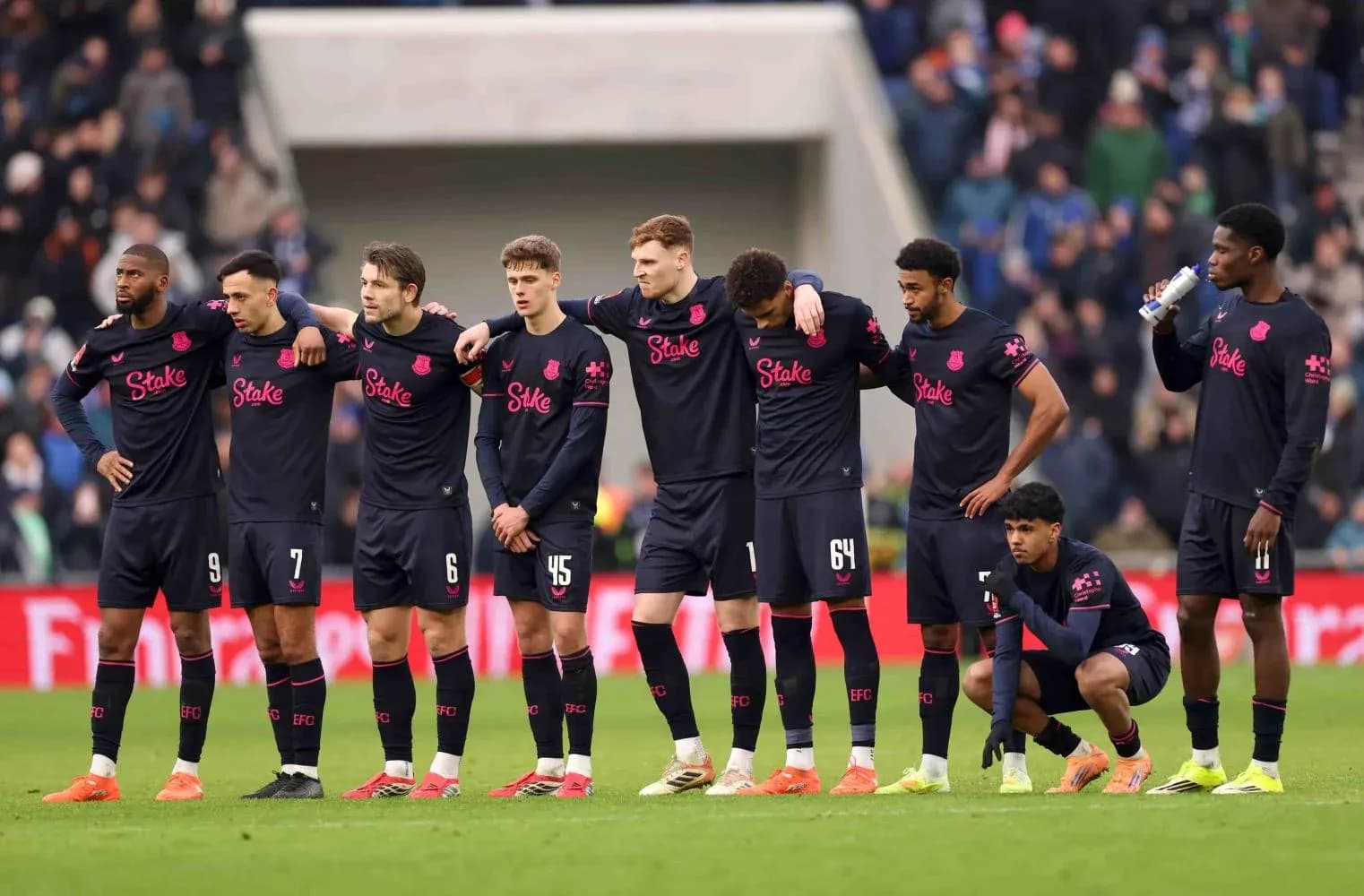
The most recent meeting between these clubs at this ground came in the FA Cup, when Sunderland stunned Everton after penalties. The tie finished 1-1 in normal time at Hill Dickinson Stadium before Sunderland prevailed in the shootout (FA Cup, season 2025, January 2026).
In league action, the sides shared the points on 3 November 2025 at the Stadium of Light, a 1-1 draw that reflected a tight Premier League contest where neither could land a decisive blow (Premier League, season 2025, November 2025).
Going further back, Everton enjoyed a commanding 3-0 home victory over Sunderland in the League Cup on 20 September 2017 at Goodison Park, a reminder that when the Merseyside club finds rhythm at home, they can overwhelm this opponent (League Cup, season 2017, September 2017).
Tactical Preview
Everton’s statistical profile points towards a settled structure and a clear idea of how they want to play. The most used shape is a 4-2-3-1 (21 league matches), occasionally switching to a 4-3-3 (1 match), which suggests a preference for a double pivot protecting the back four and a creative line of three behind a lone striker. With 46 goals from 36 games, that system has delivered a respectable attacking return (1.28 goals per game), while the identical 46 conceded underline that their commitment to attack can leave spaces.
In this framework, J. Garner is a pivotal figure. Listed as a Midfielder in the squad but operating with defensive responsibilities in the data, J. Garner has produced 7 assists in the Premier League (7 assists) and is one of the division’s leading providers. J. Garner’s 1665 passes with 52 key passes (1665 total passes, 52 key passes, 86% accuracy) show how much Everton’s build-up flows through him, while 115 tackles and 54 interceptions (115 tackles, 54 interceptions) underline his importance in transition. Discipline will be crucial: J. Garner has collected 11 yellow cards (11 yellow cards), so his aggression must be controlled in a high-stakes fixture.
J. Grealish offers a different creative angle from midfield, with 6 assists (6 assists) and 40 key passes from 574 passes (574 passes, 40 key passes, 83% accuracy), plus 57 dribbles attempted with 23 successful (57 attempts, 23 successful). That blend of passing and ball-carrying gives Everton the ability to break Sunderland’s lines between midfield and defence, especially in the half-spaces of their 4-2-3-1.
Sunderland, by contrast, have used a broader tactical palette. Their most common formation is also 4-2-3-1 (19 matches), but they have alternated with 4-3-3 (5 matches), 5-4-1 (5 matches), 4-4-2 (3 matches) and 4-1-4-1 (3 matches), plus a cameo for 3-4-3 (1 match). That flexibility suggests a coach willing to adapt to opponent and game state, but it can also hint at a side still searching for an ideal balance, which fits with their 37 goals scored and 46 conceded.
In midfield, G. Xhaka is the metronome. With 6 assists (6 assists), 1684 passes at 83% accuracy (1684 passes, 83% accuracy) and 34 key passes, G. Xhaka gives Sunderland control and progression from deep. E. Le Fée adds vertical thrust: 4 goals and 5 assists (4 goals, 5 assists), 1040 passes with 48 key passes, and 83 tackles (83 tackles) show a two-way midfielder who can both break up play and create chances. Out wide or in advanced roles, their attackers will look to exploit Everton’s equal goals-for/goals-conceded profile (46 scored, 46 conceded) by targeting transitions when the home side commits bodies forward.
Defensively, Sunderland must manage their aggression. T. Hume, listed as a Midfielder here, has 9 yellow cards (9 yellow cards) and 64 tackles (64 tackles), while Reinildo and D. Ballard each have one red card (one red card each), indicating that Sunderland’s back line can drift into risky challenges under pressure. Against Everton’s creative core of J. Garner and J. Grealish, timing in the tackle will be essential.
Statistical Snapshot
- Competition: Premier League, season 2025 — 17 May 2026.
- Venue: Hill Dickinson Stadium, Liverpool.
- Prediction: Win or draw — Double chance : Everton or draw.
- Win Probabilities: Home 45% / Draw 45% / Away 10%.
- Model: Everton 60.0% — Sunderland 40.2%.
Betting Verdict
The prediction model leans clearly towards the hosts with a “Win or draw” call and a strong tilt in the total comparison (Everton 60.0% vs Sunderland 40.2%), which aligns with Everton’s superior attacking numbers (46 goals vs Sunderland’s 37) and home advantage at Hill Dickinson Stadium. Recent form is not sparkling for either side, but Sunderland’s away fragility (37 goals scored, 46 conceded overall, with a negative goal difference) and disciplinary risk make them a volatile proposition. With most bookmakers pricing the home win around 1.80–1.90 and the draw roughly in the mid-3s, the advised “Double chance : Everton or draw” looks a pragmatic way to back the data edge while respecting Sunderland’s capacity to scrap for a point, as seen in the 1-1 Premier League draw in November 2025.