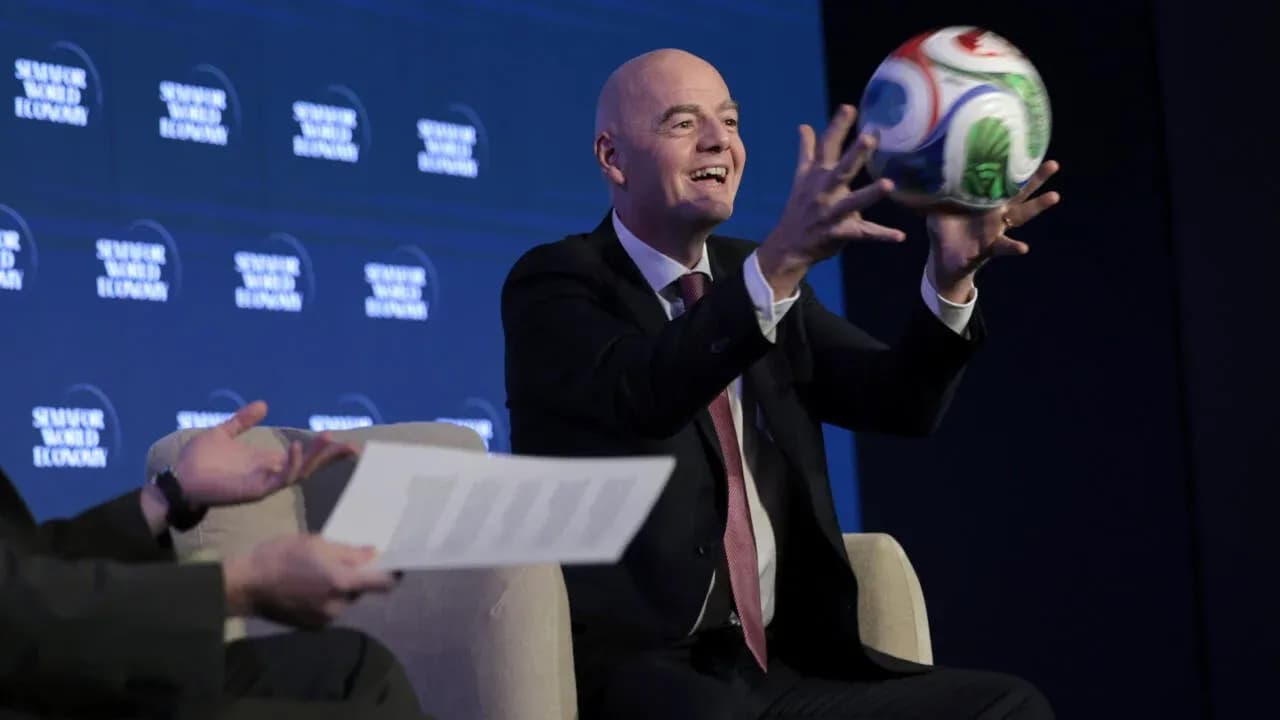
FIFA Congress Faces Political Turmoil Ahead of World Cup
The World Cup is still months away, but the political battles have already arrived at FIFA’s doorstep.
Around 1,600 delegates from more than 200 member associations are descending on Vancouver for Thursday’s Congress, a meeting meant to be about football’s future. Instead, it is being dragged into the crossfire of geopolitics, immigration battles and a festering argument over who gets to belong on the world stage.
At the heart of it all: Iran, Russia, and a FIFA president under fire.
Iran row erupts before Congress even starts
Iran’s absence from Vancouver is threatening to overshadow the entire gathering.
Officials from the Football Federation Islamic Republic of Iran (FFIRI) landed in Toronto earlier this week, only to abruptly turn around and fly home, abandoning their onward trip to the host city. According to Iranian media, FFIRI president Mehdi Taj — a former member of Tehran’s Islamic Revolutionary Guard Corps (IRGC) — and two colleagues left after being “insulted” by Canadian immigration officers.
Canada, which officially designated the IRGC a terrorist organization in 2024, did not address the individuals by name but made its stance unmistakably clear.
“IRGC officials are inadmissible to Canada and have no place in our country,” the national immigration agency said, citing privacy laws as the reason it would not discuss specific cases.
That single decision has thrown yet more uncertainty over Iran’s already fragile World Cup status. Since the Middle East war erupted on February 28, following a wave of attacks by the United States and Israel, questions have swirled around whether Iran can safely and freely participate in a tournament co-hosted by the US.
Iranian officials tried to pre-empt the storm. Last month, they proposed moving their three group-stage matches from the United States to co-host Mexico. Gianni Infantino shut that idea down quickly.
Iran, he insisted to AFP, will play “where they are supposed to be, according to the draw.”
Washington has tried to draw a line of its own. US Secretary of State Marco Rubio said last week that Iran’s players would be welcome at the World Cup. The door, though, may not be open to everyone. Rubio warned that members of the Iranian delegation with links to the IRGC could still be refused entry.
So Iran, a qualified team on paper, arrives at Congress as a ghost presence — central to the debate, missing from the room.
Infantino walks into a political minefield
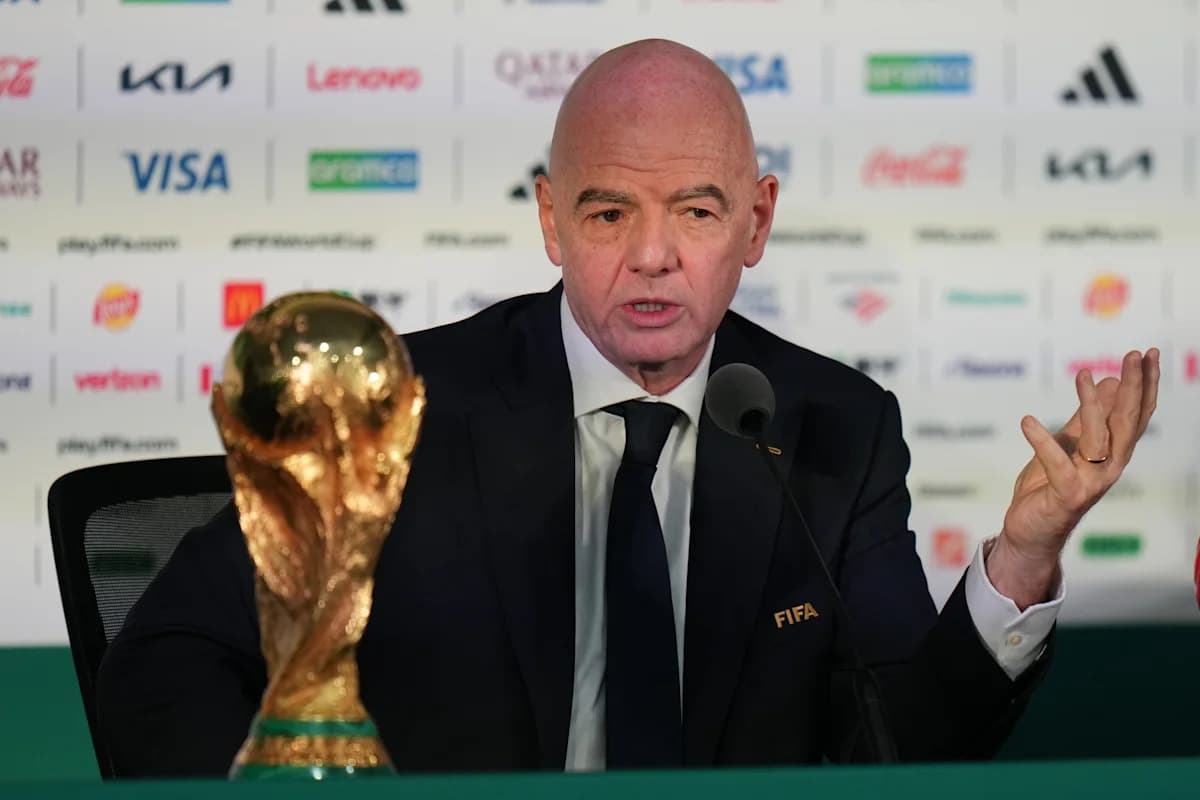
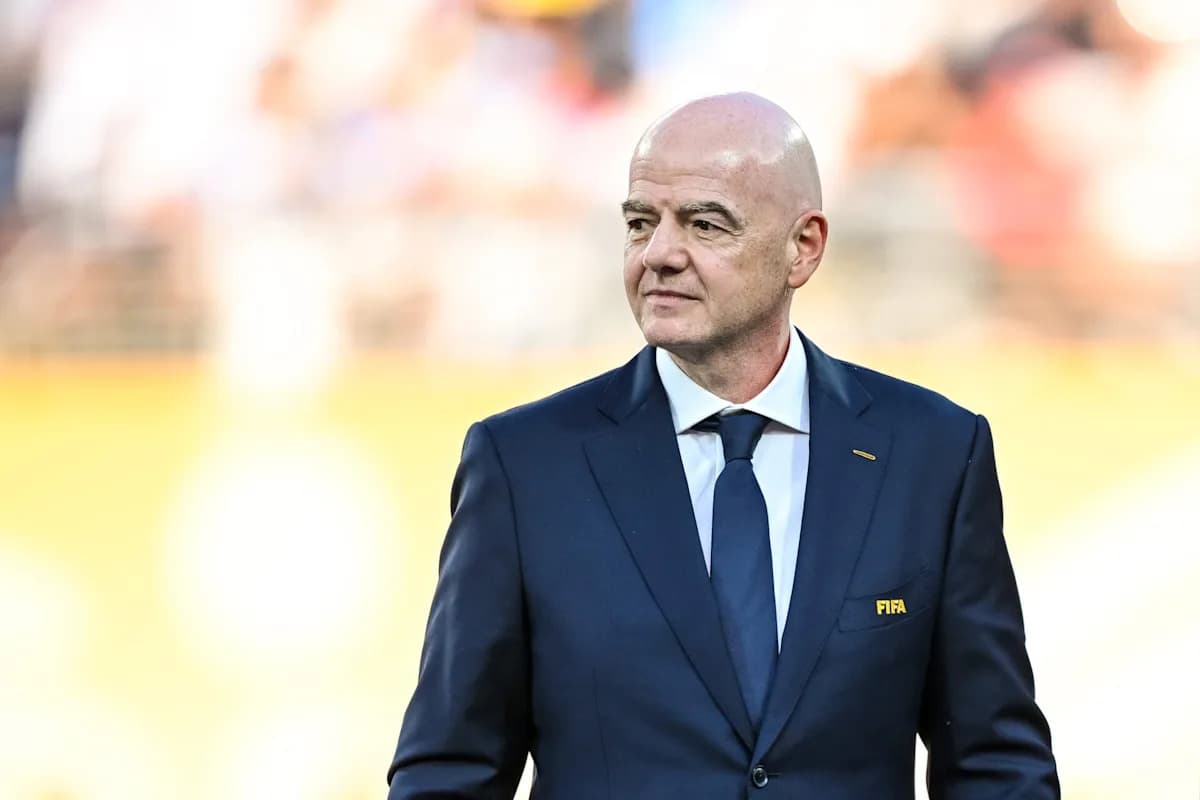
Gianni Infantino was already under scrutiny before the Iran episode erupted. Now, every word he delivers to Congress will be weighed against a backdrop of anger, mistrust and rising costs.
The FIFA president faces criticism on several fronts: spiralling World Cup ticket prices, his close friendship with US President Donald Trump, and a perception that the world body is slow to protect fans and teams from the political turbulence swirling around the host nation.
On Tuesday, FIFA tried to ease at least one of those concerns. The organization announced it had increased World Cup financial distributions to nearly $900 million, a sharp rise from the $727 million unveiled in December.
The move did not come out of nowhere. Several qualified teams had privately warned they could lose money by simply turning up to a tournament spread across vast distances, with soaring travel, tax and operational costs. For them, the World Cup risked becoming a prestige event that damaged the balance sheet.
The extra funding is meant to plug that gap. It may not silence the criticism.
Human rights groups demand more than words
While federations worry about budgets, rights organizations are focused on something more fundamental: whether people will be safe.
With the Trump administration’s hardline immigration policies still casting a long shadow, Amnesty International has pressed Infantino to use his Congress address to spell out how FIFA will shield fans, journalists and local communities from arbitrary detention, mass deportations and attacks on free expression.
“FIFA President Gianni Infantino has yet to publicly outline how fans, journalists and local communities will be safe from arbitrary detention, mass deportations and crackdowns on free expression,” said Steve Cockburn, Amnesty’s head of economic and social justice.
“This FIFA Congress should be the moment he does so, and the global football community must receive more than empty platitudes.”
That last phrase hangs over Vancouver like a challenge. FIFA has promised before. Now, campaigners want concrete guarantees, not carefully crafted statements.
The Trump Peace Prize that will not go away
Infantino’s relationship with Trump is also back under the spotlight.
During last December’s World Cup draw in Washington, the FIFA president awarded the US leader the FIFA Peace Prize, a move that stunned many inside the game and far beyond it. The backlash has not faded.
“We want to see (the prize) abolished,” Norwegian football association president Lise Klaveness said this week. “We don’t think it’s part of FIFA’s mandate to give such a prize.”
For critics, the award symbolized a governing body drifting away from its core role and into the realm of political theatre. For Infantino, it is now another decision he must defend as he tries to hold together a deeply divided membership.
Russia’s exile back on the table
As if Iran and Trump were not enough, Congress is also expected to revisit one of the most contentious issues in modern football: Russia’s ongoing ban from international competition.
Russia has been shut out since the 2022 invasion of Ukraine, a sanction that has reshaped qualifying campaigns and tournament line-ups. Infantino has already signalled that he wants that isolation to end.
“We have to (look at readmitting Russia). Definitely,” he told Britain’s Sky News earlier this year. “This ban has not achieved anything, it has just created more frustration and hatred.”
Those words will echo in Vancouver’s meeting halls. Some associations see Russia’s exclusion as a necessary stand against aggression. Others, like Infantino, argue that football should not be an instrument of punishment, especially when the players and fans bear the brunt.
The clash between those positions will say much about where FIFA draws its moral boundaries — or whether it chooses to draw them at all.
A Congress under strain
On paper, this Congress is just another entry in FIFA’s calendar, a vast administrative gathering where statutes are tweaked, budgets approved and hosts applauded. In reality, it has become a stress test for the modern game.
Iran’s contested presence, Russia’s possible return, Trump’s Peace Prize, the price of tickets, the safety of fans at the World Cup — each issue pulls the organization in a different direction. Each exposes the tension between a sport that wants to be universal and a world that is anything but united.
Infantino will stand on stage in Vancouver with a script, a smile and a message of global football harmony.
By the time the delegates file out, the real question will be whether anyone still believes that harmony exists.